Brain Rot Words List 2026: 50+ Gen Z & Alpha Slang
Brain rot words are TikTok- and Discord-derived slang terms that proliferate so quickly they feel like they are rewiring how Gen Z and Gen Alpha communicate online. Oxford University Press named "brain rot" the Word of the Year in 2024, defining it as the "supposed deterioration of a person's mental state... especially viewed as the result of overconsumption of material (now particularly online content) considered to be trivial." This guide curates 50+ terms with meanings, origins, and usage rules — plus a parent's guide and rules for using brain rot without sounding cringe.
Last updated June 2026 · ~25-minute read · Sourced from Oxford University Press, Dictionary.com, Psychology Today, and Know Your Meme trends.
Update log: June 26, 2026 — refreshed the article image set and alt text, removed repeated glossary entries, and kept the June 2026 usage guidance intact. Previously updated December 2025.
Brain Rot Words List 2026: Quick Meanings and Examples
| Brain rot word | Quick meaning | Example use |
|---|---|---|
| Skibidi | Context-dependent meme word for something chaotic, funny, cool, or absurd. | "That edit is so skibidi." |
| Rizz | Charisma or flirting ability. | "He has serious rizz." |
| Fanum tax | Taking a bite of someone else's food as a joke. | "You took my fries. Fanum tax?" |
| Gyatt | A reaction to someone's appearance, usually informal and sometimes inappropriate. | "The comments were full of gyatt jokes." |
| Sigma | A meme label for independent or high-status behavior, often used ironically. | "That was a sigma move." |
| Delulu | Short for delusional; unrealistically hopeful or self-convinced. | "I'm delulu about winning." |
| No cap | No lie; seriously. | "That song is good, no cap." |
| Bussin | Very good, especially food. | "This pizza is bussin." |
| Only in Ohio | A meme label for something strange or chaotic. | "Only in Ohio could that happen." |
| Touch grass | Take a break from being too online. | "Log off and touch grass." |
When I started compiling this list, the term that surprised me most was how quickly the Oxford Word of the Year selection itself became a brain rot reference — meta-irony in motion. The 35-item core list below covers the canonical 2023-2024 terms; the FAQ and parent's sections address the questions that come up most when people are trying to figure out whether what their teenager is saying is a joke, a warning sign, or just normal generational drift.
What Are Brain Rot Words?
Ever heard someone say, “That’s total brain rot,” or watched a TikTok where teens rattle off a string of words that sound like pure nonsense? If you’ve ever found yourself baffled by these viral phrases, you’re not alone. Welcome to the world of brain rot words—a rapidly evolving category of internet slang that’s everywhere on TikTok, in Gen Z group chats, and even creeping into Gen Alpha’s vocabulary.
Top 3 Trending Words:
Skibidi: Awesome, bad, or a filler word (context dependent).
Rizz: Charisma or ability to attract a partner.
Fanum Tax: Stealing a bit of food from a friend.
The full 50+ word list is below.
What Does 'Brain Rot' Mean in Online Language?
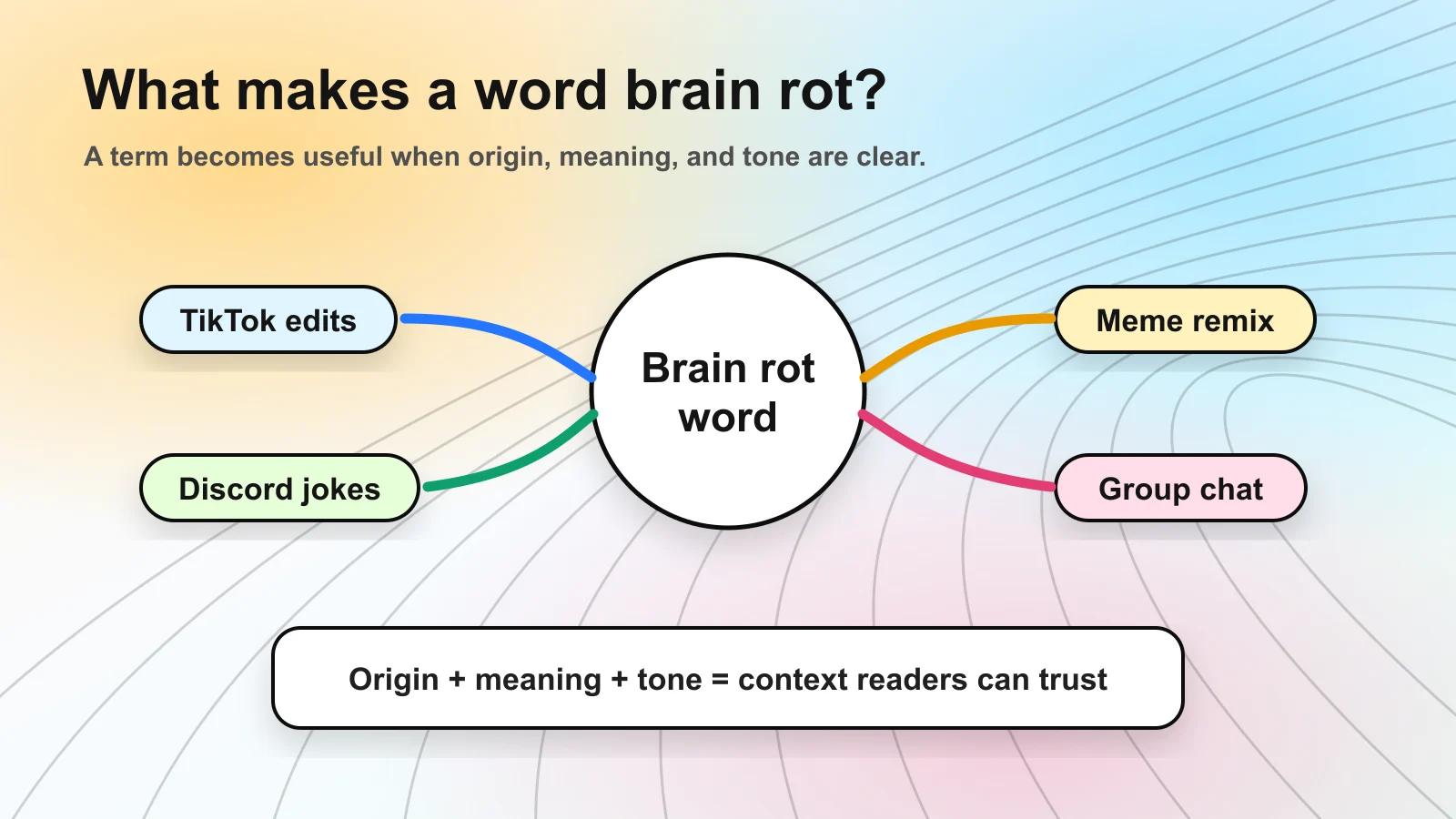
Imagine scrolling endlessly through your social feed, picking up words and phrases that are catchy, funny, and sometimes make little sense. That’s the essence of brain rot in internet culture. The term refers to the feeling of having your brain numbed—or “rotted”—by consuming large amounts of low-value, repetitive, or purely entertaining content. It’s not just about mindless scrolling, though. These words often become inside jokes, meme fuel, or shorthand for entire moods and experiences among younger generations.
-
Brain rot words are usually short, memorable, and sometimes absurd (think: “skibidi,” “rizz,” or “no cap”).
-
They’re born on platforms like TikTok, where trends move at lightning speed and attention spans are short.
-
While some see them as harmless fun, others worry they contribute to digital distraction or make meaningful communication harder.
Why Should You Care About Brain Rot Words?
Here’s why understanding this slang matters:
-
Staying current: Online language changes fast, and knowing these words helps you keep up with digital culture.
-
Connecting across generations: If you’re a parent, teacher, or just want to relate to younger people, learning this slang is a must.
-
Decoding conversations: These phrases often slip into everyday talk, so recognizing them can help you understand what’s really being said.
But let’s be real: the pace at which new brain rot words pop up can feel overwhelming—especially if you already struggle with distraction or information overload. You might start to wonder, “How do I keep track of all this?”
How to Organize the Chaos: A Smarter Way to Track Trends
Imagine having a personal command center that helps you capture every new brain rot word, organize examples, and track where you found them—without drowning in sticky notes or endless browser tabs. That’s where tools like the AFFiNE ADHD-Friendly Pomodoro Dashboard come in. Designed for anyone who feels buried by digital clutter, this planner breaks big projects (like researching viral slang) into bite-sized, color-coded milestones. With features like cross-device syncing, visual dashboards, and push reminders, you can stay on top of language trends without the mental exhaustion.
-
Capture new words and phrases as you discover them
-
Organize your research with tags, notes, and visual charts
-
Set reminders for regular updates or focused writing sprints
In addition to using planner templates, teams and educators looking for a fully bespoke solution can partner with elearning app development services to build custom platforms that capture, organize, and share emerging slang trends across devices and users.
Whether you’re a content creator, educator, or just a curious web surfer, this kind of structure turns the chaos of internet slang into something you can actually manage—and maybe even enjoy.
What’s Next?
This article will walk you through the origins of brain rot words, why they go viral, and—most importantly—a curated, up-to-date list of the most popular terms you’re likely to see online. Ready to finally decode the internet’s wildest slang? Let’s dive in.
Understanding the Viral "Brain Rot" Phenomenon
When you hear someone joke, “That’s pure brain rot,” do you ever wonder what they really mean? Or why a string of seemingly random words—like “skibidi,” “rizz,” or “goblin mode”—can suddenly take over your social feeds? If so, you’re in good company. The rise of brain rot words is more than just the latest internet fad; it’s a reflection of how digital culture, humor, and generational identity are evolving at lightning speed.
What Does "Brain Rot" Mean in Internet Culture?
In practice, the idea is simple: in today’s online world, brain rot describes the feeling of mental fuzziness or distraction that comes from binging on low-value, repetitive, or absurd digital content. Think endless TikTok scrolling, surreal meme loops, or viral videos that make you laugh—and then wonder what you just watched. The phrase isn’t a medical diagnosis; it’s a tongue-in-cheek way to capture the collective experience of digital overload and the sometimes questionable value of internet entertainment.
-
Origins: The term “brain rot” has roots in 19th-century literature, where it described intellectual decline. In the 2000s, fandoms on platforms like Tumblr and Twitter began using it to describe obsessive fixations on shows or characters (Dictionary.com).
-
Modern Usage: Today, it’s mostly used by Gen Z and Gen Alpha to poke fun at their own digital habits—admitting, often with irony, that they’re “rotting” their brains on memes or viral trends.
-
Humor vs. Critique: Some use it as a badge of belonging, while others raise concerns about attention spans, meaningful communication, or mental well-being.
Why Do Brain Rot Words Go Viral?
You’ll notice that brain rot words are everywhere—on TikTok, in group chats, and splashed across memes. But why do these quirky, sometimes nonsensical terms catch fire so quickly?
-
Meme Culture & Shared Humor: These words often start as inside jokes, then spread through viral memes, challenges, or remixed videos. Their randomness and absurdity make them memorable and easy to share.
-
Digital Attention Spans: Platforms like TikTok and Twitter favor quick, punchy content. Short, catchy slang fits perfectly into this fast-paced digital environment (AFFiNE Blog).
-
Generational Identity: For Gen Z and Gen Alpha, using brain rot words is a way to signal belonging, creativity, and a sense of irony. It’s also a playful pushback against older generations’ expectations of “proper” language (Psychology Today).
The Debate: Harmless Fun or Cause for Concern?
The viral spread of these words sparks mixed reactions:
-
Amusement: Many embrace the randomness, seeing it as a creative, self-aware way to bond and laugh about online life.
-
Concern: Some parents, educators, and psychologists worry that constant exposure to “brain rot” content could erode attention spans or diminish communication skills.
-
Indifference: Others shrug it off, recognizing that language—and slang—has always evolved with each generation.
“Language adapts to users’ needs, reflecting cultural shifts and technological leaps. What seems like brain rot today might be tomorrow’s mainstream—like ‘cool’ or ‘hip’ before it.”
Ultimately, the brain rot vocabulary explained in this guide is not just a symptom of digital distraction — it is a window into how young people connect, joke, and express themselves in an era of endless content and constant change. Next, we’ll break down the ultimate list of these viral words and phrases, so you can finally decode the language of the internet’s wildest trends.
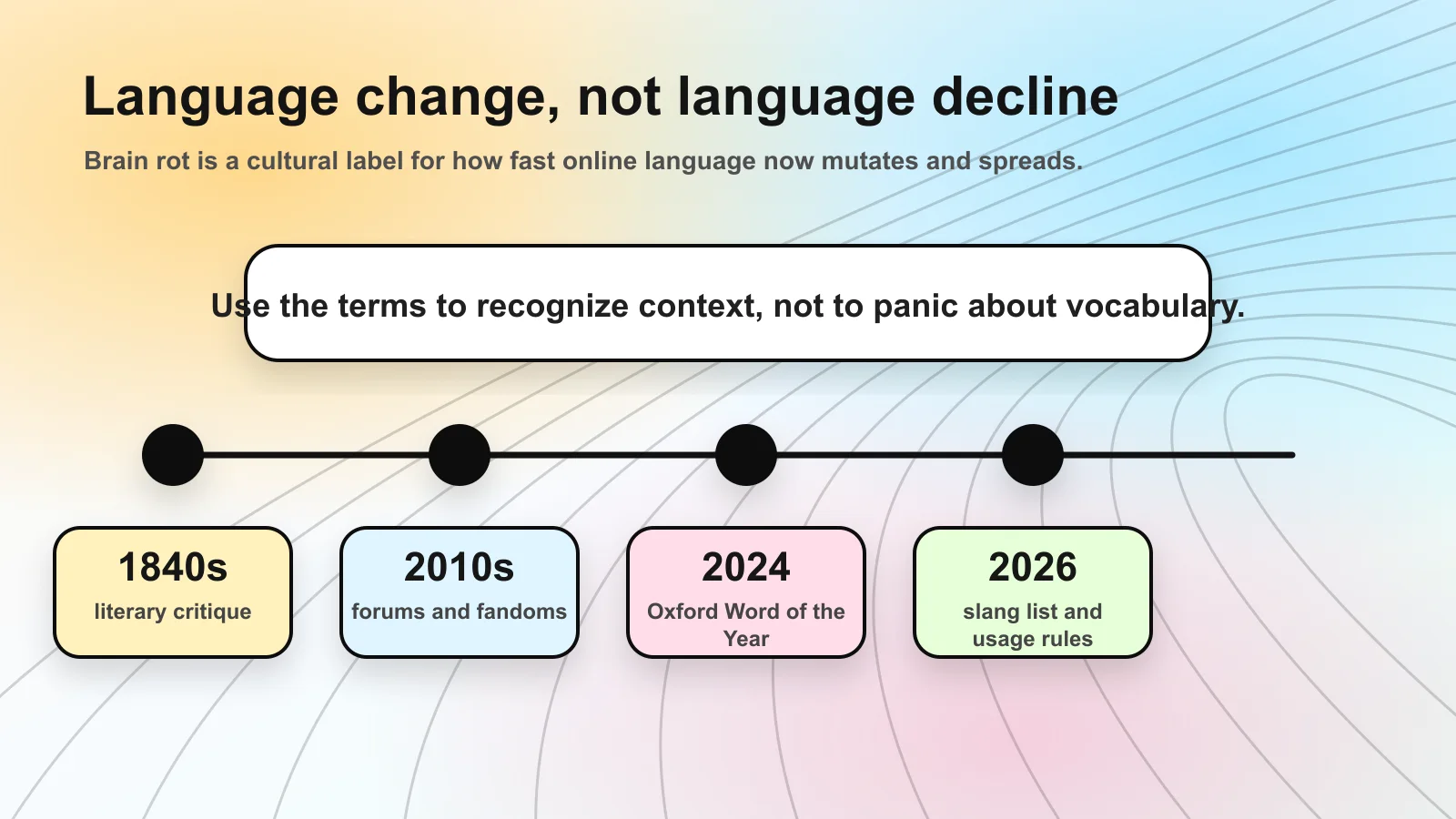
"Language change is adaptation, not deterioration. The Oxford selection reflects social anxiety about media consumption, not a verdict on the words themselves." — adapted from Psychology Today, 'The Evolution of Language' (March 2025)
The Ultimate List of Brain Rot Words You Need to Know
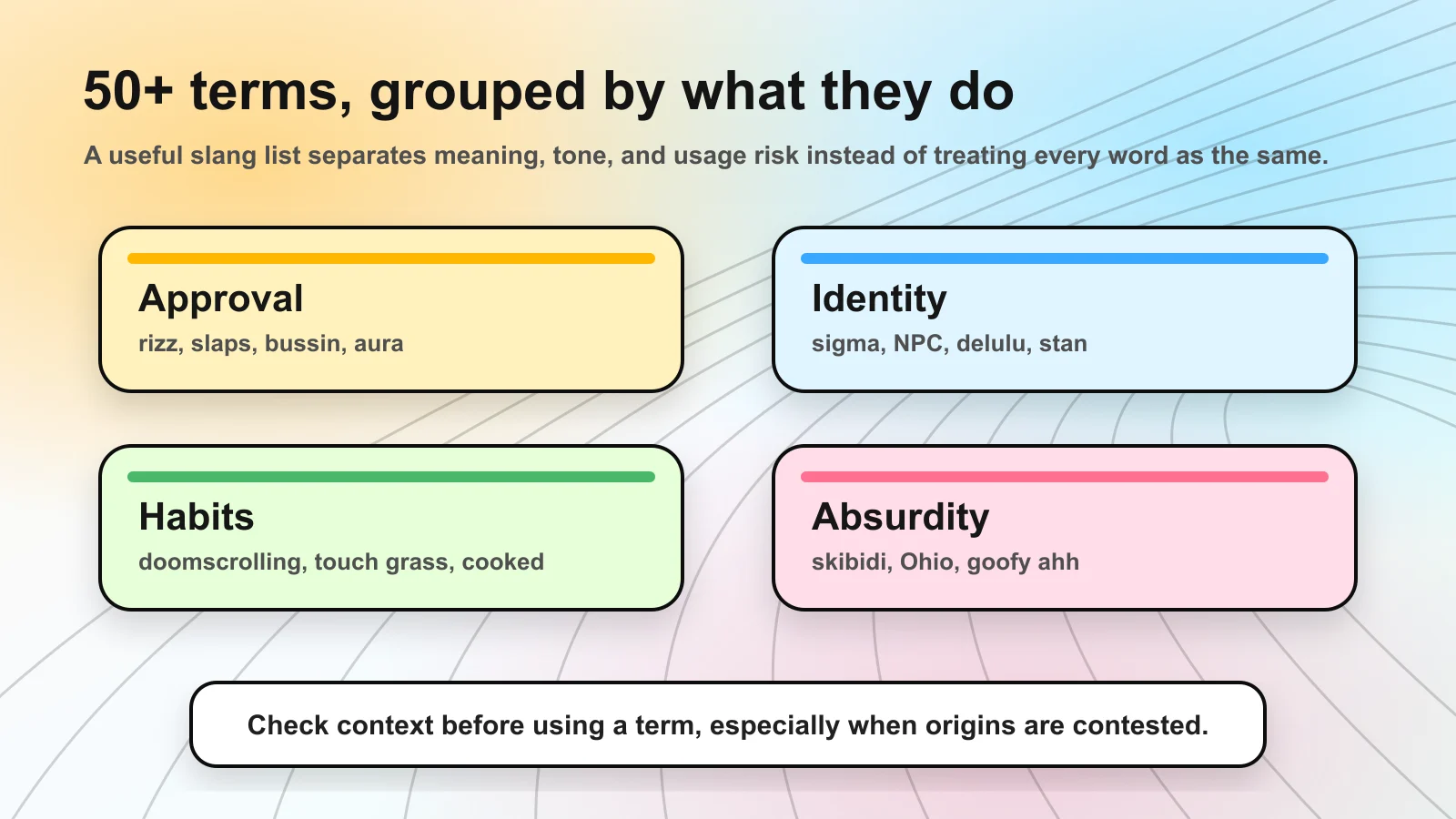
Ever tried to decode a TikTok comment section or overheard a Gen Z group chat and wondered, “What are they even saying?” If so, you’re not alone. The list of brain rot words is growing so fast that even the savviest internet users can feel left behind. To help you catch up, we’ve compiled a living, up-to-date brain rot words list—complete with meanings and real-world examples. Whether you’re a parent, educator, or just curious about digital slang, this table is your cheat sheet for the wildest words and phrases dominating online conversations.
What Makes a Word “Brain Rot”?
Before you dive in, remember: brain rot words are catchy, often absurd, and sometimes sound like pure nonsense. Their meanings can shift quickly, and new entries pop up almost every week. Think of this list as a snapshot—a starting point for understanding the language of today’s internet culture.
| Word or Phrase | Meaning | Example Usage |
|---|---|---|
| Skibidi | Can mean good, cool, bad, evil, or dumb depending on context; from the viral “Skibidi Toilet” meme | “That dance is so skibidi.” |
| Rizz | Short for charisma; describes someone’s flirting ability or charm (Oxford 2023 Word of the Year) | “He’s got mad rizz.” |
| No cap | No lie; I’m being serious | “That story was wild, no cap.” |
| Bussin | Excellent, delicious, or impressive (often used for food) | “This pizza is bussin!” |
| Goblin mode | Slothful or self-indulgent behavior with no concern for social norms | “I’ve been in goblin mode all weekend.” |
| Yeet | Exclamation of excitement or surprise; also means to throw something energetically | “Yeet!” (while tossing an object) |
| Goofy ahh | Describes something or someone silly or foolish | “That meme is so goofy ahh.” |
| Fanum tax | Theft of food between friends; from streamer Fanum | “You took my fries? That’s fanum tax.” |
| Delulu | Short for “delusional”; describes irrational or unrealistic behavior | “She thinks he likes her? She’s so delulu.” |
| Alpha / Beta / Sigma | Describes social hierarchies among men: alpha (leader), beta (follower), sigma (independent) | “He’s got sigma energy.” |
| Stan | Devoted fan | “I stan her music.” |
| Yass | Exaggerated yes; excitement or approval | “Yass queen!” |
| UwU | Text face expressing cuteness or affection; sometimes used ironically | “Thanks for the gift, UwU.” |
| Zesty | Lively, quirky, dramatic, or bold | “That outfit is zesty.” |
| Vibe check | Assessing the mood or energy of a person or situation | “Let’s do a vibe check before the party.” |
| Sussy / Sus | Short for suspicious; popularized by the game Among Us | “That’s kinda sus, not gonna lie.” |
| Slaps | Describes something exceptionally good or impactful | “This song slaps!” |
| Cringe | Something embarrassing or awkward | “His joke was pure cringe.” |
| Blud | Friend, buddy, or bro | “What’s up, blud?” |
| Shlawg | A variation of 'dawg' or 'bro', used ironically or humorously. | “Don’t shlawg my outfit.” |
| Grindset | Mindset focused on constant effort and success | “He’s all about that grindset.” |
| Spiraling | Rapid emotional decline or losing control | “I’m spiraling after that test.” |
| FR | Abbreviation for “for real” | “You’re coming to the party, FR?” |
| Gyatt | Expresses excitement, often about someone’s appearance | “Gyatt! Did you see her outfit?” |
| Looksmaxxing | Trying to improve one’s appearance, sometimes to extremes | “He’s deep into looksmaxxing.” |
| Cooked | Done for, exhausted, or in trouble depending on context | “I forgot the deadline. I’m cooked.” |
| Aura | A joking measure of someone’s presence, confidence, or social score | “That comeback had +1000 aura.” |
| NPC | Someone acting predictably or without individuality, usually as a joke | “That was such an NPC response.” |
| Mewing | A tongue posture technique intended to improve the jawline, which has also become a meme or gesture to jokingly avoid answering questions. | “He started mewing in the group photo.” |
| Only in Ohio | Refers to anything quirky, strange, or random | “A shopping cart in the drive-thru? Only in Ohio.” |
| Not the mosquito again | Expresses irritation about a repeated annoyance | “Not the mosquito again!” |
| Goated with the sauce | Greatest of all time, especially with added flair | “That play was goated with the sauce.” |
| Dawg / Shmlawg | Friend or buddy | “You’re my dawg.” |
| Cheugy | Outdated or trying too hard; not in fashion | “That’s so cheugy.” |
| Simp | Someone who’s overly attentive or adoring, often to a romantic interest | “He’s such a simp for her.” |
| Yapping | Talking at length, often playfully used for overexplaining | “I started yapping about the lore again.” |
| Crash out | To act recklessly or go insane | “Don’t crash out over a game.” |
| Doomscrolling | Mindlessly scrolling negative or endless content online | “I spent all night doomscrolling.” |
How to Use This Brain Rot Words List
Feeling overwhelmed? Don’t worry—nobody expects you to memorize every entry. Instead, use this list as a reference any time you encounter a strange new term. You’ll notice that some words (like “cringe” or “simp”) have already crossed over into mainstream language, while others (“skibidi,” “fanum tax”) are still mostly online inside jokes. The meanings can also shift with context, so pay attention to how they’re used in different communities.
-
Stay curious: New words appear constantly. If you see a phrase not on this list, it may be the next big thing.
-
Ask for context: Don’t be afraid to ask younger friends or family what a word means—they’ll probably enjoy explaining it.
-
Notice the humor: Many brain rot words are deliberately absurd or self-aware, meant to poke fun at internet culture itself.
Why This List Keeps Changing
The brain rot words list is always evolving. What’s “goated” today might be “cheugy” tomorrow. Some terms go viral for a few weeks, then fade away, while others become permanent fixtures in digital slang. That’s why it’s helpful to bookmark resources and check back for updates regularly. As we look ahead, expect even more wild, creative, and sometimes baffling words to join the ranks—especially as Gen Alpha starts inventing their own slang.
Ready to see where these words come from and how they spread? Next, we’ll explore the platforms—like TikTok and Discord—that launch these viral trends and keep the brain rot revolution going strong.
Where Brain Rot Begins: TikTok and Online Sources
Ever wonder why it seems like new slang pops up overnight, or why the list of TikTok brain rot words changes faster than you can scroll your feed? The answer lies in the unique way social platforms—especially TikTok—fuel the birth and spread of these viral terms. Let’s break down how these platforms work together to turn inside jokes and memes into global language trends.
TikTok: The Epicenter of Brain Rot Slang
When you hear someone say “skibidi” or “rizz” in a hallway or see a TikTok caption packed with words you’ve never heard, you’re witnessing the TikTok effect in action. TikTok’s short-form videos, remix culture, and algorithm-driven feed make it the perfect breeding ground for new slang. Here’s why TikTok is at the heart of the tiktok brain rot words list:
-
Viral Challenges: Words often start as part of a dance, challenge, or meme. As users copy and remix the trend, the language spreads with it.
-
Influencer Power: When a popular creator uses a word, their millions of followers pick it up instantly—sometimes even before the meaning is fully clear.
-
Algorithmic Reach: TikTok’s “For You” page pushes trending content to wide audiences, making even niche slang go mainstream in a matter of hours.
-
Comment Section Culture: The comments on viral videos become a playground for new phrases, with users riffing on each other’s jokes and inventing fresh terms on the fly.
It’s no surprise that many of the most recognizable brain rot words—like “no cap,” “bussin,” or “sigma”—first gained traction on TikTok before spilling into everyday conversation and other platforms.
Other Platforms That Shape the Slang
While TikTok leads the charge, it’s far from alone. The rapid spread of brain rot words relies on a network of digital spaces where trends are born, debated, and remixed. Here’s a quick guide to where else you’ll see these words—and how each platform plays a unique role:
-
Reddit: Subreddits dedicated to memes, youth culture, and internet humor are hotbeds for testing new slang. Reddit’s upvote system helps the catchiest terms bubble to the top, often before they hit mainstream feeds.
-
Discord: Private servers and group chats allow slang to develop in tight-knit communities, especially among gamers and fandoms. Once a word gains traction here, it can quickly leap into broader use.
-
Gaming Communities: Online games and streaming platforms (like Twitch) have their own vocabularies, but words like “NPC,” “ratio,” and “cringe” often start with gamers before going viral elsewhere.
-
X (formerly Twitter): Twitter’s fast-paced, public conversations help slang spread quickly—especially when influencers or meme accounts jump in. Hashtags and trending topics can launch a word into the cultural spotlight overnight.
-
Instagram & Snapchat: Visual platforms like Instagram Stories and Snapchat help reinforce new slang through memes, DMs, and viral image trends. Phrases often appear in captions or as part of meme formats.
Why Do These Platforms Matter?
Imagine slang as a digital wildfire: TikTok sparks the blaze, but platforms like Reddit, Discord, and Twitter fan the flames. Each space adds its own twist, remixing words and giving them new meanings. This constant back-and-forth explains why the list of TikTok brain rot words is always changing—and why it’s so hard to keep up.
Next, we’ll look at how online communities rank and debate these words, creating their own tier lists and sparking even more conversation around what’s “cringe,” what’s “goated,” and what’s just plain “mid.”
For the gamification angle on brain rot — how Twitch chats and gaming subcultures became major slang nurseries — see our brain rot games guide.
Ranking the Rot: Decoding Brain Rot Words Tier Lists
Ever scroll through TikTok or Reddit and spot a colorful chart ranking slang from “goated” to “cringe”? If so, you’ve stumbled upon the internet’s favorite way to debate the value—and absurdity—of brain rot words: the tier list. But what exactly is a brain rot words tier list, and why are people so obsessed with ranking slang?
What Is a Tier List—and Why Do They Matter?
Imagine you’re sorting your favorite snacks from “must-have” to “never again.” Now swap the snacks for viral words like “skibidi,” “rizz,” or “delulu.” That’s the essence of a tier list: a visual, often humorous chart where online communities debate which slang terms are essential, overused, or downright embarrassing. These lists aren’t official—they’re user-generated, subjective, and change constantly as new trends emerge.
-
S-Tier: Reserved for the most iconic, beloved, or “goated” words (think: “rizz,” “no cap”).
-
A/B-Tier: Still popular and funny, but maybe not as viral or fresh as S-Tier.
-
C/D-Tier: Words that are fading, overused, or starting to feel forced (“cheugy,” “mid”).
-
F-Tier: The “cringe” zone—terms that spark eye-rolls or have lost their appeal.
These rankings are more than just internet fun—they’re a living snapshot of what online communities value, mock, or outgrow at any given moment.
How Communities Build and Debate Tier Lists
Sounds complex? Not really. On platforms like TikTok, Discord, and Reddit, users collaborate to create tier lists using polls, comments, or even live debates. The process is playful, but also reveals how language evolves with group consensus and inside jokes. You’ll notice that the same word might be S-Tier in one community and F-Tier in another, depending on context, humor, or even regional trends.
| Criteria | Typical Examples |
|---|---|
| Cringe Factor | Is the word embarrassing or awkward to use? (“blud,” “cheugy”) |
| Overuse | Has the word become stale from repetition? (“no cap,” “slay”) |
| Brain-Rot Potential | Does the term feel especially random, silly, or nonsensical? (“skibidi,” “goofy ahh”) |
| Viral Power | How quickly did the word go mainstream? (“rizz,” “delulu”) |
| Staying Power | Is the word still relevant, or fading fast? (“yeet,” “mid”) |
What’s fascinating is how these debates highlight the playful, ever-changing nature of internet language. A word can jump tiers overnight—one viral meme or celebrity mention is all it takes to revive or retire a piece of slang.
What Tier Lists Reveal About Online Culture
At first glance, tier lists might seem like just another meme format. But dig deeper, and you’ll see they’re a mirror for how online communities bond, compete, and poke fun at themselves. By ranking slang, users express shared values: what’s cool, what’s tired, and what’s so “brain rot” it’s actually hilarious. The humor and subjectivity of these lists make them a safe space for self-aware critique—and a reminder that language is always in flux.
Curious which words are rising or falling on the latest brain rot words tier list? Keep an eye on TikTok trends, Discord debates, or even create your own chart with friends in an online flipbook. Next, we’ll explore how some of these viral words have broken out of internet circles to earn mainstream recognition—sometimes even landing “Word of the Year” honors.
From Slang to Spotlight: How "Brain Rot" Became Oxford Word of the Year
"'Brain rot' is used to describe both the cause and effect of this [consumption of low-quality online content], referring to something that is likely to lead to such deterioration, as well as the supposed effect of such deterioration." — Oxford University Press, Word of the Year 2024 announcement
When you think of internet slang, you probably imagine fleeting trends—words that burn bright on TikTok, then fade away. But what happens when one of these terms breaks through, earning a place in the cultural spotlight? That’s exactly what happened with brain rot in 2024, when it was officially crowned the 2024 Oxford Word of the Year, preceding 2025's winner, 'rage bait'. So, how did a phrase born in meme culture make its way to the top of the linguistic charts, and what does it say about the evolution of our language?
How "Brain Rot" Went Mainstream
Sounds surprising? Imagine this: more than 37,000 people voted in the annual Oxford Word of the Year poll, and “brain rot” emerged as the winner. The Oxford University Press defines it as “the supposed deterioration of a person’s mental or intellectual state, especially viewed as the result of overconsumption of material (now particularly online content) considered to be trivial or unchallenging.” In other words, it’s both a joke about binge-watching silly videos and a real concern about the effects of endless scrolling.
-
Usage of the term brain rot jumped by over 230% in just one year, reflecting growing anxieties about digital overload and the impact of social media on mental health.
-
While its first recorded use dates back to 1854 in Thoreau’s Walden, the meaning has shifted dramatically—from criticizing society’s intellectual laziness to poking fun at the digital age’s obsession with viral content.
-
Today, it captures both the cause (low-value online content) and the effect (feeling mentally drained or distracted).
What Does This Recognition Mean?
When a phrase like "brain rot" is chosen as the Oxford Word of the Year, it signals more than just popularity. It’s a snapshot of our cultural mood—a way to document how society feels about technology, entertainment, and the rapid pace of change. As Casper Grathwohl, President of Oxford Languages, put it, “It feels like a rightful next chapter in the cultural conversation about humanity and technology.”
-
Language Evolution: The rise of "brain rot" shows how quickly internet slang can move from niche joke to global talking point. It’s the latest example of digital culture shaping the words we use every day.
-
Generational Self-Awareness: Interestingly, it’s Gen Z and Gen Alpha—those most immersed in online trends—who popularized the term, often using it with irony or self-deprecating humor.
-
Broader Conversations: The term’s recognition has sparked deeper debates about mental health, screen time, and the value of online content, especially among young people and parents.
Creativity or Decline? The Debate Continues
When a "brain rot word" enters the dictionary or wins a major award, it often divides opinion. Is this a sign of linguistic creativity, or proof that standards are slipping? Here’s how the conversation usually unfolds:
-
Creativity and Adaptation: Supporters argue that new slang reflects the flexibility and inventiveness of language. As online culture changes, so must the words we use to describe it.
-
Concerns About Standards: Critics worry that the rise of viral slang erodes grammar, vocabulary, and meaningful conversation, especially among younger generations.
-
Middle Ground: Many linguists point out that language has always evolved in response to social and technological change. Today’s "brain rot" may be tomorrow’s everyday vocabulary—just as "selfie" or "emoji" once were.
Ultimately, the story of "brain rot"—from meme to Oxford Word of the Year—is a reminder of how connected our language is to the digital world. It’s proof that even the silliest phrase can capture a cultural moment, spark debate, and become part of our shared vocabulary. Next, we’ll see how humor and irony keep these words alive in memes and online jokes, helping us cope with the absurdity of internet life.
The Lighter Side: Finding Humor in Brain Rot Language
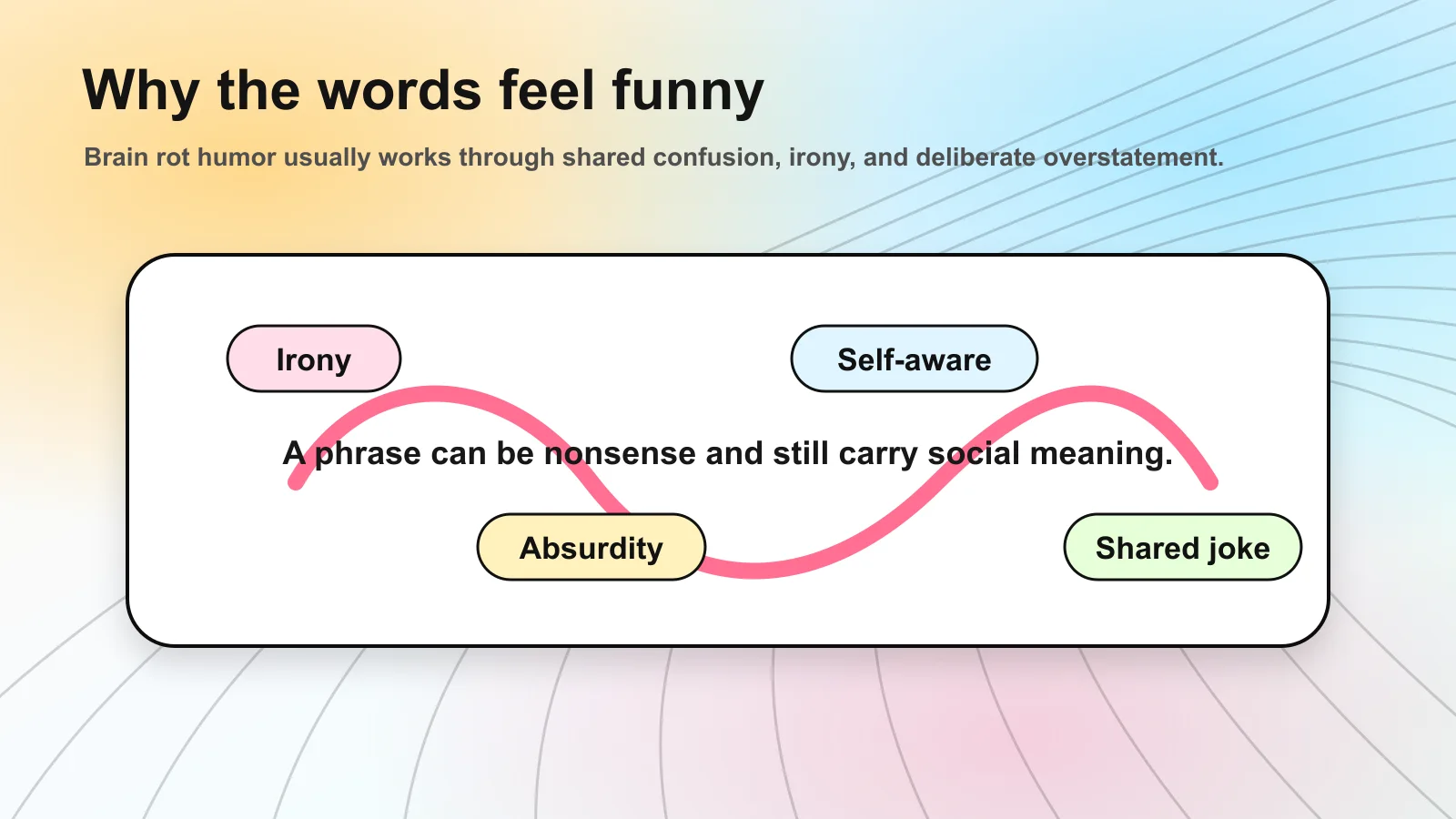
Ever catch yourself laughing at a meme packed with words you barely understand—or hear teens toss around phrases like “skibidi” or “goofy ahh” and wonder, “Is this comedy or chaos?” If so, you’re not alone. The list of brain rot words funny isn’t just a catalog of quirky slang—it’s a window into how the internet uses humor, irony, and self-deprecation to make sense of a language that’s always mutating.
Why Are Brain Rot Words So Funny?
Sounds strange? Imagine reading a meme that says, “Not the mosquito again!” or seeing someone comment “goblin mode” on a photo of a messy room. What makes these moments funny isn’t just the randomness—it’s the shared absurdity. According to the Game Quitters glossary, many brain rot terms are deliberately nonsensical or over-the-top, designed to poke fun at both the content and the people using them. Humor thrives on exaggeration, surprise, and inside jokes, all of which are at the heart of these viral words.
-
Irony and Satire: Phrases like “delulu” (delusional) or “cringe” often get tossed around in a tongue-in-cheek way, letting users call out their own awkwardness or poke fun at trends.
-
Self-Deprecating Humor: Saying you’re “in goblin mode” after a lazy weekend isn’t just an admission—it’s a way to laugh at yourself and invite others to join in.
-
Absurdity as Relief: When words like “skibidi” or “yeet” go viral, it’s often because they’re so ridiculous they break the monotony of everyday talk. The randomness itself becomes the joke.
Memes, Viral Moments, and the Comedy of Confusion
Memes are the playground where brain rot words truly shine. You’ll notice that the brain rot words list funny is filled with terms that started as meme punchlines or viral video captions. Here are a few classic examples:
| Funny Brain Rot Word | Comedic Context |
|---|---|
| “Goofy ahh” | Used to roast a silly dance, awkward selfie, or bizarre meme image. |
| “Not the mosquito again” | Inserted into threads about recurring annoyances, turning frustration into a running joke. |
| “Goblin mode” | Self-mockery for being lazy, unkempt, or indulging in comfort food—often with photos for proof. |
| “Delulu” | Playfully calling out someone’s wild hopes or conspiracy theories. |
| “Skibidi” | Used in surreal meme edits, often for maximum nonsense value. |
| “UwU” | Ironically expressing fake cuteness or exaggerated affection in meme replies. |
| “Yeet” | As a punchline for videos where someone throws an object dramatically. |
These words often appear in formats that exaggerate confusion or highlight just how quickly internet language changes. For instance, a meme might feature a bewildered parent faced with a barrage of slang, or a TikTok skit where someone tries (and fails) to use every trending word in one sentence. The joke is often on all of us—no one can keep up, and that’s what makes it so relatable.
Humor as a Coping Mechanism for Digital Overload
When language changes this fast, it’s easy to feel lost or left out. But humor helps us bridge the gap. By laughing at the absurdity of new slang, people find a way to connect, cope, and even critique the culture itself. As internet slang experts note, these jokes make digital life more human—and memorable—by turning confusion into a shared experience.
-
Memes using brain rot words often exaggerate their own silliness, inviting everyone to be “in on the joke.”
-
Self-deprecating humor (“I’m pure brain rot after this scroll session”) makes it easier to talk about digital burnout and distraction.
-
Parody accounts and skits use the rapid-fire pace of slang to lampoon internet culture itself, keeping the conversation light even as the language evolves.
So next time you see a list of brain rot words funny or stumble onto a meme that makes zero sense at first glance, remember: the laughter isn’t just about the words—it’s about finding joy (and a little sanity) in the chaos of the digital age. Up next, we’ll look at how parents can join the conversation, decode these terms, and even use humor to connect with younger generations.
The visual side of brain rot — meme formats, character archetypes, and the Italian brain rot phenomenon (skibidi, tralalero tralala, lirilì larilà) — gets its own deep dive in our brainrot memes overview.
A Parent's Crash Course in Brain Rot Terminology
Is brain rot bad for kids?
Most brain rot vocabulary is harmless cultural shorthand — language change is normal across generations. The concern, per Psychology Today, is rarely the slang itself but the screen-time patterns that produce heavy exposure. Some specific terms originate in problematic subcultures (looksmaxxing, mewing-as-serious-advice come from incel-adjacent communities) — knowing the origin helps you spot accidental endorsement vs. ironic usage.
What to Worry About
- Terms borrowed from manosphere or incel-adjacent forums (some looksmaxxing language carries underlying misogynistic ideology)
- Excessive screen time correlating with the slang exposure (the underlying habit, not the words)
- Cyberbullying contexts where slang is being used to name and target a specific person
What's Harmless Humor
- Most terms (e.g., "rizz," "no cap," "delulu," "cooked") are good-natured Gen Z cultural shorthand
- Generation-specific humor is normal — every cohort has had its own slang
- Knowing terms ≠ adopting underlying behavior; teens experiment with vocabulary far more than ideology
Sourced Perspective
Per Psychology Today, language change isn't deterioration — it's adaptation. The Oxford Word of the Year selection reflects a societal anxiety about media consumption patterns, not a verdict on the words themselves. Use this list to recognize, not to police.
How to Use Brain Rot Slang Without Sounding Cringe
The fastest way to spot someone who's not in the joke is when they use brain rot terms wrong. Five rules from observing what works:
- Match the audience's cohort. Gen Alpha (born ~2010+) uses different terms than Gen Z (born ~1997-2010) and Millennials. A term that's current to one age group can be passé or unknown to another.
- Avoid words past their viral peak. Brain rot terms typically have 3-to-6-month half-lives. By the time a term appears in major news outlets, it's usually fading among native users.
- Don't explain the joke. Context is the humor. If you have to define it for someone, you are not in the joke yet.
- Check origins before using. Some terms have problematic roots — manosphere, incel-adjacent subcultures, or specific cyberbullying contexts. Knowing the origin keeps you from accidental endorsement.
- Use sparingly. Overuse breaks the humor and reads as performative. Native speakers drop one or two terms into otherwise normal sentences — they do not speak in full brain rot.
Three ways NOT to use brain rot slang
- Don't translate it for an adult audience. Once translated, the joke evaporates. If the audience needs a glossary, switch register.
- Don't deploy ironically with the target cohort. If a Gen Alpha thinks you mean it sincerely while you think you are being ironic, you are the joke.
- Don't borrow heavily from problematic subcultures (looksmaxxing, mewing-as-serious-advice). Even if used ironically, repeated use signals familiarity readers may misread.
Beyond Single Words: Exploring Brain Rot Phrases and Future Speak
Ever feel like it’s not just the words, but the way people string them together that leaves you scratching your head? You’re not alone. As internet slang evolves, full phrases, sentence structures, and even meme-inspired expressions have become just as important as individual words. If you’re searching for a list of brain rot words and phrases, you’ll find that the most viral language trends are often multi-word catchphrases or sentence templates that morph with each new meme cycle.
Common Brain Rot Phrases: More Than Just Words
In practice, imagine scrolling through TikTok or Discord and seeing lines like, “It’s the [blank] for me,” or “Not the [thing] again!” These aren’t just random combos—they’re formulas that let users riff on shared jokes, poke fun at themselves, or react to the chaos of online life. Here are some of the most recognizable brain rot phrases you’ll encounter:
-
“It’s the [X] for me” – Used to highlight a specific trait or moment, often with sarcasm or affection. Example: “It’s the confidence for me.”
-
“Not the [X] again!” – Expresses mock annoyance or playful frustration about a recurring event. Example: “Not the mosquito again!”
-
“Goated with the sauce” – Means something is the best, with extra flair. Example: “That move was goated with the sauce.”
-
“Only in Ohio” – Used to describe anything bizarre, random, or uniquely strange. Example: “A shopping cart in a fast food drive-thru? Only in Ohio.”
-
“Did you pray today?” – A meme catchphrase for situations that seem wild or in need of divine intervention. Example: “Saw my bank account after the weekend—did you pray today?”
-
“Vibe check” – A quick assessment of mood or atmosphere. Example: “This party needs a vibe check.”
-
“Say less” – Means “I get it” or “no need to explain further.” Example: “You want pizza? Say less.”
-
“Main character energy” – Refers to acting like the star of your own story. Example: “She walked in with main character energy.”
How Do Brain Rot Phrases Evolve?
When you see these phrases everywhere, it’s not just coincidence—it’s the internet remixing language in real time. Most start as inside jokes, meme captions, or song lyrics, then get adapted, shortened, or twisted for new situations. The formulaic nature (“It’s the [X] for me”) lets anyone join in, making the trend feel inclusive and endlessly adaptable. Over time, some phrases fade, while others stick around or get reimagined with fresh twists for new platforms or communities.
Looking Ahead: The Future of Brain Rot Language
Curious what the current brain rot words list looks like in 2026? Recent trends showed even wilder phrases, more absurd mashups, and a growing blend of AI-generated memes and human creativity. As digital platforms evolve, new forms of communication—like interactive video memes or real-time group chats—will likely spawn their own slang templates and viral catchphrases. You might see:
-
AI-driven phrase generators creating custom meme sentences
-
Hybrid language mixing emojis, GIFs, and text in single “sentences”
-
Global slang crossovers as trends jump from one culture or language to another
-
Even more self-aware, ironic, or meta expressions
What’s clear is that brain rot language isn’t slowing down—it’s mutating faster than ever, fueled by the creativity (and short attention spans) of a hyper-connected generation. So, whether you’re trying to keep up as a parent, teacher, or just a curious web explorer, remember: today’s viral phrase could be tomorrow’s mainstream lingo, and the next big meme might be just a scroll away.
As we wrap up, let’s recap the key takeaways about brain rot words and why staying informed—without getting overwhelmed—matters in this wild world of digital slang.
Conclusion
Ever feel like you’re drowning in a sea of new slang, memes, and viral phrases? You’re not alone. The explosion of brain rot words—from “skibidi” to “rizz”—is a sign of just how quickly online language evolves. But what does all this really mean for you, and how can you keep up without losing your focus?
What Is the Real Meaning Behind Brain Rot Words?
Let’s break it down. Brain rot words meaning isn’t about medical diagnosis or scientific decline—it’s a playful, self-aware label for the mental fuzziness or distraction you might feel after hours of scrolling through low-value, repetitive, or absurd online content. The phrase has roots in 19th-century literature, but today it’s a badge of digital belonging, a running joke, and a way to talk about the sometimes overwhelming pace of internet culture (Oxford Word of the Year 2024).
-
Origins: From Thoreau’s critique of simple ideas to TikTok’s viral memes, brain rot language has always reflected the tension between entertainment and meaningful engagement.
-
Cultural Significance: The rise of the brain rot words list shows how digital natives use humor, irony, and shared language to connect, cope with stress, and make sense of a chaotic online world.
-
Why It Matters: Whether you’re a parent, educator, or just a curious reader, understanding these words helps you decode conversations, build bridges across generations, and stay plugged in to the latest trends.
How to Stay Informed—Without Getting Overwhelmed
Sounds impossible? Actually, it’s all about balance. The internet will always keep inventing new phrases, but you don’t have to memorize every single one. Instead, try these strategies:
-
Bookmark a living brain rot words list: Use digital glossaries or keep your own running document for quick reference.
-
Ask questions and stay curious: If you hear a new word, don’t hesitate to ask what it means—most people enjoy sharing their knowledge.
-
Set boundaries for screen time: Take regular breaks from scrolling to reset your focus and avoid digital overload.
-
Use organizational tools: When research projects or content creation feel chaotic, structured planners like the AFFiNE ADHD-Friendly Pomodoro Dashboard can help you corral new terms, schedule learning sessions, and track your progress. With features like cross-device syncing, visual dashboards, and habit tracking, you’ll turn digital chaos into clear, manageable steps—making it easier to enjoy the fun side of brain rot culture without feeling lost.
Final Thoughts: Embrace the Change, Find Your Balance
When you look at the journey of brain rot words—from niche meme slang to Oxford Word of the Year—it’s clear that internet language is more than a passing fad. It’s a living, breathing reflection of how we connect, laugh, and adapt in a digital age. Staying informed is valuable, but so is protecting your peace of mind. By using smart strategies and the right tools, you can enjoy the creativity and humor of online trends—without letting them take over your time or attention.
So, next time you stumble across an unfamiliar phrase, remember: it’s not just a word—it’s a window into the culture of the moment. Stay curious, stay organized, and don’t be afraid to laugh at the absurdity of it all. The world of brain rot words will keep changing, but with intention and a little help from digital planning tools, you can navigate it with confidence and clarity.
Want to test what you have just read? Try our brain rot vocabulary quiz to see whether you can match terms to their meanings without scrolling back up.
Frequently Asked Questions About Brain Rot Words
Is brain rot bad for kids?
Most brain rot vocabulary is harmless cultural shorthand and language change is normal across generations. Psychology Today's analysis frames the concern as screen-time patterns rather than the slang itself. Some specific terms (looksmaxxing, mewing as serious advice) originate in incel-adjacent communities and warrant origin-checking before use; most other terms (rizz, no cap, delulu) are good-natured Gen Z shorthand.
What was the first brain rot word to go mainstream?
Oxford University Press traces the modern slang sense of "brain rot" to early-2010s online discussion forums, with the major viral crossover happening 2023-2024 via TikTok For You pages. The selection as 2024 Oxford Word of the Year confirmed the term's transition from internet subculture to mainstream media.
1. What are some Gen Z brain rot words?
Gen Z brain rot words include terms like skibidi, rizz, gyatt, fanum tax, sigma, no cap, bussin, and delulu. These words are often used in social media and meme culture to express humor, trends, or group identity. Their meanings can shift quickly, so staying updated is key to understanding online conversations.
2. What does 'brain rot' mean in internet slang?
In internet slang, 'brain rot' refers to the feeling of mental overload or distraction from consuming repetitive, low-value, or absurd online content. It is often used humorously to describe the effects of binge-watching viral videos or memes, and the slang associated with it reflects the fast pace and creativity of digital culture.
3. How can parents keep up with brain rot words?
Parents can stay updated by keeping a running list of new slang, asking their children about unfamiliar words, and using digital tools like the AFFiNE ADHD Planner Template. This planner helps organize and track new terms, making it easier to discuss internet trends and maintain open communication about digital habits.
4. Why do brain rot words go viral so quickly?
Brain rot words spread rapidly due to platforms like TikTok, where viral challenges, influencer trends, and algorithm-driven feeds amplify new slang. Meme culture and short attention spans also contribute, as catchy or absurd terms are easy to share and adapt across social media communities.
5. What is the significance of 'brain rot' being Oxford's Word of the Year?
When 'brain rot' was named Oxford's Word of the Year, it highlighted how digital slang can reflect broader cultural trends. This recognition shows that internet language is shaping mainstream vocabulary and sparking conversations about technology's impact on communication and mental well-being.