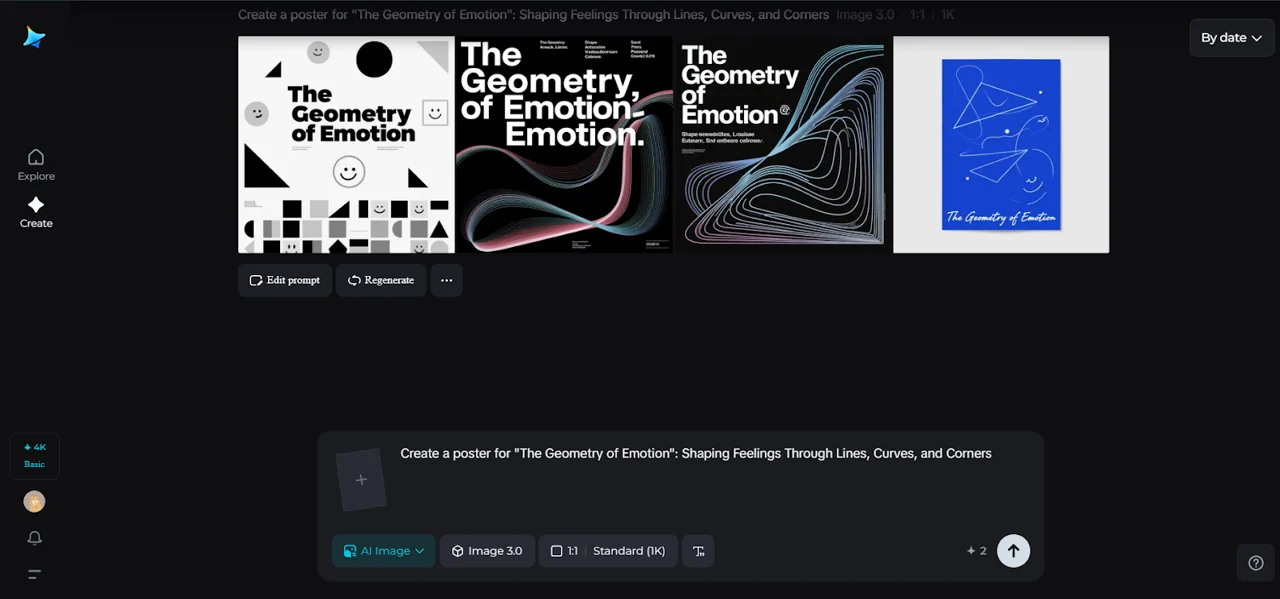
The Geometry of Emotion: Shaping Feelings Through Lines, Curves, and Corners
What if how you feel about a brand isn't influenced by its copy or colours — but by its geometry? The subtle swoop of a logo, the tilt of a layout, the rhythm of lines and whitespace — all communicate with the subconscious first, before words. Shapes are emotional syntax, and designers have been writing feelings in geometry for centuries before pixels replaced pencils.
Now, this emotional mapping has achieved a new sort of precision. Software such as Dreamina's AI photo generator enables designers to map visual feeling through geometry with surgical delicacy — testing the limits of how a subtle shift in symmetry, or a blunted edge, can alter the mood of a whole campaign. A circle could be warmth; a diagonal could hint at movement; a square could assure stability. Each is a beat in visual rhythm.
Geometry is the unseen grammar of design — it determines whether a spectator is relaxed or intrigued, comforted or stimulated, before they realize why.
The emotional map of shape
All shapes have psychological heft. Our minds developed to interpret them subliminally:
-
Circles are soothing and nurturing — they recall human faces, heavenly bodies, and cycles of continuity.
-
Triangles imply movement and direction — ideal for energy, drive, and transformation.
-
Squares and rectangles communicate stability and dependability — a basis for trust and structure.
-
Curves calm; angles provoke; symmetry comforts; asymmetry stimulates.
When applied in design, these forms become emotional triggers. A curvaceous font blunts a technology brand's austerity. A diagonal grid infuses a fashion brand with vitality. A symmetrical logo creates immediate trust before anyone reads a slogan.
Geometry is emotional engineering — it makes the viewer feel design before he/she thinks about it.
The dance of logic and empathy
Excellent design dances between math and mood. The grid is strict, but the emotion it evokes is liquid. Designers deploy geometry not as ornament, but as choreography — directing where the eyes move and how the heart feels.
Even small compositions narrate. A single circle amidst a field of white can be meditative or sad. Two intersecting diagonals can convey conflict or convergence. These are not just images — they're emotional equations.
In advertising, such equilibrium manifests as storytelling in motion. A beauty brand may employ soft curvature to imply care, while a sport brand embraces diagonals to imply strength and speed. Geometry turns into tone — not merely design.
How geometry builds brand personality
Geometry is one of the oldest branding languages. Way before slogans, merchants stamped their products with geometric patterns and seals to identify ownership and trustworthiness. The same applies today.
A contemporary brand can express its personality exclusively in shape:
-
Luxury brands depend on symmetry and restrained geometry — elegance through restraint.
-
Technology brands tend to employ angular precision, smartness, and advancement.
-
Wellness brands like circular harmony — wholeness and equilibrium.
-
Creative brands live on asymmetry — spontaneity and experimentation.
Even spacing, margins, and alignment fuel emotion. The more constrained the geometry, the tenser the tension. The looser, the more relaxed the feeling. This hidden architecture sets the tone for how audiences view trust.
No wonder, therefore, that designers use the AI logo generator to test out geometric identities — apply it to see how different psychologies of shape can turn the same brand name into radically different personalities. A circle could make a logo feel conversational; a triangle could make it feel like climbing.
Lines as language
Lines are feeling sentences. Horizontal lines anchor us — they bring forth peace, horizons, and quiet. Vertical lines elevate — they convey growth and aspiration. Diagonal lines convey movement and tension and therefore work well for brands that wish to generate energy.
Designers tend to incorporate these emotional geometries in posters, advertising, and packaging to control the movement of the eye, much like rhythm in music. It's not where you're looking — it's where your eyes go.
A single diagonal across a serene composition can add pulse. A curve across a grid can add humanity. Every tweak shifts the duration that the viewer remains — and how much they engage.
Designing emotion through geometry with Dreamina
Dreamina empowers designers to explore the emotional impact of shape — bridging abstract geometry with visual storytelling. It connects rationality and emotion — allowing creators to create a sense of emotional equilibrium with shape, symmetry, and form derived from motion.
Step 1: Generate a text prompt
Start by using Dreamina and create a rich description of your geometric disposition. Think of your prompt as emotional architecture — describe the shapes, balance, and atmosphere rather than being too literal about the subjects.
For example: A minimal geometric poster design made of overlapping transparent circles, with diagonal cuts, and gently lit in muted tones, creating the feeling of harmony with tension.
Such descriptive language activates Dreamina to interpret emotional intent from language to visual geometry, so the work produced carries psychological nuance.
Step 2: Tweak parameters and generate
Now make it finer by selecting model, aspect ratio, size, and resolution — 1k for sketches or 2k for detailed renderings. All parameters affect emotional clarity: square enhances balance, widescreen adds openness and flow. After setting the parameters, click Dreamina's icon to make. In a matter of seconds, your idea is born — geometric forms creating emotional rhythm, from calm symmetry to dynamic tension.
Step 3: Refine and download
Use Dreamina's inpaint, expand, remove, and retouch features to boost mood and composition. Soften edges to create calm, extend diagonals to imply movement, or even out corners for a grounded appearance. When you're happy with your emotional geometry, click the Download icon to download your design — ready to live as a poster, ad concept, or brand visual.
Emotional architecture in visual storytelling
Geometry is not only form — it's storytelling. Every line, every curve, every angle speaks a part of the emotional story of a brand. Designers can utilize this architecture to inform not only what one sees, but how one feels about what one sees.
A square composition in a spare poster could imply subdued confidence. A spiral implies intrigue and growth. Subtle asymmetry can retain a viewer's focus by appealing to the human tendency to seek equilibrium.
The silent emotion beneath the grid
When color and geometry combine, emotion is heightened. A red triangle is tough; a blue circle is calming. This specificity provides brands remarkable leverage — the power to dictate emotional pacing through form alone.
And this is where tools such as the AI image editor take the craft deeper — enabling gradients, contours, and shadows that lend geometry its tactile heart. A gently rounded corner can make an otherwise corporate look more human. A sharp alignment of diagonal lines can create harmony out of chaos.
The hidden feeling behind the grid
The elegance of geometric design is restraint. It does not scream, it hums. Under every grid and alignment exists a quiet emotional undertow — one that directs perception and memory.
A well-designed geometric composition is inevitable, as if it could be no other way. That's the emotional authority of precision — serenity derived from structure, faith created through logic.
The other time you notice a poster, advertisement, or logo that simply feels right, observe. More often than not, geometry is quietly doing the emotional work in the background — taming the chaos, bearing the mood, and defining your view without saying a word.
Emotion, by design—fueled by Dreamina
In design, emotion does not derive from decoration — it arises from structure. Geometry provides emotion with a framework, a rhythm, a pulse. It is why a square can feel safe, a curve can feel nurturing, and a diagonal can feel adventurous.
Dreamina enables designers to navigate these intangible emotions through form — connecting intuition and technology, letting feelings find shape with clarity and precision.
Because when geometry turns into emotion, seeing is no longer an option — feeling takes over.