5 Online Homework Tracker Apps For Students 2026
Starting a new semester brings a chaotic mix of syllabi, conflicting deadlines, and GPA pressure. While most students instinctively search for a quick Google Sheet assignment tracker template or a stylish Notion assignment tracker template, these standard tools often fail to handle the dynamic nature of academic life.
For students who want planning plus understanding, pair a tracker with the AI Homework Helper and a step-by-step AI math solver so assignments turn into review notes instead of one-off answers.
Are they truly the most effective way to manage your workload?
If you are looking for the best assignment tracker for college, simply downloading a static grid isn't enough—you need a complete workflow. In this guide, we will analyze the most common assignment tracker templates available today and compare their pros and cons to help you find a system that actually works.
The Science Behind the Stress: The Zeigarnik Effect
Before we dive into templates, it is important to understand why your brain feels overwhelmed. Psychologists refer to this as the Zeigarnik Effect—the psychological phenomenon where uncompleted tasks take up more mental space than completed ones.
When you keep deadlines in your head, your brain remains in a state of constant, low-level anxiety. By offloading these dates into a reliable assignment tracker, you are literally freeing up cognitive resources for studying rather than remembering. This is why a digital system is superior to memory alone.
The Current Landscape of Assignment Tracker Templates
Before you commit to a system for the next four months, let's look at the standard options students typically use when searching for an online assignment tracker.
1. The Google Sheets Assignment Tracker Template
For years, the spreadsheet has been the gold standard for organization. A quick search for "google sheets assignment tracker template free" yields millions of results.
-
How it works: You have rows for assignments and columns for due dates, subjects, and status. You might use conditional formatting to turn a cell red when a deadline is close.
-
The Good: It is familiar. Everyone knows how to use a spreadsheet. It handles data and sorting very well.
-
The Bad (Why students quit):
-
Spreadsheet Fatigue: Staring at a grid of 500 rows is visually exhausting. It looks like work, not a plan. It lacks the visual engagement needed for a student assignment tracker.
-
No Workflow: You can't "move" a task. It’s static. You can’t easily see what you need to do today versus next month without constantly applying filters.
-
Mobile Experience: Have you ever tried to update a complex Google Sheet assignment tracker template on your phone while walking to class? It’s a nightmare of pinching and zooming.
2. The Notion Assignment Tracker Template
Notion has taken the student world by storm. It’s aesthetic, customizable, and powerful. Searching for an assignment tracker Notion template free is almost a rite of passage for college freshmen.
-
How it works: It uses databases that can be viewed as lists, boards, or calendars.
-
The Good: It’s beautiful. You can make it look exactly how you want with covers and icons.
-
The Bad (Why students quit):
-
The "Builder's Trap": Students often spend more time designing their template than actually doing their homework. The learning curve is steep.
-
Online Dependency: This is the dealbreaker. Notion is cloud-based. If your campus Wi-Fi is spotty, or you’re in a lecture hall with no signal, your Notion assignment tracker template is inaccessible. You can't check your assignment due date tracker when you need it most.
-
Performance: As your database grows with a whole semester's worth of content, it can become slow and laggy on mobile devices.
3. The Basic PDF/Paper Template
- The Bad: We won't spend much time here. In 2026, a static PDF assignment tracker template free of automation is simply not enough. If a professor changes a due date (which they always do), your paper tracker becomes a messy scribble.
Why AFFiNE is the Superior Alternative
You shouldn't have to choose between the data power of Google Sheets and the visual beauty of Notion. You also shouldn't have to rely on stable Wi-Fi to know what homework is due.
Enter AFFiNE.
AFFiNE is an Open Source, all-in-one workspace that solves the specific frustrations students have with generic tools. Built on robust technologies like BlockSuite and OctoBase, it ensures your data is yours forever.
1. The "Local-First" Advantage
Unlike a Notion assignment tracker template, AFFiNE stores your data on your device.
-
Offline Access: You can open your assignment tracker app, check off tasks, and write notes in a basement library with zero signal. It syncs automatically when you’re back online.
-
Privacy: Your academic data belongs to you, not a cloud server. This is crucial for privacy-conscious students looking for a task assignment tracker.
2. Multimodal Views (The Best of Both Worlds)
With a Google Sheet assignment tracker template, you are stuck with a grid. With AFFiNE, your data is fluid.
-
Table View: Use this for the "Syllabus Sweep" (entering all data rapidly).
-
Kanban View: Switch to this to visualize your workflow (To Do -> Doing -> Done).
-
Calendar View: Switch to this to see your monthly deadlines as a proper assignment tracker calendar.
-
Whiteboard Mode: Zoom out to mind-map your essay topics right next to the due date card.
3. Integrated Note-Taking
In Excel, a cell is just a cell. In AFFiNE, every task in your assignment tracker template is a document. You can click "Open" on your "History Essay" task and start writing your draft inside the task card. No more switching between apps.
Free AFFiNE Assignment Tracker Templates (Download Now)
We have curated specific templates from our Template Gallery to cater to different learning styles. You don't need to build these from scratch—just copy them to your workspace.
Template A: The "Weekly Kanban" Tracker
Best For: Visual learners and procrastinators who need momentum.
Why Visual Tracking Works?
Why choose a Kanban board over a simple list? According to research on visual information processing, the human brain processes images significantly faster than text.
A study by the Social Science Research Network suggests that 65% of the population are visual learners. Using a visual weekly assignment tracker allows you to instantly recognize bottlenecks (e.g., a piled-up "In Progress" column) without having to read every single row. This visual cue helps you prioritize effectively and reduces the "cognitive load" of planning.
This template functions similarly to a Weekly Schedule Template but is optimized for academic deliverables.
-
Structure:
-
Columns: Backlog, This Week, Today, In Progress, Completed.
-
Properties: Subject Tag, Priority (High/Med/Low).
-
Why it works: Instead of seeing a scary list of 100 items, you only focus on the "Today" column. Dragging a card to "Completed" releases dopamine and keeps you motivated.
Template B: The "Master Syllabus" Database
Best For: Students who love data and structure (The Google Sheets converts).
If you are looking for a robust Academic Planner, this is the one. It mimics the data density of a spreadsheet but adds rich text and tagging.
-
Structure:
-
View: Detailed Table View.
-
Columns: Assignment Name, Course Code, Due Date, Type (Exam/Paper/Lab), Status, Grade Received.
-
Why it works: It acts as your central source of truth. It allows for complex sorting—for example, "Show me all EXAMS due in OCTOBER."
Template C: The "Exam Countdown" Calendar
Best For: Big-picture thinkers and those managing multiple heavy deadlines.
This template helps you build a dedicated Exam Prep Study Planner.
-
Structure:
-
View: Monthly Calendar.
-
Features: Color-coded by subject.
-
Why it works: It prevents you from being blindsided. You can see at a glance that the third week of November is "Hell Week" and start preparing now.
How to Customize Your Template (Step-by-Step)
Searching for "how to make an assignment tracker" or "how to create an assignment tracker"? Downloading a free assignment tracker template is just the start. Here is how to make it yours using AFFiNE’s flexible features.
Step 1: Import Your Syllabus
Don't add tasks one by one as they come up. Take 2 hours at the start of the semester. Open your Master Syllabus Template (Table View) and input every single date from every course syllabus. This creates your baseline class assignment tracker template.
Step 2: Set Up Smart Tags & Goals
In AFFiNE, you can create custom tags.
-
By Class: Create a tag for each course (e.g., #CS101, #ENG202) and assign a color.
-
By Goals: Integrate a Smart Goal Template approach. Tag assignments by the grade you aim to achieve (e.g., "Must get A").
-
By Energy Level: This is a pro tip. Add tags like #QuickTask (15 mins) or #DeepFocus (2 hours). When you have 20 minutes between classes, filter your assignment progress tracker by #QuickTask and knock one out.
Step 3: Link Your Resources (The Web Clipper)
This is where AFFiNE destroys the competition. Do not just write "Read Chapter 4."
Use the AFFiNE Web Clipper to save the online textbook link or PDF directly into your assignment card.
-
Intelligent Capture: Automatically capture article content along with key details.
-
Context in One Place: Keep your bibliography and your due date tracker side-by-side.
Now, your assignment tracker website isn't just a list; it's your study hub.
Step 4: Integrate Note-Taking
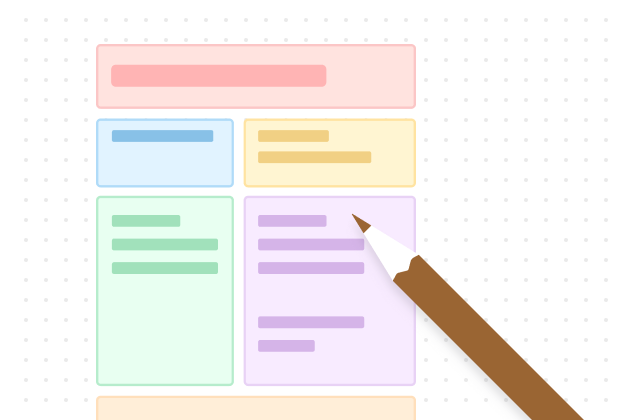
Don't separate your planning from your learning. We recommend integrating note-taking directly into your tracker using the Cornell method. Developed by Cornell University, this system forces you to condense and summarize information, which has been proven to improve long-term retention. This allows you to take structured notes on the reading assignment right where you track the deadline.
Instead of having a detached schedule, using AFFiNE's Cornell Notes Template inside your assignment card ensures that your planning and your learning happen in the same context.
Advanced Tips for Maintaining Your Tracker
A template is only as good as the habit behind it. Here is how to ensure you actually use your assignment tracker planner.
The "Sunday Review" Ritual
Every Sunday evening, open your tracker.
-
Look at the "Master List."
-
Drag tasks due this week into the "This Week" column of your Kanban board.
-
Check the dates. Did a professor extend a deadline? Update it now.
Handle "Floating" Assignments
Some professors say "Read this sometime before the final." These are dangerous. In your assignment tracker template free setup, assign these a fake due date (e.g., two weeks before the final) so they don't get lost in the void.
Collaborative Group Projects
If you have a group assignment, you don't need a separate tool.
-
Create a specific page in AFFiNE for the project.
-
Share it with your group mates via the AFFiNE Community collaboration features.
-
Assign tasks to different people. AFFiNE supports real-time collaboration, effectively turning your personal student assignment tracker into a project management tool.
Conclusion
The search for the perfect assignment tracker template often leads to "Analysis Paralysis." You spend hours looking at pretty Notion templates or complex Google Sheets, but you never actually start working.
AFFiNE offers the perfect middle ground: the structure of Excel, the visual appeal of Notion, and the offline reliability of a native app.
Stop overcomplicating your semester.
-
Download AFFiNE for free on Mac & Windows or iOS & Android.
-
Select a Template from the gallery.
-
Start Tracking and get back to studying.
FAQ: People Also Ask
Q: Is there an assignment tracker for homeschool?
A: Yes. The flexibility of AFFiNE makes it an excellent homeschool assignment tracker. Parents can set up the curriculum using the Academic Planner template, and students can check off their daily assignment tracker tasks independently.
Q: What is the best free assignment tracker app?
A: For 2026, AFFiNE is one of the best assignment tracker app because it combines assignment tracker free features with offline capabilities, making it superior to cloud-only tools like Notion for students with unreliable internet.
Q: How do I create an assignment tracker fast?
A: The fastest way is to not build from scratch. Use a pre-made class assignment tracker template from AFFiNE. Simply import it to your workspace and start typing your syllabus.