Create A Morning Routine Planner Spread That Actually Sticks
What Is a Morning Routine Planner Spread and Why It Matters
Picture this: You wake up, grab your phone, and suddenly thirty minutes have vanished into a scroll hole. Your coffee gets cold. You rush through getting ready. The entire day feels like you're playing catch-up. Sound familiar? Now imagine the opposite—opening your eyes with a clear roadmap for your first few hours, moving through each task with intention, and starting work already feeling accomplished. The difference between these two scenarios often comes down to one strategic tool: a morning routine planner spread.
A morning routine planner spread is a dedicated page (or set of pages) in your daily planner or productivity planner specifically designed to capture and guide the critical first hours of your day. Unlike a general daily calendar that tracks appointments from morning to night, this spread zeroes in on your wake-up-to-work window with laser focus. It's not just a decorative page with pretty headers—it's a functional command center for your mornings.
What Makes Morning Spreads Different from Daily Planners
Here's where most planning resources miss the mark. They lump morning routines into standard day planner layouts, treating 6 AM the same as 3 PM. But your morning hours operate differently. They set the psychological tone for everything that follows.
A traditional daily planner gives equal weight to every hour. A morning routine spread, however, expands those first few hours into detailed, actionable segments. Think of it this way: your standard business planner might show "morning routine" as a single time block. A dedicated morning spread breaks that down into specific elements—hydration, movement, mindset work, preparation tasks—each with its own space and tracking mechanism.
According to bullet journal experts, morning routines look different for each person and even for different days for each person. Your workday morning differs from your weekend morning. Your in-office days differ from remote days. A dedicated spread accommodates these variations in ways a generic daily calendar simply cannot.
The Strategic Purpose Behind Your First Page of the Day
Why dedicate precious planner real estate specifically to mornings? Because these hours determine your trajectory. A morning spread serves multiple strategic purposes:
• Decision elimination: You've already decided what happens when you wake up, freeing mental energy for bigger challenges
• Habit reinforcement: Visual tracking of morning behaviors builds consistency over time
• Flexibility planning: Built-in alternatives for when you oversleep or face unexpected disruptions
• Progress visibility: You can actually see your morning routine evolving and improving
This guide takes a methodology-first approach. You'll learn not just what elements to include in your spread, but why certain layouts work better for morning productivity. Whether you prefer paper planning or digital tools, whether you're a business planner type who schedules in 15-minute blocks or someone who needs looser structure—the principles remain the same. Functional effectiveness comes first. Visual appeal follows naturally when the system actually works.
Ready to transform chaotic mornings into intentional ones? Let's build a spread that doesn't just look good in your planner—it actually sticks.
The Science Behind Effective Morning Routine Planning
You might wonder whether a morning routine planner spread is just another productivity trend or something backed by real evidence. Here's a compelling data point: research shows that a consistent morning routine could boost your annual income by $12,500. That's not a typo. Structured mornings correlate directly with higher productivity outcomes, better decision-making, and improved overall performance throughout the day.
But why does putting your morning routine on paper—rather than just keeping it in your head—make such a difference? The answer lies in how your brain forms and maintains habits. Understanding this neuroscience transforms your spread from a pretty page into a powerful behavior-change tool.
How Visual Planning Reinforces Morning Habits
Every habit follows the same neurological pattern: cue, routine, reward. According to neuroscience research, your brain links these three elements together over time, eventually making behaviors feel automatic and almost effortless. A morning routine planner spread leverages each part of this loop deliberately.
When you open your planner each morning, the visual layout itself becomes your cue. The act of checking off completed tasks delivers an immediate reward—that satisfying feeling of progress. And the routine? It's mapped out right in front of you, eliminating the mental effort of figuring out what comes next.
Over time, your brain starts to associate the cue with the reward, making the behavior feel automatic—almost effortless.
This matters especially for your mornings because willpower depletes throughout the day. Those first waking hours offer your freshest mental energy. A visual spread captures that advantage by removing friction. You're not deciding what to do—you're simply following the path you've already created.
Consider using the daily grind planner approach: treat your morning spread as a habit tracker printable that shows patterns over weeks, not just single days. When you see a streak of completed morning tasks, your brain receives stronger reinforcement than any single checkmark provides.
The Cognitive Science of Routine Tracking
Here's something fascinating about writing things down: research on journaling and structured reflection shows it improves clarity and momentum by reducing decision fatigue. Each choice you make—even tiny ones like "should I exercise before or after breakfast?"—draws from a limited daily supply of mental energy.
Your morning routine spread pre-makes those decisions. You've already determined the sequence. You've already allocated time blocks. The cognitive load drops dramatically when you wake up because the thinking happened yesterday, not at 6 AM when your brain is still warming up.
This principle extends to tracking your daily habit completion. The best daily planner systems include visual elements—checkboxes, progress bars, or simple tally marks—that provide instant feedback. Studies show that even five to ten minutes of structured reflection delivers measurable mental health benefits. Imagine what consistent morning tracking does over 30, 60, or 90 days.
Simplicity increases follow-through. Keep it simple and create a daily ritual of a short daily reflection.
The time blocking template approach works particularly well here. When you assign specific minutes to each morning activity, you create what researchers call "implementation intentions." Instead of vaguely planning to meditate, you've written "6:15-6:25: meditation" in your spread. This specificity dramatically increases your likelihood of actually doing it.
There's another layer to this: accountability through visibility. When your morning intentions exist only in your mind, skipping them feels invisible. When they're written in your daily grind planner spread with an empty checkbox staring back at you, the accountability becomes tangible. You're making a commitment to yourself in ink.
The science is clear—visual planning doesn't just organize your mornings, it literally rewires neural pathways for consistent behavior. Now that you understand why this works, let's explore which format will work best for your specific planning style.
Choosing Your Morning Spread Format
Before you grab your pens and start designing, here's a question worth sitting with: What kind of morning planner are you? Some people thrive with simple checkboxes. Others need every minute mapped out. Still others want to track patterns over weeks rather than manage individual days.
Choosing the wrong format leads to abandoned spreads and frustrated mornings. Choosing the right one? That's where the magic happens. Let's break down the four main approaches so you can match your planning style to a format that actually works for you.
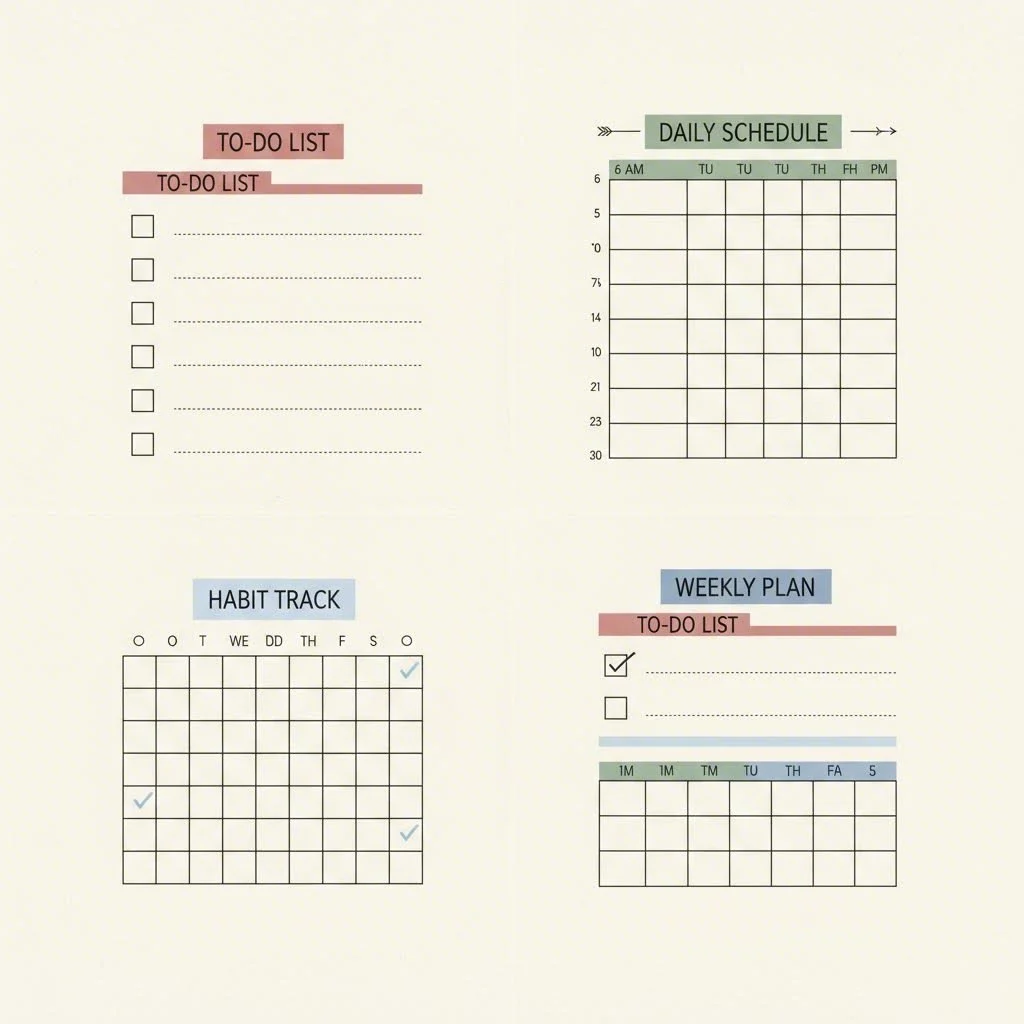
| Format Type | Best For | Time Investment | Flexibility Level | Ideal User Profile |
|---|---|---|---|---|
| Checklist | Quick task completion | Low (2-3 min setup) | High | Task-oriented people who want simple accountability |
| Time-Block | Minute-by-minute structure | Medium (5-10 min setup) | Low to Medium | Those who need external structure or tend to lose track of time |
| Tracker | Long-term habit building | Low daily, Medium weekly | Medium | Pattern seekers who want to see progress over weeks |
| Hybrid | Comprehensive coverage | High (10-15 min setup) | Medium to High | Detail-oriented planners who want multiple views |
Checklist Spreads for Quick Morning Wins
If you're drawn to the simplicity of a to do list format, checklist spreads might be your perfect match. Research on to-do list effectiveness shows that checking off completed tasks creates a positive psychological effect—it boosts motivation by providing a sense of accomplishment and encourages you to tackle more items.
A checklist morning spread lists your essential tasks in order without assigning specific times. Wake up, grab your planner, and work through each item:
• Drink water
• Stretch for 5 minutes
• Review daily priorities
• Eat breakfast
• Get dressed
The beauty here is flexibility. If you wake up late, you simply skip or shorten items rather than reworking an entire schedule. The downside? To-do lists often lack specific time allocations, which can lead to poor time management if you underestimate how long tasks actually take. For mornings with hard deadlines—like catching a train at 7:45—pure checklists might leave you scrambling.
Checklists work best when your morning tasks are relatively quick and interchangeable. If you can do them in almost any order and don't have strict time constraints, this format offers maximum ease with minimum friction.
Time-Block Layouts for Minute-by-Minute Control
Now imagine the opposite approach. An hourly planner layout breaks your morning into specific time slots, showing exactly when each activity happens. This is scheduling on steroids—and for some people, it's exactly what they need.
The concept of planning your days in five-minute increments has been widely discussed in productivity circles, though even proponents acknowledge it requires significant preparation. When tested, this approach helped users cut out unnecessary distractions and get tasks done faster because knowing they only had a set time really focused their minds.
A time-block morning spread using an hourly schedule template might look like:
• 6:00-6:10 — Wake up, hydrate
• 6:10-6:30 — Exercise
• 6:30-6:45 — Shower
• 6:45-7:00 — Breakfast
• 7:00-7:15 — Review schedule, pack bag
• 7:15-7:30 — Commute prep, leave house
This daily hourly planner approach works brilliantly when you need external structure to stay on track. If you tend to lose yourself in one activity (like that "quick" social media check that becomes 20 minutes), time blocks create guardrails. The hourly planner template keeps you honest about where your minutes actually go.
However, this format has lower flexibility. When unexpected things happen—a child needs attention, you oversleep, traffic changes—you're constantly adjusting the entire schedule. Even productivity experts note that this approach can feel frustrating initially as you learn exactly how long things take. Consider leaving blank space in your time table chart to allow breathing room.
Tracker Format for Pattern Seekers
What if your goal isn't managing a single morning but building lasting habits over time? The tracker format takes a different angle entirely. Instead of planning today's morning in detail, you're recording completion across weeks or months.
A tracker spread might show a grid with your morning habits listed vertically and dates running horizontally. Each day, you simply mark whether you completed each habit. Over time, patterns emerge. You notice you always skip meditation on Mondays. You see that your exercise streak is strongest when you wake before 6:30.
This format answers different questions than checklists or time-blocks. It's less about "what should I do right now?" and more about "am I actually building the morning routine I want?" The habit tracker printable approach works particularly well for people who respond to visual streaks and don't need moment-by-moment guidance.
The tradeoff is that trackers alone don't help you navigate a chaotic morning in real-time. They're accountability tools, not action guides. Many people pair trackers with one of the other formats for comprehensive coverage.
Hybrid Approaches for Comprehensive Coverage
Can't decide? You don't have to. Hybrid morning spreads combine elements from multiple formats, giving you both daily guidance and long-term visibility.
A popular hybrid approach includes:
• A checklist section for essential tasks
• Time anchors for critical deadlines ("must leave by 7:30")
• A small tracker grid for weekly habit visibility
• Space for notes or reflections
Professional organizers suggest that planners with bells and whistles—like to-do checklists combined with space for each week's priorities—let detail-oriented users flex their planning muscles by considering both the big picture and the nitty gritty. A Day Designer style approach, for instance, offers dated pages with timed slots plus checkbox areas plus gratitude sections.
Hybrids require more setup time and more planner space. But for those who find single-format spreads lacking, they provide the comprehensive morning command center that actually sticks. You get flexibility where you need it and structure where it helps.
Matching Your Format to Your Planning Personality
Still unsure which format fits? Ask yourself these questions:
• Do you tend to underestimate how long tasks take? Time-blocks force realistic time awareness.
• Do you abandon systems that feel too rigid? Checklists offer maximum flexibility.
• Are you building new habits rather than managing existing ones? Trackers show progress over time.
• Do you want to see everything in one place? Hybrids provide comprehensive views.
There's no universally "best" format—only what works best for you. As planning experts note, the best planner is one you look at and reference consistently. Sometimes starting with scratch paper to establish the habit before investing in elaborate spreads makes sense.
Now that you've identified your ideal format, let's walk through exactly how to build your first morning spread from scratch—step by step.
Step-by-Step Guide to Creating Your First Morning Spread
You've chosen your format. You understand the science. Now comes the hands-on part—actually building your morning routine planner spread from scratch. This is where most guides fall short, offering inspiration without instruction. Not here. Whether you're working with a blank notebook page or searching for the right daily planner template, this walkthrough gives you a repeatable process that works.
The secret to spreads that stick? Start with reality, not aspirations. Too many people design beautiful morning pages based on their ideal self, then abandon them within a week because they don't match actual life. Follow these six steps in order, and you'll create something both functional and sustainable.
-
Audit your current morning (time and tasks)
-
Identify non-negotiable elements
-
Choose your format
-
Add tracking elements
-
Include flexibility buffers
Starting with Your Morning Audit
Before you touch your planner templates or grab your favorite pens, spend three to five days simply observing. What time do you actually wake up—not your ideal time, but real life? How long does each activity genuinely take? Where do you lose minutes without realizing it?
Experienced bullet journal creators emphasize that being realistic with time allocation is critical. If you aren't allocating enough time for certain tasks, you may feel unproductive when really you didn't give yourself enough time. Nothing puts you off more than feeling like you're failing at something.
Track your morning in a simple notes app or on scratch paper. Write down:
• Wake-up time (actual, not alarm time)
• Each activity you do and approximate duration
• Time wasters that sneak in (phone scrolling, lingering in bed)
• Hard deadline moments (when you must leave, start work, etc.)
This audit prevents the most common spread failure: designing for a fantasy morning instead of your real one. You might discover your "quick" shower takes 15 minutes, not 5. Or that you need 20 minutes to truly wake up before you're functional. These insights become the foundation for realistic planning.
Identifying What Can't Be Skipped
From your audit, identify non-negotiables—the activities that must happen every single morning regardless of circumstances. These aren't aspirational habits you'd like to build. They're the bare minimum for a functional start.
Common non-negotiables include:
• Personal hygiene basics
• Getting dressed
• Feeding yourself (or dependents)
• Essential medication or health routines
• Whatever gets you out the door on time
Everything else—meditation, exercise, journaling, elaborate breakfast prep—falls into the "nice to have" category. Your spread should guarantee the non-negotiables happen, then layer in additional elements based on available time. This distinction prevents overwhelm and ensures even your worst mornings still function.
Building Your Layout Layer by Layer
Now you're ready to design. Whether you're creating a printable daily planner page or working in a physical notebook, build your layout in layers rather than trying to design everything at once.
Layer 1: Time Framework
Start by establishing your morning boundaries. One effective approach involves thinking of your ideal wake and sleep times, then creating a timeline where each square equals a set increment—like 30 minutes per square. If you're awake for roughly 16 hours total, you might use 32 squares for a full day spread, or fewer for just your morning. Adjust the formula based on your actual morning window.
For a daily schedule printable or day planner template, this might mean creating columns for each 15 or 30-minute block. For a simpler checklist format, you might just note anchor times—when you wake, when you must leave, and one or two checkpoints in between.
Layer 2: Non-Negotiable Placement
Place your must-do items first. These get prime position in your layout and guaranteed time allocation. Work backward from your hard deadline (leaving the house, starting work) to ensure these essentials fit. If you must leave by 7:30 and need 45 minutes for non-negotiables, your morning routine effectively ends at 6:45.
Layer 3: Desired Activities
Now add the habits you want to build—but be honest about available time. Planning experts suggest thinking about what tasks you'll be excited to achieve alongside the tasks you need to achieve. Making time for enjoyable activities motivates you to stick with the routine. Balance boring necessities with things you actually look forward to.
Layer 4: Tracking Elements
Add visual tracking appropriate to your chosen format. Checkboxes work for daily task completion. Small grids or dots let you track habits across a week. Progress bars show percentage completion. Choose tracking that gives you the feedback you find motivating without creating extra work.
The Critical Role of Flexibility Buffers
Here's where most spreads fail: they're designed for perfect conditions. Real mornings include interruptions, oversleeping, unexpected calls, and children who suddenly need attention. Without built-in flexibility, one disruption derails your entire system.
Buffer time acts as a safety net in your schedule, providing flexibility, reducing stress, and helping you stay on track without feeling rushed. In scheduling terms, a buffer is extra time added before or after an activity to prevent overlap and handle unexpected delays.
For your morning spread, this means:
• Build in 10-15% extra time beyond what tasks "should" take
• Create catch-up slots at one or two points in your morning
• Design "minimum viable morning" alternatives for rough days
• Leave white space in your layout for notes or adjustments
Consider building slight buffers into time allocation so that if tasks get done quicker, you have extra free time. This positive reinforcement makes you want to stick with the routine rather than feeling constantly behind.
For those using a printable planner approach, leave margins around your time blocks. For analog spreads, consider using pencil for time estimates your first few weeks so you can adjust as you learn your actual pace.
Putting It All Together
Your finished morning routine spread should feel like a realistic map, not an impossible ideal. When you look at it, you should think "yes, I can do this" rather than "maybe on a perfect day."
Test your spread for one week before making it permanent. Use a daily planner printable as a draft, or work in pencil. Note what works and what doesn't. Did you underestimate shower time? Does exercise need to move earlier? Is your buffer actually sufficient?
After testing, refine and recreate your spread with confidence. You'll have something based on evidence rather than wishful thinking—and that's what separates spreads that stick from spreads that get abandoned by day three.
Of course, not everyone's mornings look the same. A parent juggling kids has different needs than a remote worker with flexible hours. Let's explore how to customize your spread for your specific lifestyle.

Customizing Your Spread for Your Lifestyle
Here's the truth no generic template can tell you: your morning looks nothing like anyone else's. A new parent's 6 AM involves diapers and bottles, not meditation and journaling. A night shift nurse's "morning" might start at 3 PM. A college student's routine differs wildly between exam weeks and summer break.
Effective morning routine spreads aren't one-size-fits-all. They're custom planners built around your actual life—not Instagram's version of productivity. Let's explore specific modifications for different lifestyles so you can create a customizable planner that works for your reality.
Adapting Spreads for Parents and Caregivers
Parenting and predictable mornings rarely coexist. Children throw curveballs—tantrums, spilled cereal, sudden bathroom emergencies—that demolish rigid schedules. Yet research on family routines shows that children, especially young ones, benefit from following a consistent routine. By doing the same activities in the same order every day, children can learn to smoothly transition from one activity to the next because they know what to expect.
Your custom planner approach for parenting mornings should include:
• Doubled buffer time: Whatever buffer you'd normally include, double it. Kids don't run on adult schedules.
• Parallel tracking: Include your children's routine alongside yours. When everyone follows the same sequence—wake, dress, wash, eat—the household moves together.
• Visual cue integration: Visual chore charts or habit trackers help children remember what's coming next. Your spread can include a simplified version kids can reference.
• Backup plans explicitly written: What happens if someone has a meltdown? If breakfast gets refused? Write these contingencies directly into your spread.
• Tag-team scheduling: If you have a partner, consider splitting caregiving duties so each person gets protected time for personal routines.
The key insight? Your morning routine exists within a family system. Design your spread to accommodate chaos rather than pretend it won't happen.
Shift Worker Solutions for Rotating Schedules
When your "morning" changes weekly—sometimes starting at 5 AM, sometimes at 2 PM—standard work schedule template approaches fall apart. Shift workers need flexibility built into the DNA of their spreads.
The "Opening Shift" mindset offers a practical alternative. Instead of fixed times, focus on the sequence and relative spacing of activities. Your customizable planner should use time anchors rather than absolute times:
• Wake + 0 minutes: Hydration, basic hygiene
• Wake + 15 minutes: Movement or stretching
• Wake + 30 minutes: Nourishment
• Wake + 45 minutes: Preparation for work
• Departure - 15 minutes: Final checks and transition
This approach works whether you're waking at 4 AM or noon. The routine stays consistent even as the clock changes. Consider creating a modular work planner spread with interchangeable time columns—one for early shifts, one for mid-day, one for nights.
Sleep coaches emphasize that focusing on function over form matters most. A good morning routine simply needs to work for you—it doesn't need to fit traditional 9-to-5 expectations.
Remote Worker Transition Rituals
When your commute is twelve steps from bed to desk, mornings blur dangerously. Without physical separation between home and work, remote workers often struggle with the psychological transition that commuters get automatically.
Your morning spread should emphasize transition rituals—deliberate activities that signal "morning routine" is ending and "work mode" is beginning:
• Workspace preparation block: Include time to set up your desk, open necessary apps, and create a professional environment
• Clothing change: Even working from home, changing out of pajamas creates mental separation
• Physical movement between zones: A short walk, even around your apartment, mimics the commute transition
• Clear start time: Without a train to catch, define exactly when work begins and protect the time before it
The Opening Shift approach suggests that preparing lunch in the morning prevents scrambling when you're already hungry and tired later. For remote workers, this preparation extends to your workspace—everything ready before you sit down eliminates friction that bleeds into work hours.
Student Study Block Integration
Students face unique morning challenges: variable class schedules, competing priorities between academic and personal goals, and the eternal temptation of sleeping through that 8 AM lecture.
Custom planners for students should integrate study blocks directly into morning routines:
• Review sessions: Use morning mental clarity for quick review of material before classes
• Priority identification: Include a space to write your single most important academic task for the day
• Class-day vs. free-day variations: Create two versions of your spread—one for packed schedules, one for open mornings
• Energy-appropriate task placement: Schedule memorization and complex thinking for peak alertness windows
The key is recognizing that student mornings serve academic goals, not just personal wellness. Your spread should reflect that integration rather than treating study as separate from routine.
Early Birds vs Night Owls: Energy-Based Task Placement
Your chronotype—whether you're naturally a morning person or a night owl—should fundamentally shape how you design your spread. Research on biological clocks confirms that your circadian rhythm dictates when you feel most alert and productive.
For Early Birds:
• Front-load demanding tasks when mental energy peaks
• Schedule creative or complex work in the first hour after waking
• Build wind-down elements into late morning as energy naturally dips
• Capitalize on quiet hours before others wake for focused work
For Night Owls:
• Keep early morning simple—basic hygiene, hydration, gentle movement
• Avoid scheduling demanding cognitive tasks immediately after waking
• Build in longer transition time; your brain needs it
• Consider starting your workday later if flexibility allows, giving your brain time to boot up
Productivity research suggests that when you're aligned with your natural energy peaks, the quality and efficiency of your work can improve markedly. Your spread should honor who you are rather than forcing you to become someone you're not.
When Time Is Extremely Limited
What if you have fifteen minutes between waking and leaving? Or you're caring for a newborn with unpredictable sleep? Even a 10-minute Opening Shift can dramatically improve your day when you focus on high-impact activities.
Your minimum viable morning should prioritize:
• Hydration: One glass of water takes 30 seconds
• Quick space reset: Making your bed creates psychological order in under two minutes
• One centering breath: Thirty seconds of intentional breathing shifts your mental state
• Priority identification: Knowing your single most important task prevents reactive days
A 10-minute routine you actually do is infinitely more effective than a 60-minute routine you abandon. Design your spread with a "bare minimum" section clearly marked for those days when survival mode kicks in.
When Mornings Are Spacious
Conversely, if you have two hours before obligations begin, your spread can expand to include elements that rushed mornings can't accommodate:
• Extended movement or full workouts
• Meditation or contemplative practice
• Creative work or personal projects
• Leisurely breakfast preparation
• Connection time with family members
Caregivers who carved out meditation time describe creative solutions—one couple took turns, with one parent going to the car to meditate while the other handled morning duties, then switching. The spacious morning spread should help you protect and use this luxury of time intentionally.
Whatever your lifestyle, the principle remains constant: build your spread around your actual circumstances, not an idealized version of life. But even the best-designed spread can fail. Let's explore the most common mistakes and exactly how to fix them.
Common Morning Spread Mistakes and How to Fix Them
You've designed your spread. It looks fantastic. You've chosen your format, customized it for your lifestyle, and started using it with enthusiasm. Then week two hits—and suddenly that beautiful page sits untouched while you rush through another chaotic morning. Sound familiar?
Creating a morning routine planner spread is only half the battle. Keeping it functional over time requires recognizing when something isn't working and knowing exactly how to fix it. After personally trying and failing at creating productive morning routines many times, experienced planners discover that success isn't about following someone else's system—it's about building and refining one that works for you.
Let's troubleshoot the most common failures so your spread doesn't become another abandoned productivity experiment.
The Five Mistakes That Kill Morning Spreads
Before diving into solutions, you need to identify which problem you're actually facing. Most abandoned spreads fail for one of these five reasons:
• Overloading with too many tasks: Your spread includes fifteen activities for a 90-minute window, leaving you perpetually behind before you've even started
• Creating visually beautiful but functionally useless layouts: Gorgeous washi tape borders and elaborate headers that don't actually help you accomplish anything
• Setting unrealistic time estimates: Allocating 5 minutes for tasks that genuinely require 15, then feeling like a failure when you can't keep up
• Lacking flexibility for real-life interruptions: A rigid schedule that crumbles the moment anything unexpected happens
• Failing to review and iterate: Using the same non-working spread for weeks without adjusting based on what you're learning
The biggest mistake when creating a morning routine is starting too many things and expecting success. Recognizing which trap you've fallen into is the first step toward a spread that actually sticks.
When Your Spread Looks Great But Doesn't Work
It's easy to get carried away with decorations. Overloading your planner can make it hard to read and use—no matter how aesthetically pleasing those stickers are. If your spread wins Instagram likes but loses the productivity battle, you're experiencing the decoration trap.
The fix? Keep 30-40% of each page as blank space to ensure clarity. Use larger decorative elements as focal points rather than covering every inch. More importantly, prioritize functionality first:
• Place headers, date markers, and task boxes before adding any decorative elements
• Ensure checkboxes are easily accessible and large enough to use quickly
• Keep your most critical tasks visually prominent, not buried under design flourishes
• Test usability in dim early-morning light—can you actually read and use it when you're barely awake?
A simple planner that you reference consistently beats an elaborate one that just sits there looking pretty. Some people find that a daily organiser app offers cleaner functionality when paper spreads become too decorative—though the tactile satisfaction of physical planning has its own advantages.
How to Pare Down an Overloaded Spread
Start with a list of five to ten things your morning routine consists of—then commit to only the first five. Everything else becomes optional. If you've done your core five and feel inspired to do more, great. If not, you've still succeeded.
Here's a practical everyday edit approach for paring down:
• Draw a line: Literally divide your task list. Items above the line are daily commitments. Items below are only attempted when time allows.
• Apply the 21-day rule: Commit to your core routine for 21 days before adding anything new. After that period, move one optional item above the line.
• Start smaller than feels necessary: If you want to run for 30 minutes, start with walking for 5 minutes. Build the habit step by step.
Your day plans should set you up for success, not failure. Lowering expectations initially prevents the self-esteem hit that comes from repeatedly missing ambitious targets.
Building Realistic Time Buffers
Unrealistic time estimates doom more spreads than any other single factor. You write "shower: 5 min" when your actual showers take 12. You allocate 10 minutes for breakfast while ignoring the time spent deciding what to eat, preparing it, and cleaning up.
The solution involves honest tracking followed by intentional padding:
• Track actual times for one week: Use your phone timer for each activity. Write down real durations, not ideal ones.
• Add 20% to every estimate: If something takes 10 minutes, schedule 12. This accounts for normal variation.
• Build explicit buffer blocks: Add 5-10 minute "catch-up" slots between activity clusters rather than scheduling back-to-back.
• Create transition time: Moving between activities takes time. Account for it.
A daily planner undated format can help here—without printed times forcing rigid structures, you can adjust spacing as you learn your actual pace.
Signs Your Morning Routine Needs Adjustment
How do you know when your spread needs work versus when you just need more discipline? Look for these warning signs:
• You consistently skip the same tasks—they might not belong in your morning
• You feel rushed despite waking up on time—your estimates are off
• You dread opening your planner—the spread feels like a judgment rather than a tool
• Your mood is worse after using the spread than before—something's misaligned
• You've stopped referencing it entirely—functionality has broken down
These signals indicate system problems, not personal failures. The spread should serve you, not the other way around. When something consistently doesn't work, that's data pointing toward necessary changes.
The Weekly Review Framework
Spreads that last aren't set-and-forget systems. They evolve through regular evaluation and adjustment. Set aside 10 minutes each week—perhaps Sunday evening—to review your morning routine performance:
• Completion rate: What percentage of planned tasks actually happened? Below 70% suggests overloading.
• Consistent skips: Which tasks get skipped most often? Consider removing or repositioning them.
• Time accuracy: Where were your estimates wrong? Adjust for next week.
• Energy alignment: Are demanding tasks placed when you have energy for them?
• Overall feeling: Do mornings feel better than before the spread? If not, why not?
Creating a secondary routine for travel or unusual circumstances also helps maintain consistency when your normal morning isn't possible. Don't let one disrupted week destroy months of progress.
Remember: the goal isn't a perfect spread. It's mornings that actually feel better.
With troubleshooting strategies in hand, you're equipped to fix what isn't working. But what about choosing between digital and physical formats in the first place? Each has distinct advantages worth understanding before you commit.
Digital Templates vs Physical Planner Spreads
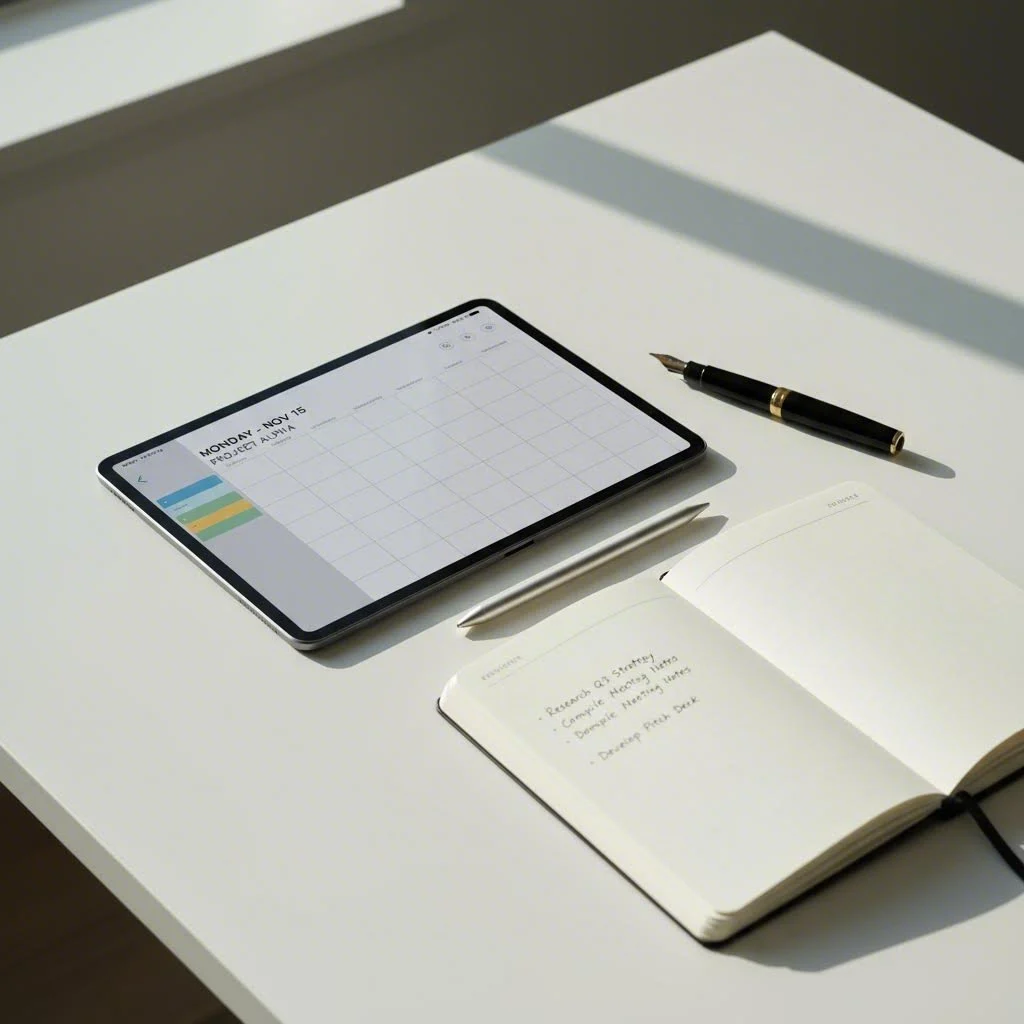
Should you design your morning routine planner spread in an app or grab a notebook and pen? This debate has passionate advocates on both sides—and honestly, they're both right. The format that works best depends entirely on how you think, what motivates you, and how you actually use planning tools in daily life.
Most guides pick a side and ignore the alternative. That's a disservice. Digital planners are popular because they're portable and easy to access across devices, while paper planners remain relevant because writing things down by hand has been shown to improve focus, memory, and follow-through. Let's explore when each format shines so you can make an informed choice—or discover that combining both might be your answer.
| Dimension | Digital Planners | Physical Spreads |
|---|---|---|
| Editing Flexibility | High—easily move, delete, or modify entries without mess | Low—changes require crossing out or starting over |
| Tactile Engagement | Minimal—screen taps lack sensory feedback | High—pen on paper engages multiple senses |
| Accessibility | Anywhere with device access; syncs across platforms | Only where you physically carry it |
| Customization Depth | Template-dependent; some apps offer extensive options | Unlimited—limited only by your creativity and materials |
| Integration with Other Tools | Strong—connects with calendars, reminders, apps | Manual—requires separate tracking for digital integrations |
When Digital Templates Outperform Paper Spreads
Imagine you're constantly tweaking your morning routine—experimenting with different wake times, adding new habits, removing what doesn't work. In a paper planner, every change means scratching things out or dedicating new pages. Digital planning works best if you already live in your devices and like automation.
Digital formats excel when you need:
• Automated reminders: Your phone buzzes at 6:15 to start meditation—no willpower required to remember
• Recurring task setup: Set your routine once and it appears every morning automatically
• Cross-device access: Check your spread from bed on your phone, refine it on your tablet, reference it from your laptop
• Easy sharing: Coordinate morning schedules with family members or partners through shared digital calendars
• Searchable history: Searchable archives instead of pages to flip let you find patterns quickly
A free digital planner or free GoodNotes templates offer accessible starting points without financial commitment. Apps like Notion, Google Calendar, or GoodNotes let you experiment with layouts until you find what clicks. Many free digital planners include pre-built morning routine templates you can customize immediately.
The downside? Digital tools come with their own challenges: notification overload, screen fatigue, and the temptation to multitask. Opening your planning app might lead to checking email, which spirals into scrolling social media. If screen discipline is a struggle, digital formats can undermine the very morning focus you're trying to build.
The Tactile Advantage of Handwritten Planning
There's something about pen meeting paper that screens simply can't replicate. Research has shown that the act of physically writing stimulates different brain areas compared to typing. This isn't just romantic nostalgia—it's neuroscience.
Writing information by hand helps to encode it more effectively in memory because the physical act of forming letters and words engages multiple senses and neural pathways. For morning routines specifically, this means handwritten intentions tend to stick better than typed ones.
Physical spreads shine when you value:
• Screen-free mornings: You're less likely to get distracted if you're not at a computer or have your phone in hand
• Creative expression: Doodles, color coding, freeform notes, stickers, washi tape—physical planners become personal artifacts
• Mindful ritual: Writing things down slows you down in a good way, creating intentionality around your morning
• Emotional connection: The tactile experience of holding a pen and feeling the ink flow connects you to your thoughts and emotions
A printable weekly planner offers middle ground—digital design with physical execution. You create or download your template digitally, print it, then use it by hand. This captures layout flexibility while preserving the tactile benefits of paper interaction.
Paper's limitations are practical: it's bulkier to carry around, easy to forget at home, and won't buzz to remind you of a deadline. If you travel frequently or need constant access, physical-only systems create friction.
Transitioning Between Formats
Switching from digital to paper—or vice versa—requires more than just moving your tasks. Each format trains different planning muscles. Experienced planners typically start clients on paper as they build the muscle of planning because if the planner is out of sight (like an app within your phone), it's often out of mind.
If you're moving from digital to paper:
• Accept that you'll lose automated reminders—build visual cues instead
• Start with a simple format; don't try elaborate spreads immediately
• Place your planner where you'll see it first thing (bedside, kitchen counter)
• Keep your phone charging in another room to reduce digital pull
If you're moving from paper to digital:
• Choose one app and commit—tool-hopping kills consistency
• Set up recurring morning tasks immediately so your routine auto-populates
• Use notification settings strategically; too many alerts create noise
• Consider a free GoodNotes planner if you want handwriting feel on a tablet
The Hybrid Approach: Best of Both Worlds
Many people use a hybrid system: digital tools for scheduling and reminders, and paper planners for goal setting, task management, and reflection. This split often works beautifully for morning routines.
A practical hybrid setup might look like:
• Digital calendar: Holds your hard commitments and sends wake-up reminders
• Physical spread: Lives on your nightstand for morning ritual and tracking
• Weekly digital review: Track patterns and adjust your paper system accordingly
• Printable templates: Design digitally, print weekly, use by hand daily
One planner enthusiast uses Asana for task management for both work and home, but uses a paper planner for visioning, journaling, and reflection exercises. This separation keeps work efficiency digital while preserving the grounding, screen-free ritual of paper for personal mornings.
The best system is the one you'll actually use consistently—not the one that sounds most impressive.
In 2025, a growing number of professionals are moving back to paper because they've realized digital planning is convenient, but paper planning can be more effective for deep focus. Free digital planners offer excellent starting points for testing what works before investing in premium tools or elaborate physical setups.
Whatever format you choose—or combination you create—remember that the medium serves the message. Your morning routine spread exists to make mornings better, not to prove you're using the "right" tools. Now let's explore specific resources that can support whichever direction you take.
Essential Tools and Resources for Your Morning Spread
You've got the methodology. You understand which format fits your lifestyle. Now comes the practical question: what tools will actually help you build and maintain your morning routine planner spread? The right resources can eliminate friction, spark creativity, and keep you consistent—while the wrong ones just add another abandoned app to your digital graveyard.
Whether you prefer tapping on screens or writing by hand, this curated collection focuses on tools that support the methodology-first approach we've discussed throughout this guide. No bloated feature lists or overcomplicated systems—just practical resources that help you create spreads that stick.
Digital Tools for Flexible Morning Planning
Digital planning offers unmatched flexibility for those who need to experiment, iterate, and adjust their morning routines frequently. If you identified with the customization challenges discussed earlier—especially around variable schedules, neurodivergent needs, or the frustration of rigid systems—these tools deserve your attention.
• AFFiNE ADHD Planner: If traditional rigid planners leave you feeling defeated, this template was designed specifically for brains that work differently. The visual organization and color-coded structures help you see your morning at a glance rather than getting lost in text-heavy lists. What makes it particularly valuable for morning spreads? The ability to break overwhelming tasks into manageable steps—exactly what you need when "get ready for work" feels like an impossible mountain rather than a series of small hills. The flexible, adaptable structure means you can modify your routine without starting from scratch, aligning perfectly with the iteration philosophy we've emphasized. For those who struggle with executive function challenges in the early morning hours, this approach transforms chaos into clarity.
• Notion: A highly customizable workspace where you can build morning routine databases, habit trackers, and daily dashboards. Notion offers unlimited pages and templates on its free plan, making it accessible for experimentation. The learning curve is steeper, but the payoff is a system tailored exactly to your specifications.
• Structured: For visual timeline lovers, this app displays your entire morning as a scrollable view with drag-and-drop rescheduling. The clean design feels calming—important when you're barely awake and need clarity, not clutter.
• TickTick: Combines task management with a built-in Pomodoro timer and habit tracking. The calendar view shows tasks and schedule side by side, helpful for morning time-blocking without switching between apps.
• Google Calendar: Sometimes the simplest solution works best. Google Calendar's recurring task feature allows you to block out consistent time for morning habits like workouts or reading. The familiar interface reduces learning curve friction.
For those who enjoy visual planning with a stylus, doodle scheduling on tablets combines the flexibility of digital with the satisfaction of handwriting. Apps like GoodNotes or Notability let you design spreads that feel personal while maintaining easy editability.
Printable Resources to Get Started Today
Not everyone wants to live inside apps—and that's perfectly valid. Research confirms that handwriting engages your brain differently than typing, often leading to better retention and follow-through. These printable resources give you structure without sacrificing the tactile experience.
• Free weekly planner printables: Sites like Canva, Template.net, and Pinterest offer countless free planner printables you can download immediately. Look for schedule template options that include morning-specific sections rather than generic all-day layouts.
• Time sheet template downloads: If you're using the time-block format, search for hourly or 15-minute increment templates. Many productivity blogs offer free weekly planner printable options designed specifically for morning routines.
• Target printable planners: Retail stores often carry affordable planner inserts and printable pads in their stationery sections. These work well for testing layouts before committing to a bound planner system.
• Bullet journal supplies: Dotted notebooks provide maximum flexibility for custom spreads. Brands like Leuchtturm1917 or budget-friendly alternatives give you the structure of a grid without the constraints of pre-printed layouts.
• Habit tracker templates: If you're focused on building morning habits over time, dedicated tracker printables help you see patterns across weeks. Many free versions include space for notes and reflection.
Choosing Tools That Match Your Methodology
The best tool isn't the one with the most features—it's the one you'll actually use at 6 AM when you're half awake. Consider these questions when evaluating options:
• Does it reduce friction or add it? If opening the app or finding your planner feels like effort, you'll skip it.
• Does it support your chosen format? A checklist person doesn't need elaborate time-blocking features, and vice versa.
• Can it grow with you? Your morning routine will evolve. Tools like the AFFiNE ADHD Planner accommodate change without requiring complete rebuilds—crucial when you're iterating toward what works.
• Is it accessible when you need it? A beautiful digital spread means nothing if your phone is charging in another room.
Daily planner app research consistently shows that the right tool should reduce stress, not add to it. It should feel like a natural extension of your brain—not a rigid system you constantly fight against.
Starting Without Investment
Before spending money, test your approach with free resources. A simple notes app on your phone can function as a morning checklist. Scratch paper works for drafting time-block layouts. Free digital planners and printable templates let you experiment with formats before committing to premium tools or expensive planner systems.
Many people discover that their ideal setup costs nothing—or that the investment only makes sense after they've proven the habit with simpler tools. The goal is building a consistent morning practice, not collecting planning supplies.
With the right tools in hand, you're ready for the final piece: understanding that your morning spread isn't a one-time creation but an evolving system that grows with you.
Building a Morning Spread System That Lasts
Here's what most planning guides won't tell you: the morning routine planner spread you create today isn't meant to last forever. In fact, if you're still using the exact same layout six months from now without any modifications, something's probably wrong. The real power of this system lies not in perfect design, but in continuous evolution.
Think of your spread as a living document rather than a finished product. The iterative process emphasizes learning and adaptation over rigid planning—and this principle applies just as powerfully to your morning routine as it does to product development. Each week offers new data about what works, what doesn't, and what needs adjustment.
Your First Week with a New Morning Spread
That initial week matters more than you might expect. It's not about perfect execution—it's about gathering information. Approach these seven days as an experiment rather than a test you're trying to pass.
During your first week, focus on observation:
• Track completion honestly: Which tasks happened? Which got skipped? No judgment—just data.
• Note time accuracy: Where did your estimates match reality? Where were they wildly off?
• Record friction points: What felt hard to do? What was the first thing you wanted to skip?
• Capture what worked: What felt satisfying? What made mornings genuinely better?
Productivity experts consistently find that individuals who conduct structured weekly reviews report significantly higher task completion rates and better goal alignment. Your first week sets the foundation for this review habit.
Resist the urge to redesign everything after day two. A single rough morning doesn't mean your spread failed—it means life happened. Give your system a full week before making significant changes. Whether you're using a daily planner 2026 edition, a classic day designer planner, or a simple notebook, the principle remains the same: observe before you adjust.
Building a System That Evolves With You
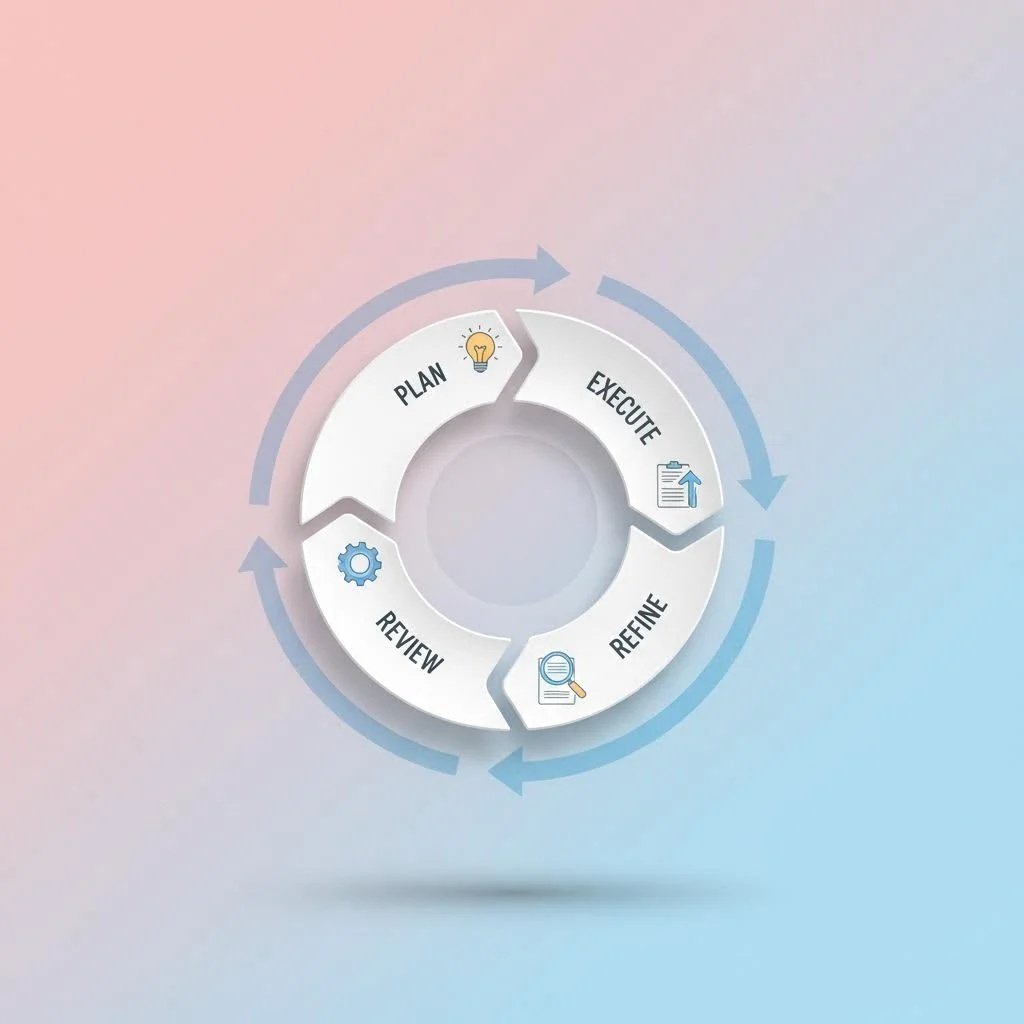
Unlike traditional waterfall methodologies which involve a linear sequence from conception to delivery, the iterative process allows for flexibility and adaptation throughout. Your morning spread should work the same way—cycling through planning, executing, reviewing, and refining.
Here's a simple weekly review framework you can use every Sunday evening or Friday afternoon:
• Completion rate check: What percentage of morning tasks actually happened? Below 70% suggests overloading; above 90% might mean you can add more.
• Consistent skip analysis: What got skipped three or more times? Consider removing it or repositioning it in your routine.
• Time estimate audit: Where were you consistently rushed or ahead? Adjust allocations for next week.
• Energy assessment: Did demanding tasks land during peak alertness? Shuffle placement if needed.
• Overall feeling evaluation: Did mornings feel better than before? If not, what specific element felt off?
Creating a repeatable review process is key to forming a lasting habit. Block 10-15 minutes weekly for this reflection—it's a small investment that compounds dramatically over time.
This is where flexible tools prove their worth. The AFFiNE ADHD Planner supports this iterative approach through structures you can modify without starting over—drag elements, adjust categories, and evolve your layout as you learn what your mornings actually need. When your system can change as easily as your understanding, iteration becomes natural rather than effortful.
Functional effectiveness matters more than visual perfection. A messy spread that improves your mornings beats a beautiful one you abandon.
Weekly planners and planner pad systems work well for this evolution because they offer natural reset points. Each week becomes a fresh iteration informed by the previous one. Some people find that a day designer 2025 planner with dated sections helps maintain consistency while still allowing adjustments to their routine elements.
Your 2026 daily planner approach should expect change. The morning routine that serves you in January might need significant modification by March. Life circumstances shift—new jobs, changed commutes, family additions, health changes. This approach acknowledges that perfect planning is impossible and that learning and adaptation are essential for success.
The Long Game: Months and Years of Morning Mastery
The most sustainable routines are the ones that grow with you. Start with one small habit, do it consistently, then add another. Don't pressure yourself to build a five-step routine overnight.
After four consistent weekly reviews, most people report greater clarity around goals, increased confidence in decision-making, less overwhelm, and more space for creativity. The morning spread becomes less about managing chaos and more about optimizing energy.
The lifecycle looks like this:
• Week 1-2: Observe and gather data
• Week 3-4: Make first round of adjustments
• Month 2: Settle into refined routine, minor tweaks only
• Month 3+: Routine feels natural; spread becomes reference rather than instruction
• Quarterly: Major review—is this still serving your current life?
Start Imperfect, Improve Always
Here's your permission slip: your first morning routine planner spread will not be perfect. It shouldn't be. Perfection is the enemy of progress, and waiting until you've designed the ideal layout means waiting forever.
Grab whatever you have—a notebook, a free printable, a digital template, a sticky note. Write down three things you want your morning to include. Tomorrow, try to do them. Notice what happens. Adjust on Sunday.
That's it. That's the system.
A good morning routine doesn't need to be complicated or time-consuming. It needs to be yours—designed around your real life, responsive to your actual needs, and flexible enough to evolve as you do.
Whether you choose analog weekly planners, digital templates like the AFFiNE ADHD Planner, or some hybrid approach, the tools matter far less than the practice. Start small. Review weekly. Iterate constantly. Trust the process.
Your mornings are waiting to be transformed. Not tomorrow. Not when you find the perfect planner. Now—imperfectly, intentionally, and with the confidence that you'll get better at this with every passing week.
Frequently Asked Questions About Morning Routine Planner Spreads
1. What is the morning hack for ADHD?
For ADHD brains, effective morning hacks include using visual planners with color-coded structures that break overwhelming tasks into manageable steps. Position your bed to receive natural morning sunlight, use sunrise alarm clocks, and consider flexible digital tools like the AFFiNE ADHD Planner that adapt to how your brain actually works rather than forcing rigid schedules. The key is reducing decision fatigue by pre-planning your morning sequence the night before.
2. What is the 5 to 9 morning routine?
The 5 to 9 before 9 to 5 routine involves waking at 5 AM and dedicating four hours to self-care activities before starting your workday. While this approach works for early risers, it's not suitable for everyone. A more sustainable approach is designing a morning routine planner spread that fits your natural chronotype and actual wake time, whether that's 5 AM or 8 AM, focusing on intentional activities rather than arbitrary time goals.
3. How do I choose between a checklist and time-block morning spread format?
Choose a checklist format if you need flexibility and quick task completion without strict time constraints. Opt for time-block layouts if you tend to lose track of time, need external structure, or have hard morning deadlines like catching a train. Many people benefit from hybrid approaches that combine checkboxes for tasks with anchor times for critical deadlines, giving both flexibility and accountability.
4. Why do morning routine planner spreads fail after the first week?
Most spreads fail due to overloading with too many tasks, unrealistic time estimates, creating beautiful but non-functional layouts, lacking flexibility for interruptions, or never reviewing and iterating. The solution is starting with only five core tasks, building in buffer time, tracking actual task durations, and conducting weekly reviews to adjust your spread based on real performance data rather than aspirational goals.
5. Should I use a digital or paper morning routine planner spread?
Digital planners excel when you need automated reminders, easy editing, cross-device access, and frequent routine changes. Paper spreads offer better memory retention through handwriting, screen-free mornings, and creative expression. Many successful planners use hybrid systems—digital calendars for reminders and scheduling, paper spreads for daily ritual and tracking. Choose based on whether you need flexibility or tactile engagement more.