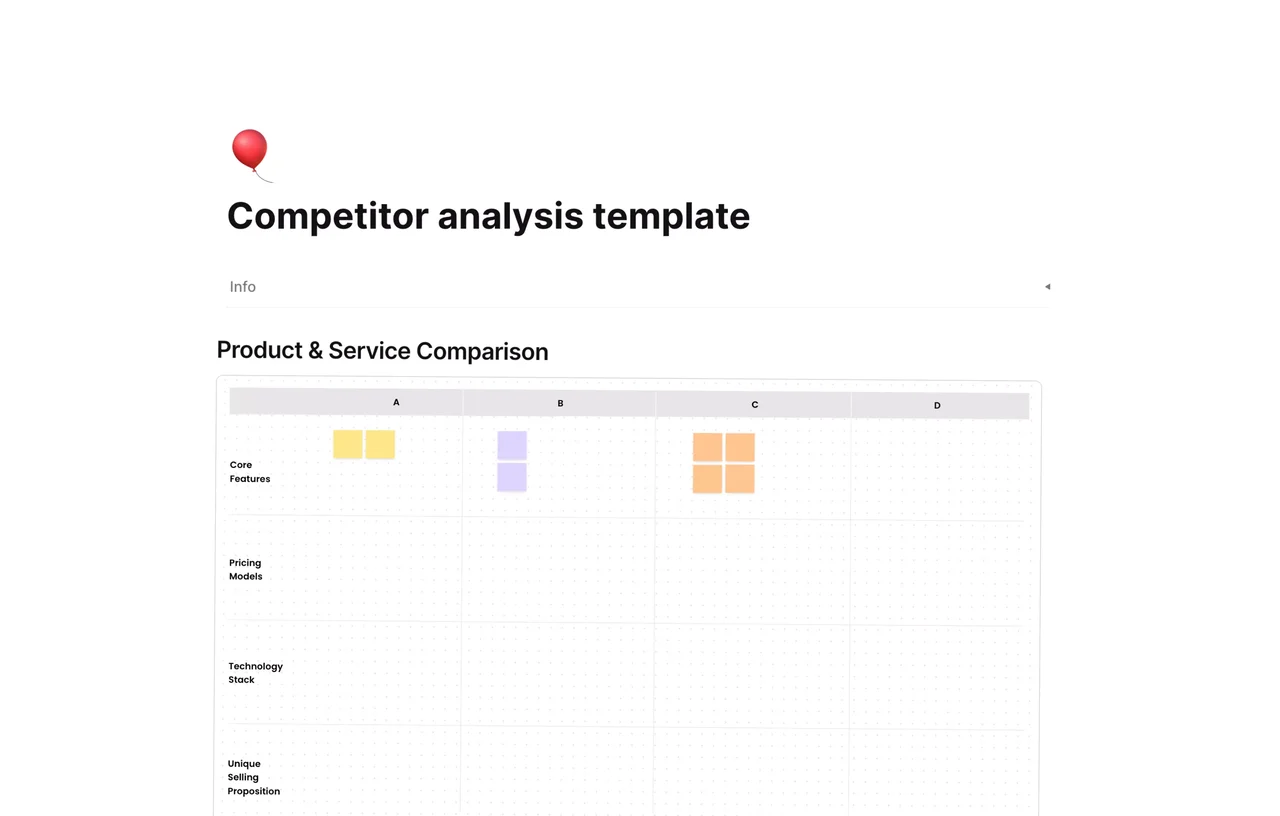
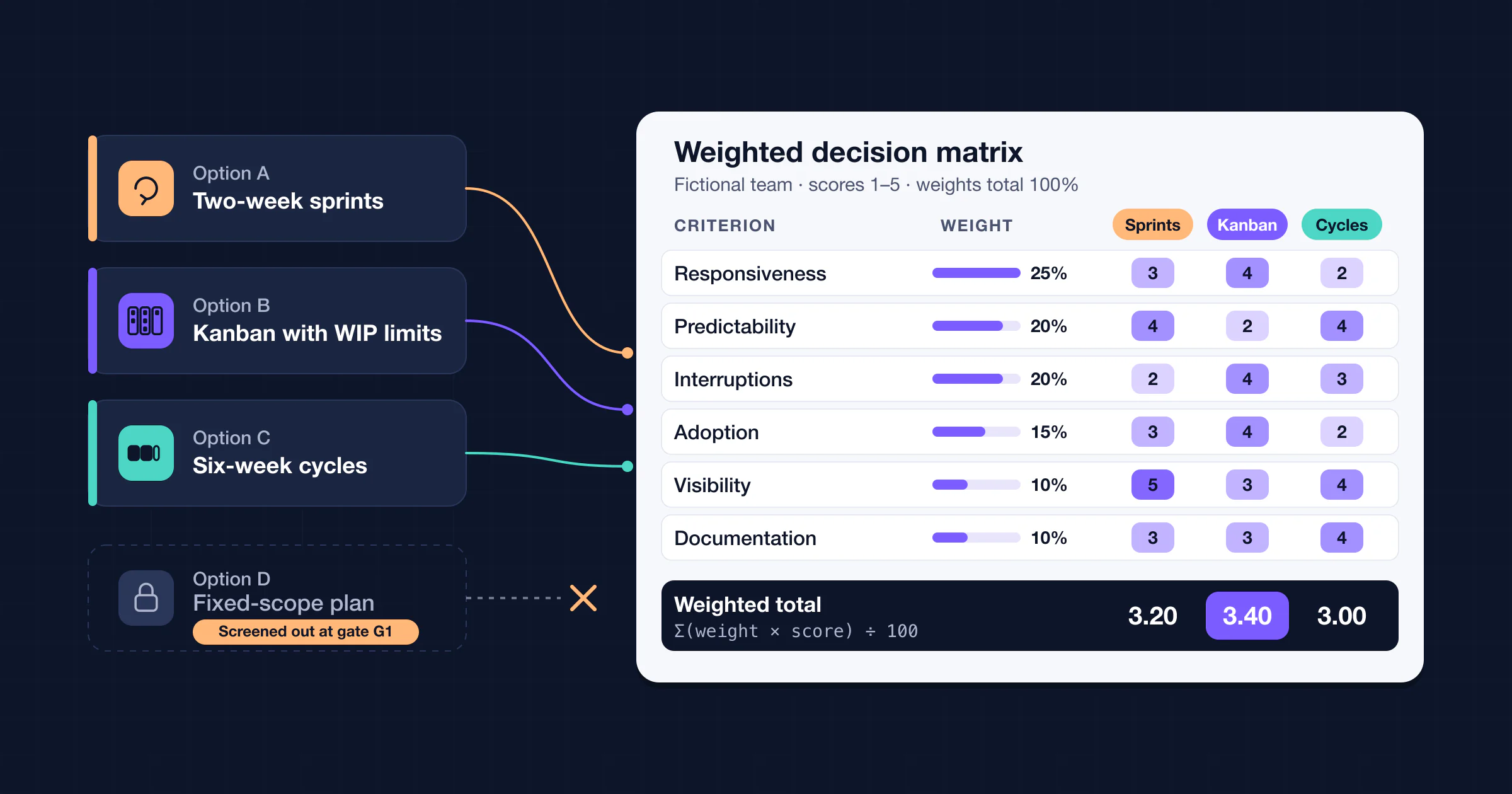
A competitor analysis template is a document for comparing your business with competitors on factors such as products, pricing, positioning, strengths, and weaknesses. This AFFiNE template is a page-mode doc with comparison tables and SWOT grids, so you can record research on each competitor and summarize where you can stand out.
What's included in this template
- Comparison tables for placing competitors side by side on factors like product features, pricing, target customers, and marketing channels.
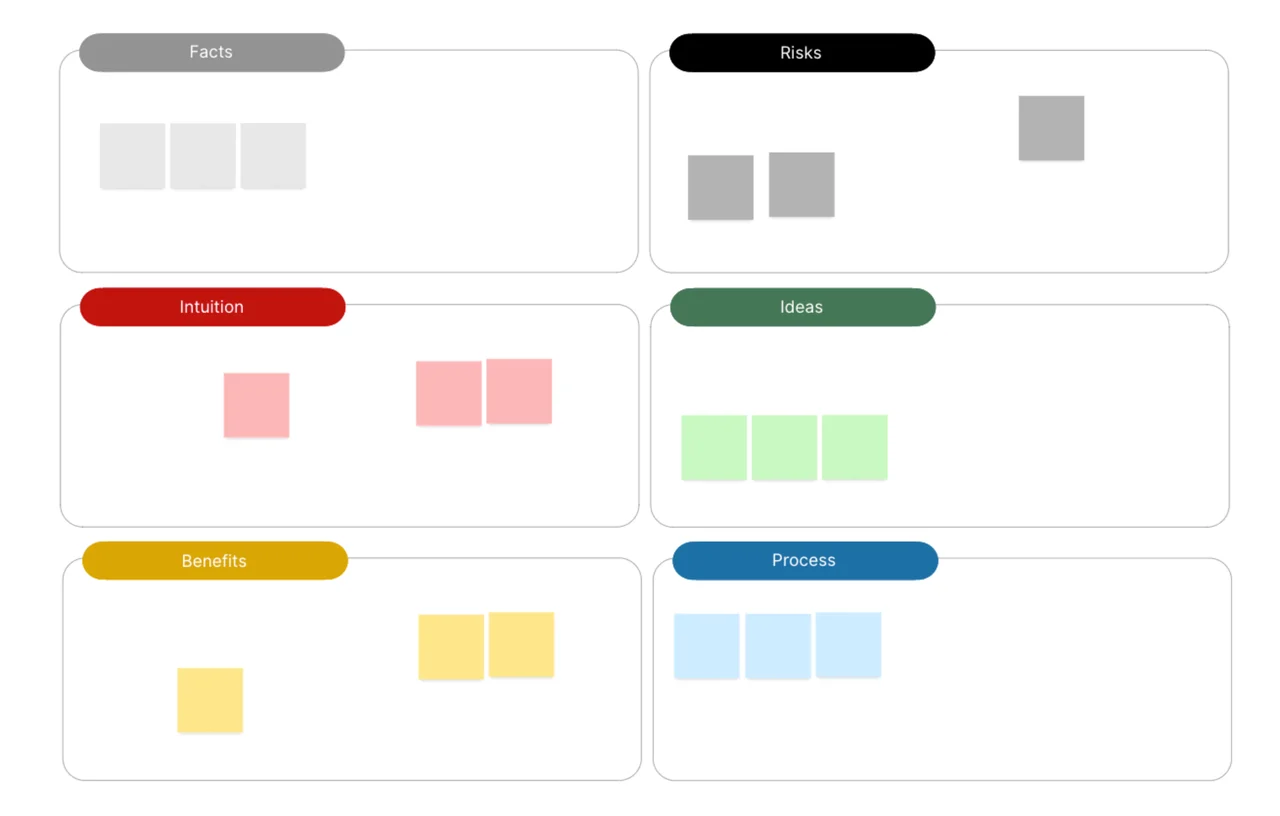
- SWOT grids for listing strengths, weaknesses, opportunities, and threats.
- Space for notes, links, and screenshots from your research, since AFFiNE docs accept text, images, and embeds.
You can rename columns and rows to match your industry.
When to use a competitor analysis template
- Before a launch: check how existing options price and position themselves.
- Planning a roadmap: find features or customer groups competitors underserve.
- Sales enablement: give sales a clear summary of how you compare.
- Pitch decks and business plans: show investors you understand the market.
- Quarterly reviews: update the doc to track changes in competitor pricing or messaging.
How to use this competitor analysis template in AFFiNE
- Duplicate the template. Click "Use this template" to copy the doc into your AFFiNE workspace.
- List your competitors. Pick three to five direct competitors and, optionally, one or two indirect alternatives.
- Choose your comparison factors. Edit the table columns to match what your customers care about, such as price, key features, and support.
- Fill in the research. Add facts from competitor websites, pricing pages, reviews, and sales calls, and link the source next to each claim.
- Complete a SWOT for each competitor. Summarize strengths, weaknesses, opportunities, and threats in the grids.
- Write your takeaways. End with two or three actions, such as a positioning change or a feature to prioritize, and share the page with your team.
Tips for a useful competitor analysis
- Compare against what customers choose instead of you, not only companies that look like you.
- Note the date of each data point; pricing and features change often.
- Focus on decisions. Every section should support a choice about product, pricing, or messaging.
Frequently asked questions
What should a competitor analysis include?
Typically a list of competitors, a side-by-side comparison of products, pricing, and target customers, a SWOT for each, and a summary of your own advantage and next steps.
How many competitors should you analyze?
Three to five direct competitors is a manageable range. Add an indirect alternative if many customers solve the problem another way.
What is the difference between a competitor analysis and a SWOT analysis?
A SWOT analysis is one tool inside a competitor analysis. The full analysis also compares competitors with each other and with you across specific factors.
How often should you update a competitor analysis?
Review it at least quarterly, and whenever a competitor changes pricing, launches a major product, or enters your market.
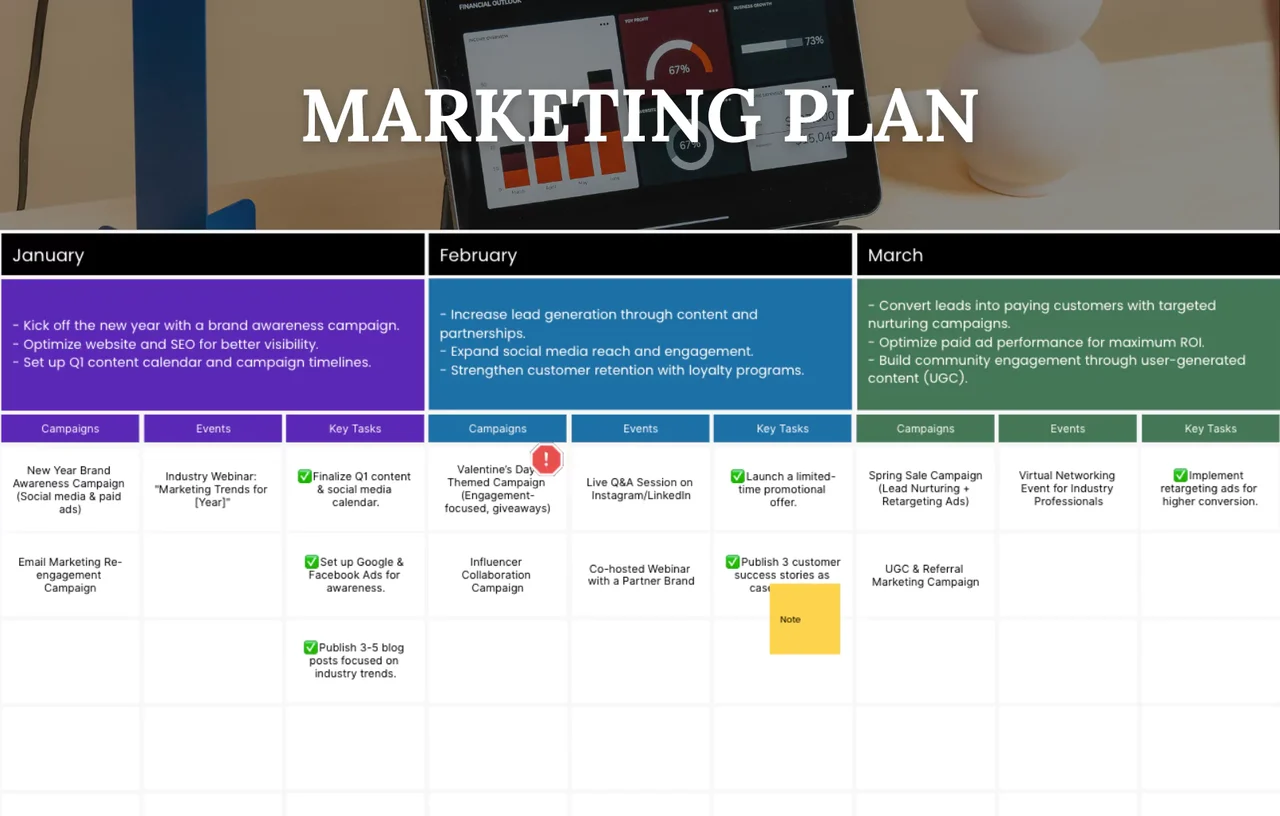
Browse more data analysis templates and the marketing plan template, or read the competitor analysis guide and free editable SWOT analysis templates.