9 Open Source ClickUp Alternatives (Self-Hosted)
What changed (Nov 14, 2026): Replaced six note-taking apps (Joplin, Standard Notes, Turtl, Trilium, Laverna, QOwnNotes) with self-hostable project management tools: Plane, OpenProject, Leantime, Huly, Vikunja and Kanboard, alongside WeKan, Odoo Project and AFFiNE. Checked every license, latest release and cloud price on official sites and GitHub, marked Focalboard as no longer maintained, moved AFFiNE out of first place with a disclosure and corrected its license, and added a comparison table, selection method, migration steps, FAQs about whether ClickUp is open source or self-hostable, sources, dated screenshots and a new cover.
The best open source ClickUp alternative depends on which part of ClickUp you are replacing. For software teams that want issues, sprints and roadmaps, start with Plane. For classic project plans with Gantt charts, OpenProject is the most complete self-hosted option. Leantime suits teams that want simpler, goal-driven planning, Huly bundles tasks with chat and docs, Vikunja and Kanboard cover lighter task lists and boards, WeKan is a Trello-style board, and Odoo Project fits companies that already run Odoo. If what you mostly use in ClickUp is Docs and Whiteboards next to task tables, AFFiNE is the docs-first option on this list.
Updated November 14, 2026. Disclosure: AFFiNE publishes this blog and is one of the nine tools compared below. We apply the same criteria to it and list its limits. The order of the tools is not a ranking.
ClickUp combines tasks, docs, whiteboards and chat in one cloud app. Teams usually look for an open source replacement for one of three reasons: they need to keep data on their own servers, they want to avoid per-seat pricing as the team grows, or they want a tool whose code they can audit and modify. ClickUp itself cannot meet the first and third needs (see the FAQ below), so this guide only includes tools you can run yourself.
Open source ClickUp alternatives at a glance
| Tool | License | Self-hosting | Latest stable release | Hosted cloud price | Best for |
|---|---|---|---|---|---|
| Plane | AGPL-3.0 (Community Edition) | Docker, Kubernetes | v1.4.3, October 28, 2026 | Free up to 12 users; Pro $6, Business $13 per seat/month billed yearly | Software teams that want a Jira or Linear-style issue tracker |
| OpenProject | GPL-3.0 | DEB/RPM packages, Docker, Kubernetes, Helm | v17.9.7, November 9, 2026 | Community edition free; Enterprise from $7.25 per user/month (25-user minimum) | Classic, agile or hybrid projects with Gantt charts |
| Leantime | AGPL-3.0 | Self-hosted Community Edition | v3.14.0, November 10, 2026 | No free cloud plan; $8 per user/month billed yearly, $10 monthly | Small teams and non-project managers |
| Huly | EPL-2.0 | Docker Compose, Kubernetes | v0.7.426, July 5, 2026 | Free plan with unlimited users and 10 GB per workspace; paid plans from $19.99/month | Teams replacing tasks, chat and docs together |
| Vikunja | AGPL-3.0 | Docker, packages, binaries, Kubernetes | v2.8.0, November 5, 2026 | Vikunja Cloud from €4/month | Personal and small-team task lists |
| Kanboard | MIT | Self-hosted web app | v1.2.57, October 31, 2026 | No hosted plan listed on kanboard.org | Minimal Kanban with WIP limits |
| WeKan | MIT | Self-hosted | v13.10, November 13, 2026 | No hosted plan; commercial support available | Trello-style boards |
| Odoo Project | LGPL-3.0 (Odoo Community) | Self-hosted Community edition | No GitHub releases; source updated daily (last commit November 13, 2026) | Odoo Online: one app free for unlimited users; paid plans priced per user | Companies that also use Odoo for sales, invoicing or HR |
| AFFiNE | MIT for the editor and most client code; server backend source-available | Docker Compose; free up to 10 seats per workspace | v0.27.4, August 18, 2026 (plus frequent beta and canary builds) | Free cloud plan; Pro $6.75/month; Team $10 per seat/month | Docs, whiteboard and databases in one workspace |
Prices are list prices in US dollars or euros as shown on each vendor's pricing page on November 14, 2026. Taxes, regional pricing and promotions vary.
How we chose these tools
- Open source license: the core product must be released under an OSI-approved license. Where a vendor keeps some features in a closed-source or paid edition (Plane, OpenProject, Odoo, AFFiNE's server), we say so.
- Self-hosting: the vendor must document a way to run it on your own server.
- Active maintenance: a stable release in the last 12 months, checked on the project's GitHub releases page on November 14, 2026. Focalboard, which appeared in an earlier version of this guide, fails this test (see below).
- Task management: each tool needs tasks, boards or lists that can stand in for at least part of ClickUp. In earlier versions of this guide we listed note-taking apps such as Joplin, Standard Notes, Turtl, Trilium, Laverna and QOwnNotes. They are good note apps, but they do not replace ClickUp's task management, so we removed them.
- What we did not do: we did not run benchmarks, load tests or long-term trials. We read each project's documentation, pricing page, license file and GitHub release history.
- Screenshots: captured at 1440×900 in a headless browser on November 14, 2026, without signing in to any account. Each shows the product's official homepage or product page, except Focalboard, which shows its GitHub README.
The 9 open source ClickUp alternatives in detail
Plane
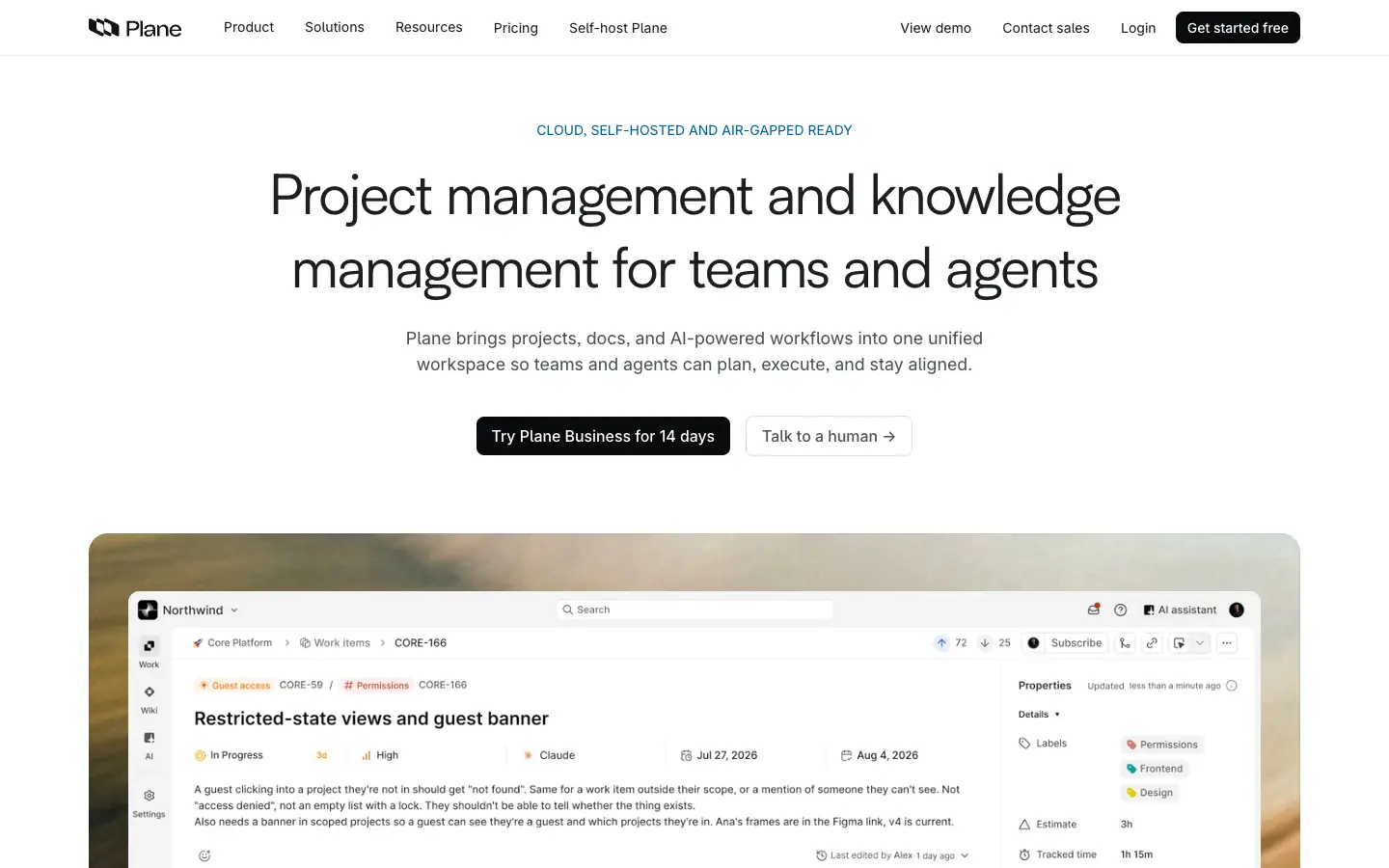
Plane is an open source project management tool built around work items, cycles (sprints), modules and project pages. It is one of the most active projects in this category, with more than 62,000 GitHub stars and a stable v1.4.3 release on October 28, 2026.
Plane offers several editions. The self-hosted Community Edition is AGPL-3.0 and matches the features of the Cloud Free plan. Paid features run on the Commercial Edition, which is closed source and is the edition Plane recommends for self-hosting. On Plane Cloud, the Free plan covers up to 12 users; Pro costs $6 and Business $13 per seat per month, billed yearly.
- Choose it if: you want a modern issue tracker for a software team and plan to self-host.
- Watch out for: time tracking, dashboards and the workspace wiki are on paid plans, so the AGPL Community Edition has fewer features than ClickUp's paid tiers.
OpenProject
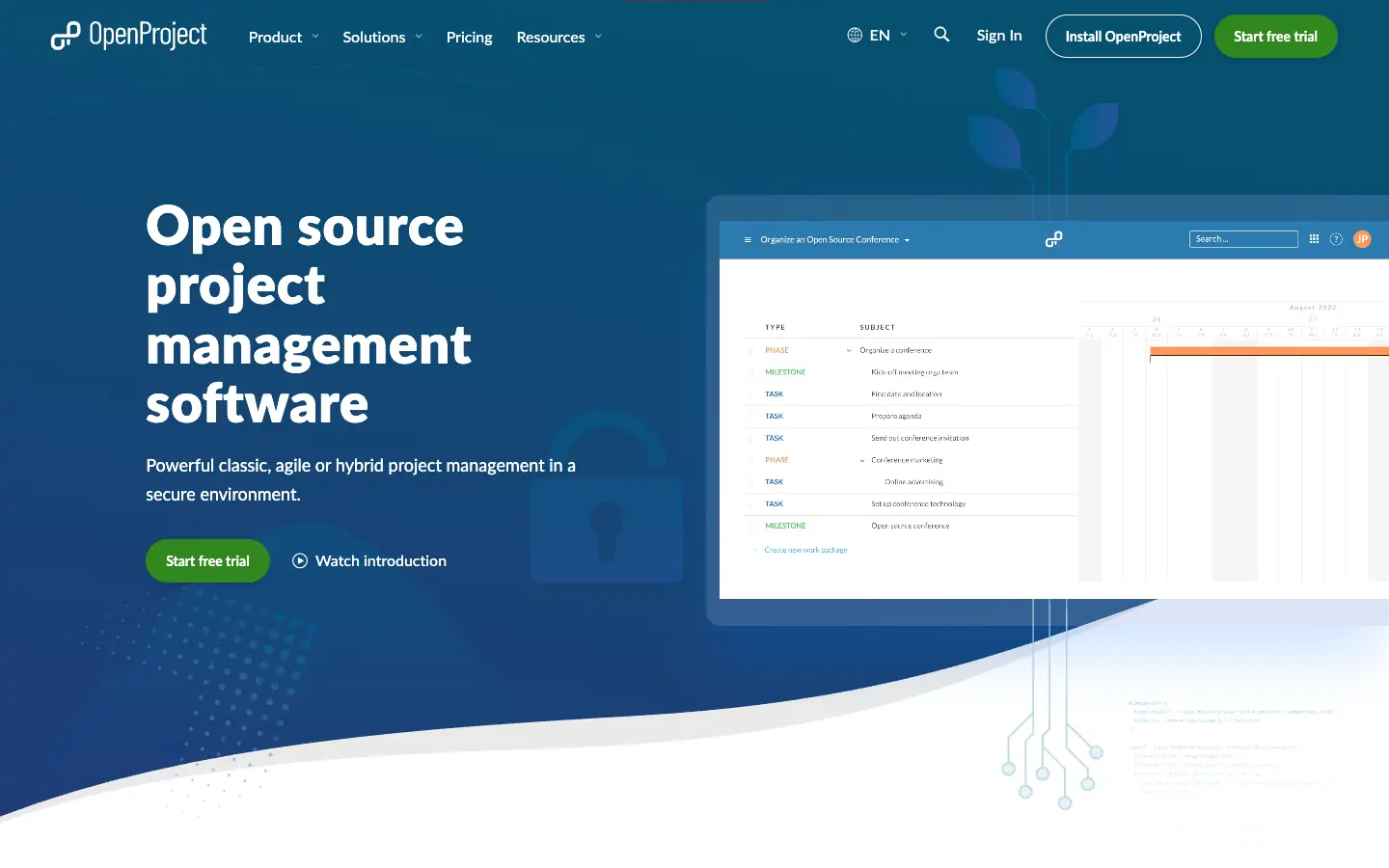
OpenProject is a mature GPL-3.0 project management suite for classic, agile and hybrid projects. It covers work packages, Gantt charts, boards, time and cost tracking, and meeting management. Its latest stable release is v17.9.7 (November 9, 2026).
The Community edition is free and can be installed with DEB or RPM packages, Docker, Kubernetes or Helm charts. Enterprise plans add support and extra features, on premises or in OpenProject's cloud. According to the pricing page, Basic starts at $7.25 per user per month and Professional at $13.50, both with a 25-user minimum.
- Choose it if: you manage projects with timelines, dependencies and budgets, or work in a public-sector or regulated setting.
- Watch out for: some features are Enterprise-only, and the interface is more traditional than ClickUp's.
Leantime
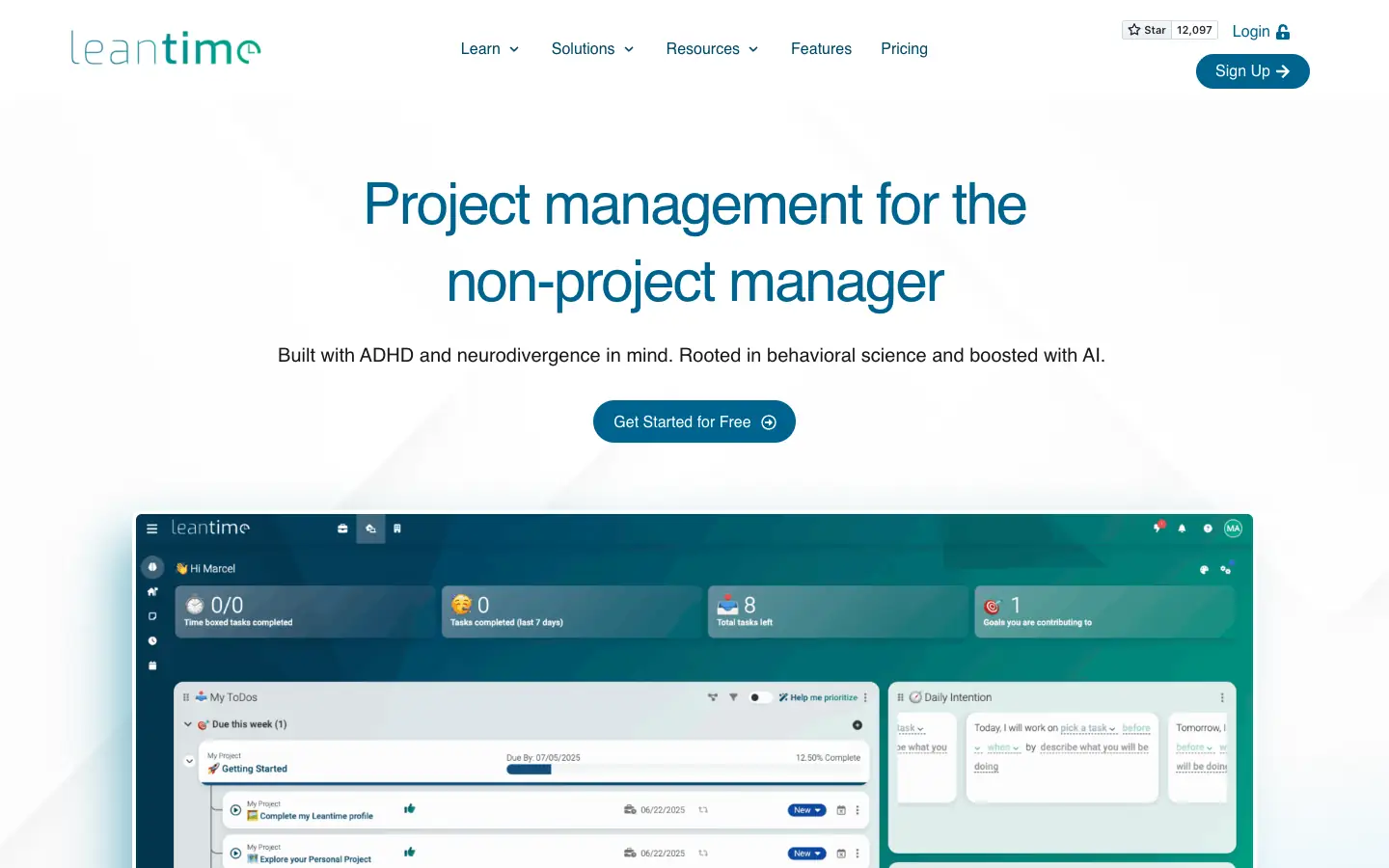
Leantime describes itself as project management for the non-project manager. It combines tasks, milestones and timesheets with goal and idea boards, and its marketing focuses on people with ADHD and other neurodivergent users. The latest release is v3.14.0 (November 10, 2026).
The self-hosted Community Edition is AGPLv3 and free. Leantime no longer offers a free cloud plan: according to its pricing page, the hosted version costs $10 per user per month, or $8 per user per month billed yearly, with a 14-day trial. Features such as whiteboards, notes, strategy tools and custom fields are sold as plugins for the open source version.
- Choose it if: you want a friendly planner for a small team that does not think in sprints.
- Watch out for: several ClickUp-style features come from the plugin marketplace rather than the core.
Huly
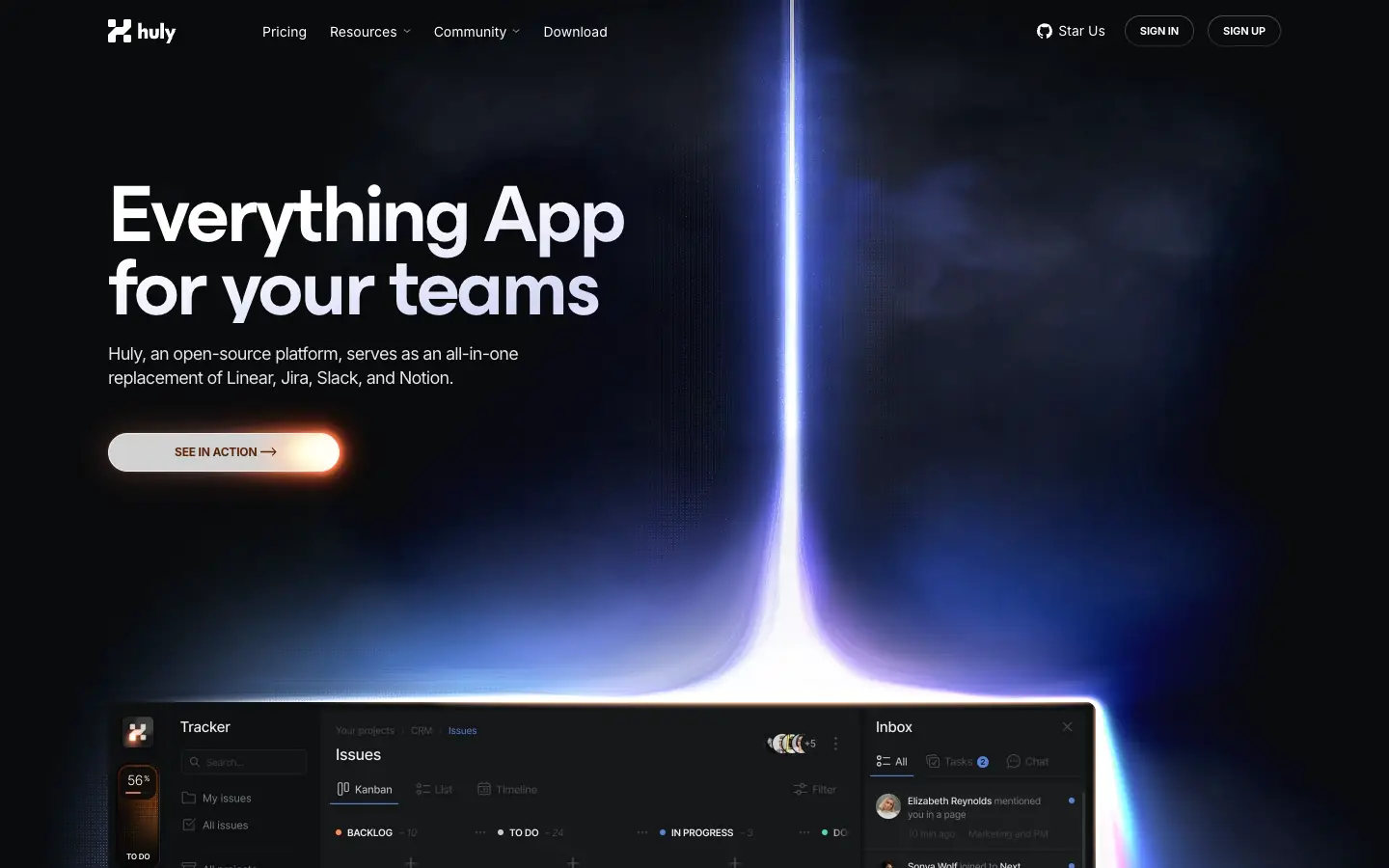
Huly is an EPL-2.0 platform that bundles an issue tracker, documents, chat and video calls. Its repository describes it as an alternative to Linear, Jira, Slack, Notion and Motion, which makes it the closest match on this list to ClickUp's all-in-one approach.
You can self-host Huly with the huly-selfhost Docker Compose setup or a sample Kubernetes configuration. The cloud version has a free plan with unlimited users and 10 GB of storage per workspace; paid plans ($19.99, $99.99 and $399.99 per month) are priced by storage and traffic, not by seat.
- Choose it if: you want to replace ClickUp and a team chat tool at the same time.
- Watch out for: the self-hosted stack runs several services, and the latest tagged release (v0.7.426) is from July 5, 2026, even though the repository was still receiving commits in November 2026.
Vikunja
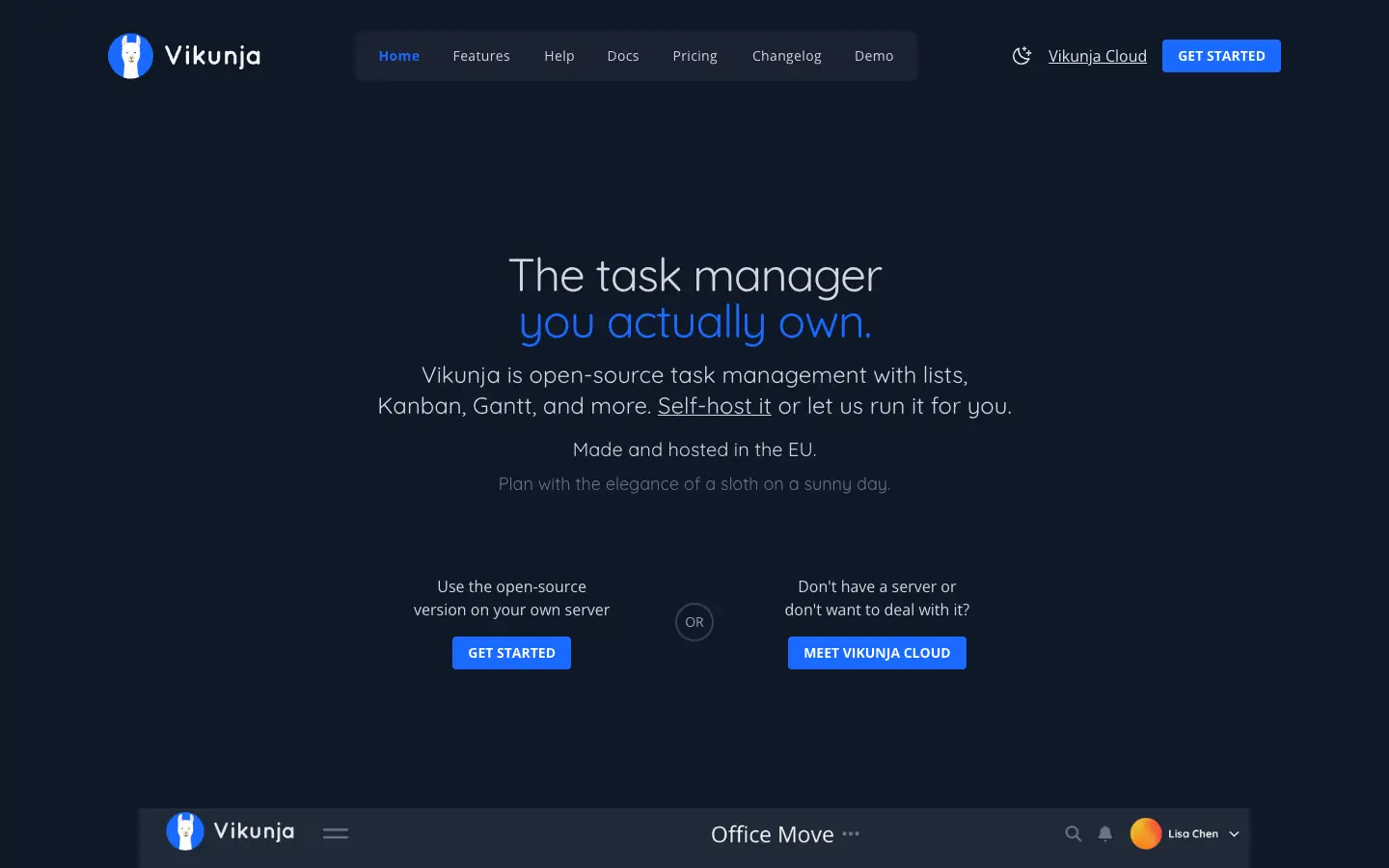
Vikunja is an AGPL-3.0 task manager with list, Kanban, Gantt and table views. It is lighter than the tools above and works well for personal task lists, households and small teams. The latest release is v2.8.0 (November 5, 2026).
Vikunja is free to self-host with Docker, DEB or RPM packages, binaries, Kubernetes or a Helm chart. If you prefer not to run a server, Vikunja Cloud plans start at €4 per month, with family and organization plans and a 14-day trial. A separate paid Pro add-on brings an admin panel, audit logs and time tracking to self-hosted instances.
- Choose it if: you need ClickUp's lists and boards but not its docs, chat or reporting.
- Watch out for: there is no built-in wiki or document editor.
Kanboard
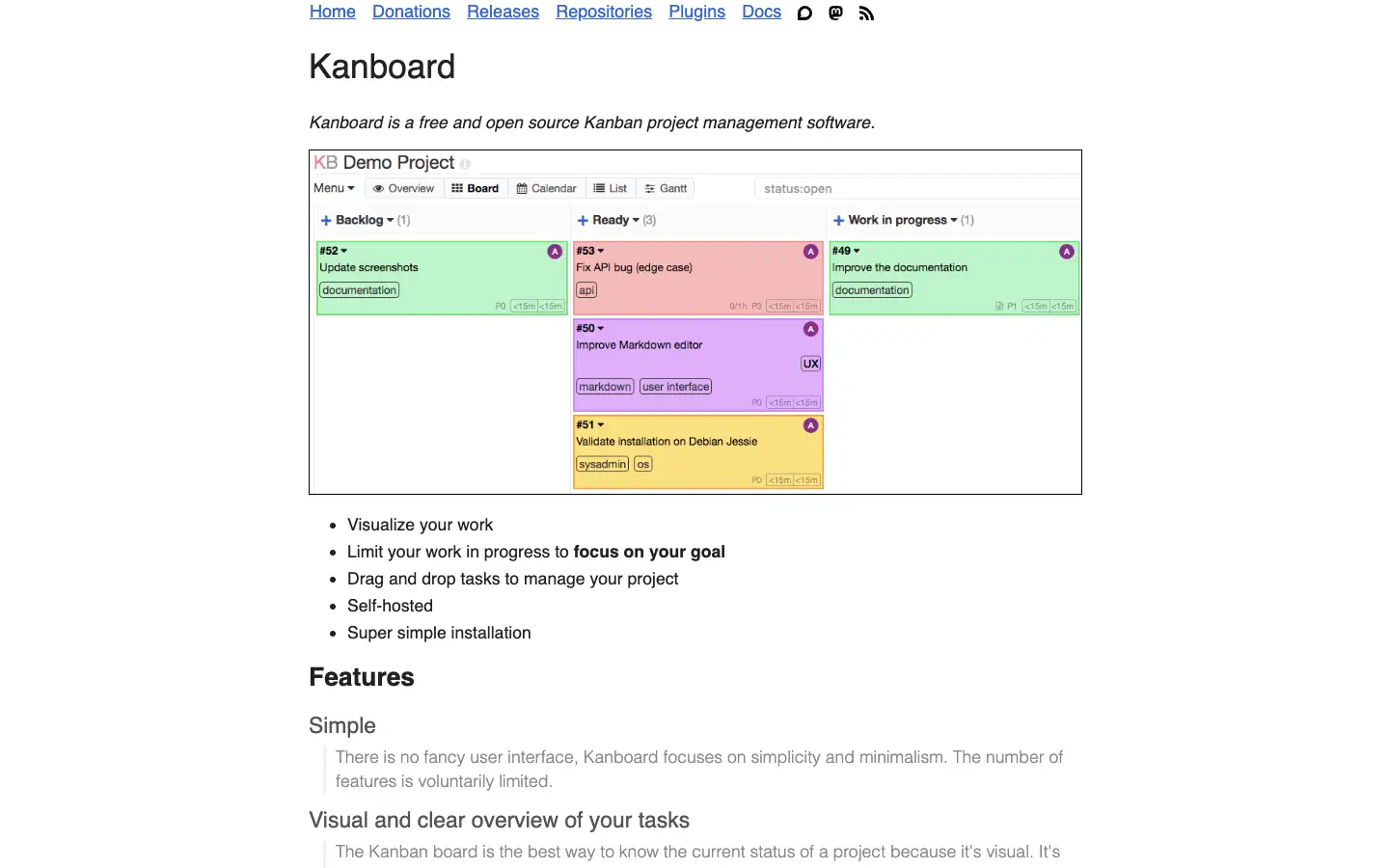
Kanboard is a minimal, MIT-licensed Kanban tool. It supports work-in-progress limits, subtasks, Markdown descriptions, automatic actions, a search query language and LDAP or OAuth2 sign-in. It is still actively maintained; v1.2.57 shipped on October 31, 2026.
Kanboard is self-hosted only; kanboard.org does not list a hosted plan. Its own site says the number of features is "voluntarily limited", which is the main reason to choose it, and the main reason not to.
- Choose it if: you want a simple board that is quick to install and easy to maintain.
- Watch out for: no docs, whiteboards or dashboards like ClickUp's.
WeKan
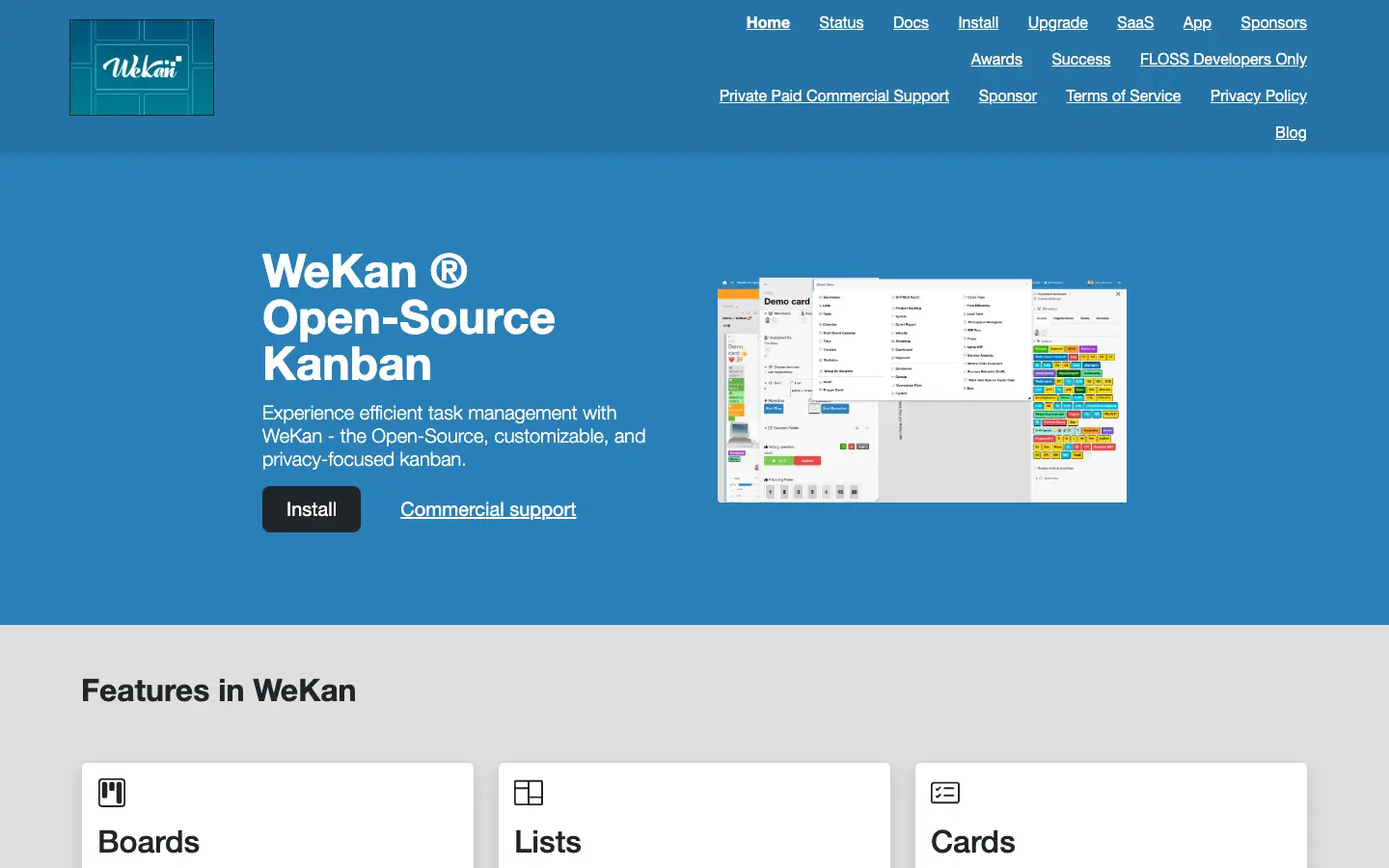
WeKan is an MIT-licensed Kanban board in the style of Trello, with boards, lists, cards, swimlanes and checklists. It is released very often: v13.10 came out on November 13, 2026.
WeKan is self-hosted, with installation guides on its site and paid commercial support for organizations that need it.
- Choose it if: your team mostly used ClickUp's Board view and wants the same thing on its own server.
- Watch out for: it is a board tool, not an all-in-one workspace.
Odoo Project
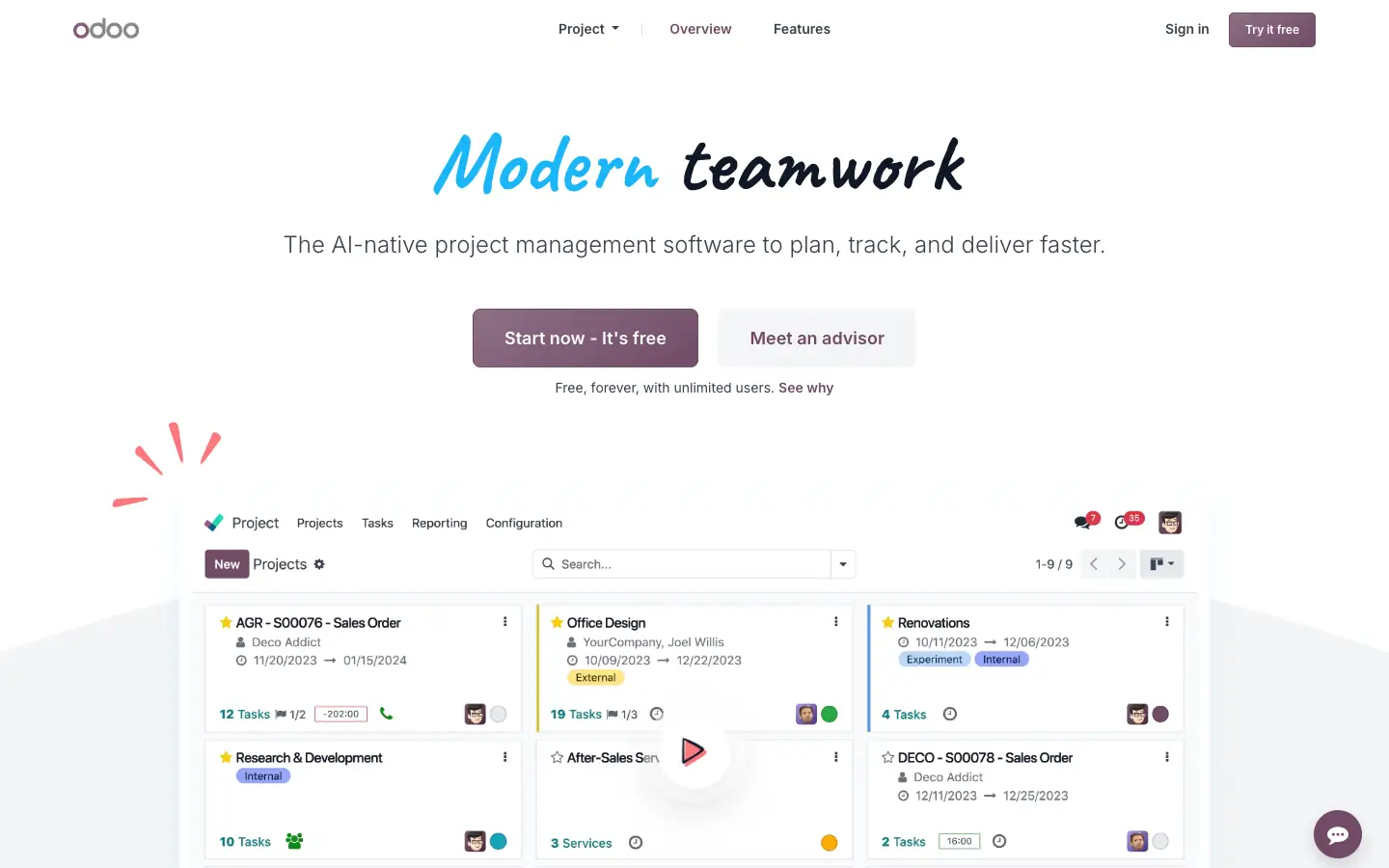
Odoo is a business application suite. Odoo Community is published under LGPLv3, and its Project app adds tasks, Kanban stages, subtasks and timesheets that connect to sales orders, invoices and HR.
Odoo comes in two editions: the open source Community edition, which you can self-host for free, and the licensed Enterprise edition. On Odoo Online, the One App Free plan lets you use one app, such as Project, free for unlimited users. Standard and Custom plans are priced per user per month and vary by region.
- Choose it if: you want project tasks connected to the rest of your business software.
- Watch out for: setting up Odoo just for project management is a lot of work, and some apps and features are Enterprise-only.
AFFiNE
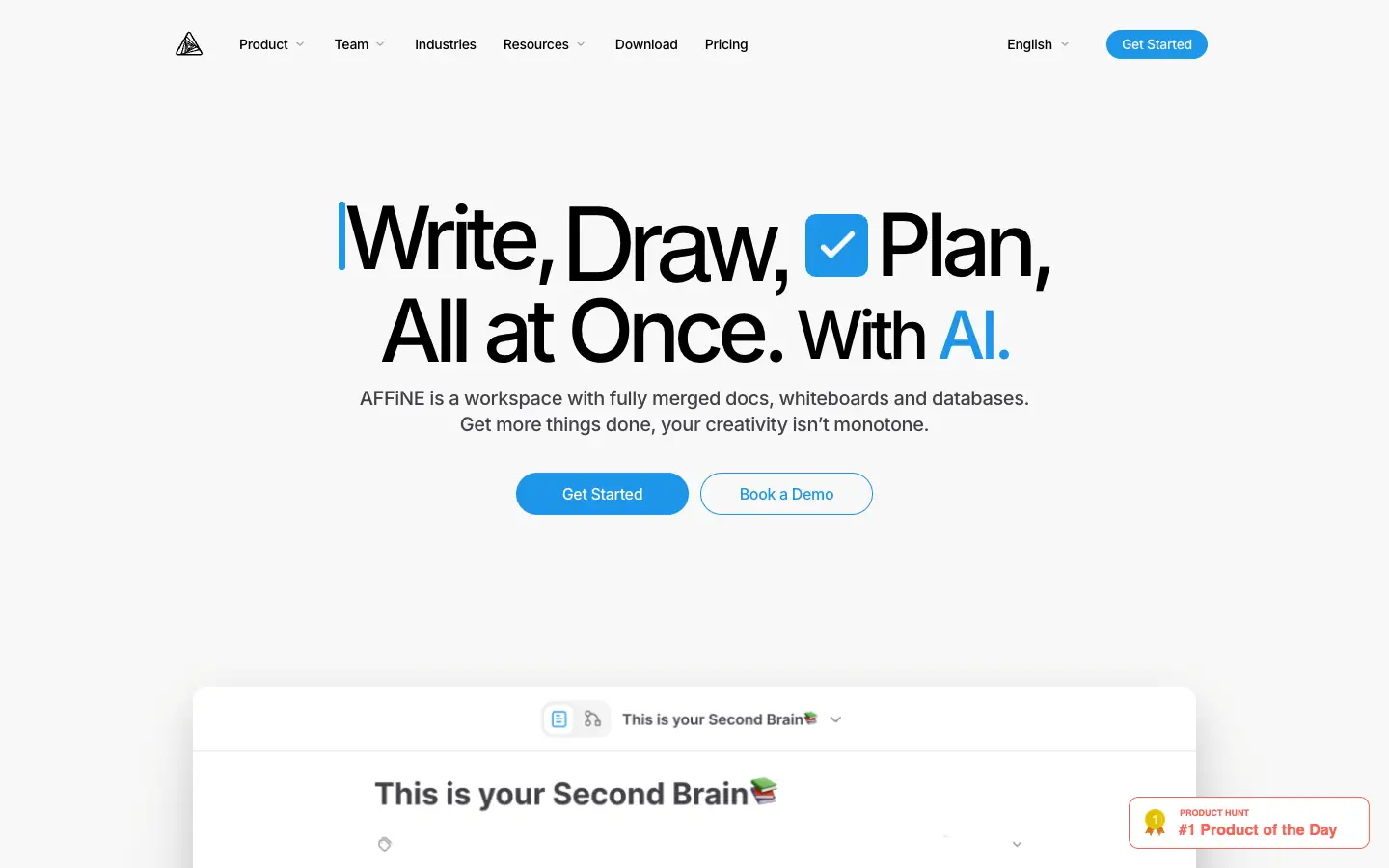
AFFiNE is our product. It is a local-first workspace that combines documents, an Edgeless whiteboard and databases with table and Kanban views. If your team uses ClickUp mainly for Docs and Whiteboards, with task lists that live next to the writing, AFFiNE covers that part in one place.
AFFiNE's licensing is mixed, so check it before you plan a rollout. The editor and most client code are MIT-licensed, while the server backend is source-available under a separate license (LICENSE). You can self-host it with Docker Compose for free for up to 10 seats per workspace. On AFFiNE Cloud, the Free plan includes 10 GB of storage and up to 3 members per workspace; Pro costs $6.75 per month and Team $10 per seat per month.
- Choose it if: you want docs, whiteboards and simple project tables in one workspace you can run yourself.
- Watch out for: AFFiNE is not a dedicated project management tool. It lacks the sprints, time tracking, workload views and reporting of Plane, OpenProject or ClickUp itself.
No longer maintained: Focalboard
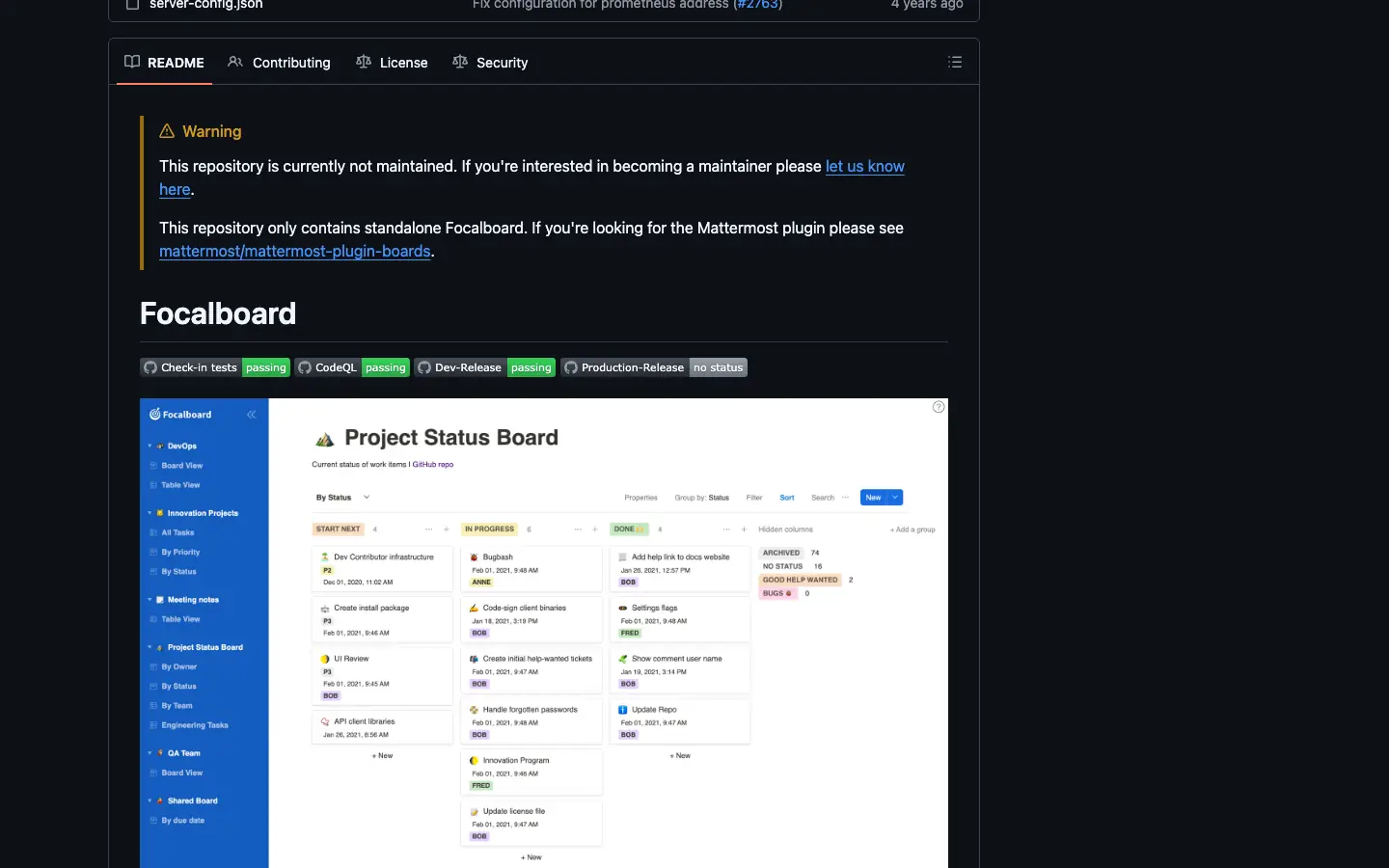
Focalboard is often listed as an open source ClickUp or Notion alternative, and earlier versions of this guide included it. Its README now states: "This repository is currently not maintained." The last release, v8.0.0, came out on June 13, 2024. We no longer recommend it for new deployments. The README points Mattermost users to the separate Mattermost Boards plugin.
Which open source ClickUp alternative should you choose?
| If you need to... | Start with | Watch out for |
|---|---|---|
| Track issues and sprints for a software team | Plane | Paid features need the closed-source Commercial Edition |
| Run classic projects with Gantt charts and budgets | OpenProject | Some features are Enterprise-only |
| Give a small, non-technical team a simple planner | Leantime | No free cloud plan; extras are plugins |
| Replace ClickUp and team chat together | Huly | Heavier self-hosted setup |
| Manage personal or small-team task lists | Vikunja | No built-in docs |
| Run a minimal Kanban board | Kanboard or WeKan | Boards only |
| Connect projects to sales, invoices and HR | Odoo Project | Large suite to set up |
| Keep docs, whiteboards and task tables together | AFFiNE | Not a full project management tool |
For a broader list that is not tied to ClickUp, see our guide to open source project management software. If self-hosting is not a requirement, compare cloud tools in our best task management software and project planning tools for teams guides. Moving off Trello rather than ClickUp? Our guide to Trello alternatives and how to move your boards covers Trello's JSON export and which tools import it.
How to move from ClickUp to a self-hosted tool
- Export your data first. ClickUp can export task data to a CSV file. Docs, whiteboards and comments may need separate exports or manual copying, so list what you rely on.
- Map your hierarchy. ClickUp uses Workspaces, Spaces, Folders and Lists. Decide how each level maps to projects, boards or labels in the new tool before you import.
- Try two tools with real work. Install your top two choices with Docker and run one real project in each for a week or two.
- Plan operations. Self-hosting means you handle backups, upgrades, HTTPS and sign-in. Check each project's upgrade notes, especially if you choose a tool with frequent releases.
- Check the license against your plans. AGPL tools (Plane, Leantime, Vikunja) require you to share changes if you modify the code and offer it to users over a network. MIT and LGPL tools are more permissive.
Frequently asked questions
Is ClickUp open source?
No. ClickUp is a proprietary, cloud-hosted product, and its source code is not published under an open source license. ClickUp offers a Free Forever plan, with paid plans from $9 per user per month (Core), but free to use is not the same as open source.
Can you self-host ClickUp?
No. According to ClickUp's data hosting help article, ClickUp is hosted entirely on Amazon Web Services. Enterprise Plan customers can choose the region where their data is stored, but there is no on-premise or self-hosted edition; an on-premise version is an open feature request on ClickUp's feedback board. If you need to keep data on your own servers, use one of the self-hostable tools above.
What is the best free open source alternative to ClickUp?
It depends on what you use ClickUp for. Plane's Community Edition is the closest fit for software teams, OpenProject's Community edition for traditional project plans, and Vikunja or Kanboard for lighter task lists and boards. All of them are free to self-host; you pay only for your server.
Is there an open source alternative to ClickUp with docs and whiteboards?
Huly includes documents alongside tasks and chat. AFFiNE combines documents, an Edgeless whiteboard and databases with table and Kanban views, but it is not a full project management tool. Leantime sells whiteboards and notes as plugins for its open source version.
Is Focalboard still a good ClickUp alternative?
Not for new deployments. Focalboard's GitHub README says the repository is not maintained, and its last release was v8.0.0 in June 2024.
Sources
All checked on November 14, 2026:
- ClickUp: Pricing, Export task data, Data hosting, On-premise feature request
- Plane: GitHub repository and releases, Pricing, Editions and versions
- OpenProject: GitHub repository and releases, Pricing, Download and installation
- Leantime: GitHub repository and releases, Pricing
- Huly: GitHub repository and releases, Self-hosting guide, Pricing
- Vikunja: GitHub repository and releases, Installation, Cloud pricing
- Kanboard: GitHub repository and releases, Official site
- WeKan: GitHub repository and releases, Official site
- Odoo: GitHub repository and LICENSE, Editions, Pricing
- Focalboard: GitHub repository and releases
- AFFiNE: GitHub repository and LICENSE, Pricing, Self-host