AFFiNE for Cyber Security

Threat modeling and security documentation.

Threat modeling documentation records a system, its data flows and trust boundaries, possible threats, and proposed mitigations. Use AFFiNE to connect manual diagrams with evidence notes, assumptions and follow-up owners. Your team performs the analysis; AFFiNE does not automatically discover threats or score risk.

30-minute Google Meet Workflow, deployment and team fit

Illustrative workspace: Portal review — research context

Workspace view
Portal review — research contextResearch findingThreat-model reviewIncident reviewEngagement handover

Page · research team · synthetic example

Portal review — research context

Scope
Example client portal
Assumption
Trusted identity provider
Review
Check the data boundary

Observations are marked separately from working hypotheses.

Same project · Edgeless canvas
Portal review — research context — illustrative canvasNodes: Identity, Portal, Service, Storage, What crosses here?. Connections: Identity to Portal (assumed trusted); Portal to Service; Service to Storage (data); What crosses here? to Storage. A dashed boundary labeled “Example service boundary”.EXAMPLE SERVICE BOUNDARY
Identity
Portal
Service
Storage
What crosses here?
assumed trusted
data
  • The example portal in scope, inside a hand-drawn service boundary.
  • The identity assumption is drawn as a dashed, assumed-trusted connection.
  • The data path leaving the boundary carries the review question.

Page + table

Research finding

Record the scope, sources and observed behavior in a page. Separate confirmed findings from hypotheses, then track the evidence your team still needs to review.

  • Observed · Observation

    Documented behavior

  • Working · Hypothesis

    Boundary assumption

  • Planned · Review

    Confirm the evidence

Source → Observation → Hypothesis → Review

Same project · Edgeless canvas
Research finding — illustrative canvasNodes: Identity, Portal, Service, Storage, What crosses here?. Connections: Identity to Portal (assumed trusted); Portal to Service; Service to Storage (data); What crosses here? to Storage. A dashed boundary labeled “Example service boundary”.EXAMPLE SERVICE BOUNDARY
Identity
Portal
Service
Storage
What crosses here?
assumed trusted
data
  • The example portal in scope, inside a hand-drawn service boundary.
  • The identity assumption is drawn as a dashed, assumed-trusted connection.
  • The data path leaving the boundary carries the review question.

Edgeless

Threat-model review

Map system components, data flows and trust boundaries on the whiteboard. Add assumptions and review questions to support your team’s manual threat modeling process.

Boundary
Example service boundary
Assumption
Trusted identity provider
Question
What crosses this boundary?
Same project · Edgeless canvas
Threat-model review — illustrative canvasNodes: Identity, Portal, Service, Storage, Crosses boundary?. Connections: Identity to Portal (trusted?); Portal to Service; Service to Storage; Crosses boundary? to Storage. A dashed boundary labeled “Boundary”.BOUNDARY
Identity
Portal
Service
Storage
Crosses boundary?
trusted?

Page + table

Incident review

Build a timeline from your team’s incident response documentation. Separate confirmed events from hypotheses, then record lessons and proposed playbook changes.

  1. Entry 1 · Fact

    Event noted from team records

  2. Entry 2 · Fact

    Review held with responders

  3. Finding · Conclusion

    Review conclusion

  4. Follow-up · Action

    Playbook change

Manually entered · not detection, response or forensic evidence

Same project · Edgeless canvas
Incident review — illustrative canvasNodes: Identity, Portal, Service, Storage, What crosses here?. Connections: Identity to Portal (assumed trusted); Portal to Service; Service to Storage (data); What crosses here? to Storage. A dashed boundary labeled “Example service boundary”.EXAMPLE SERVICE BOUNDARY
Identity
Portal
Service
Storage
What crosses here?
assumed trusted
data
  • The example portal in scope, inside a hand-drawn service boundary.
  • The identity assumption is drawn as a dashed, assumed-trusted connection.
  • The data path leaving the boundary carries the review question.

Page

Engagement handover

Assemble scope, findings, diagrams and follow-up actions for the receiving team. Make unresolved questions explicit and verify the sharing method before delivery.

Scope
Example portal review
Findings
Reviewed observations
Open items
Follow-up questions

Validate the sharing method before delivery

Embedded Edgeless frame

Markdown export — test the result before delivery

Same project · Edgeless canvas
Engagement handover — illustrative canvasNodes: Identity, Portal, Service, Storage, What crosses here?. Connections: Identity to Portal (assumed trusted); Portal to Service; Service to Storage (data); What crosses here? to Storage. A dashed boundary labeled “Example service boundary”.EXAMPLE SERVICE BOUNDARY
Identity
Portal
Service
Storage
What crosses here?
assumed trusted
data
  • The example portal in scope, inside a hand-drawn service boundary.
  • The identity assumption is drawn as a dashed, assumed-trusted connection.
  • The data path leaving the boundary carries the review question.
Illustrative workspace — synthetic content, not a product screenshot or a customer case study. In Edgeless: drag objects, use Hand to pan, or Ctrl/⌘ + scroll to zoom. Drawing tools are visual references.

From task to workspace

From threat model diagrams to incident reviews.

Document findings, discuss trust boundaries, review an incident and prepare a consulting handover.

Task-to-feature map for the four examples on this page
TaskDocsEdgelessTablesTeamExportOutput
01 · Security researcherDocument security research findingsDocsTablesResearch finding
02 · Security architectDraw a threat model diagramDocsEdgelessTeamThreat-model review
03 · Review facilitatorWrite a post-incident reviewDocsTablesTeamCyber incident review
04 · Security consultantPrepare a security consulting handoverDocsEdgelessExportEngagement handover

01Security researcher

Document security research findings

Record the scope, sources and observed behavior in a page. Separate confirmed findings from hypotheses, then track the evidence your team still needs to review.

Task
Keep a finding with the reasoning behind it
In AFFiNE
Research page separating observation from hypothesis, with a table for review status
Output
Research finding

Features used

Page + tableSynthetic example

Research finding

  • ObservedObservationDocumented behavior
  • WorkingHypothesisBoundary assumption
  • PlannedReviewConfirm the evidence

SourceObservationHypothesisReview

Illustrative layout with synthetic content — not a product screenshot.

02Security architect

Draw a threat model diagram

Map system components, data flows and trust boundaries on the whiteboard. Add assumptions and review questions to support your team’s manual threat modeling process.

Task
Run a manual threat-model review
In AFFiNE
Boundaries drawn in Edgeless; assumptions explained in connected notes the team edits together
Output
Threat-model review

Features used

EdgelessSynthetic example

Threat-model review

Threat-model review — illustrative canvasNodes: Identity, Portal, Service, Storage, Crosses boundary?. Connections: Identity to Portal (trusted?); Portal to Service; Service to Storage; Crosses boundary? to Storage. A dashed boundary labeled “Boundary”.BOUNDARY
Identity
Portal
Service
Storage
Crosses boundary?
trusted?
Boundary
Example service boundary
Assumption
Trusted identity provider
Question
What crosses this boundary?
Illustrative layout with synthetic content — not a product screenshot.

03Review facilitator

Write a post-incident review

Build a timeline from your team’s incident response documentation. Separate confirmed events from hypotheses, then record lessons and proposed playbook changes.

Task
Turn an incident review into team knowledge
In AFFiNE
Timeline written from team records, facts separated from hypotheses, follow-ups in a table
Output
Cyber incident review

Features used

Page + tableSynthetic example

Cyber incident review

  1. Entry 1FactEvent noted from team records
  2. Entry 2FactReview held with responders
  3. FindingConclusionReview conclusion
  4. Follow-upActionPlaybook change

Manually entered · not detection, response or forensic evidence

Illustrative layout with synthetic content — not a product screenshot.

04Security consultant

Prepare a security consulting handover

Assemble scope, findings, diagrams and follow-up actions for the receiving team. Make unresolved questions explicit and verify the sharing method before delivery.

Task
Deliver a complete consulting handover
In AFFiNE
Handover page linking findings and the diagram; Markdown export validated before delivery
Output
Engagement handover

Features used

PageSynthetic example

Engagement handover

Scope

Example portal review

Findings

Reviewed observations

Open items

Follow-up questions

Embedded Edgeless frame

Markdown exporttest the result before delivery

Validate the sharing method before delivery

Illustrative layout with synthetic content — not a product screenshot.

From example to evaluation

Discuss your security documentation workflow.

Talk through manual threat model reviews, research notes and engagement handovers.

Book a demo

Choose a time with the AFFiNE team.

One connected workspace

Write in a page. Switch the same doc to a canvas.

The examples above use the same building blocks.

  • Illustrative example

    Docs

    Readable pages with references, images and rich blocks.

    Explore Docs
  • Illustrative example

    Edgeless whiteboard

    A canvas to show how ideas and systems relate.

    Explore Edgeless
  • Illustrative example

    Tables and team workspace

    Track what is open and edit together in shared spaces.

    Explore Teamhub

Illustrative examples of docs, whiteboards and tables — not product screenshots or industry case studies.

Deployment and evaluation

Choose how the workspace runs.

Evaluate the workload, infrastructure and AI configuration together, with the people who will operate the workspace.

Illustration of a hosted cloud workspace

Hosted workspace

Try one workflow with permitted sample material before you scale it.

  • AFFiNE web app
  • One team workspace
  • No servers to run
Discuss cloud deployment
Self-host AFFiNE

Prerequisites

1 / Docker

Install Docker and Docker Compose on your machine.

2 / Download the latest Compose file

Download compose.yml from the AFFiNE repository.

3 / Prepare the environment file

Review the environment variables for your deployment.

Self-hosted

For self-hosted AFFiNE, Docker Compose is the documented deployment path. Workspace data and uploads use the infrastructure and storage you configure.

  • Docker Compose
  • PostgreSQL
  • File or S3 storage
  • OIDC sign-in
  • Sign in through your identity providerSelf-hosted AFFiNE supports OIDC. Review workspace roles and document access against your own requirements.
  • AI is optionalSelf-hosted AI needs a configured provider and can be turned off. Bring-your-own-key is marked experimental.
  • Licensing for restricted networksAn installable license activates without calling AFFiNE’s license servers. That alone does not make every feature work offline.
  • Backup and restoreThe process is documented, including a test restore. Run it in your own environment.
  1. Which engagement material may be stored, and where?
  2. How will access be separated between engagements?
  3. Is AI enabled, and with which configured provider?

This page makes no claim about SAML, SCIM, industry certifications, or approval for any specific workload.

Product references: AFFiNE Enterprise and documentation in English for Docker Compose, OIDC sign-in and AI configuration.

Continue exploring · General template

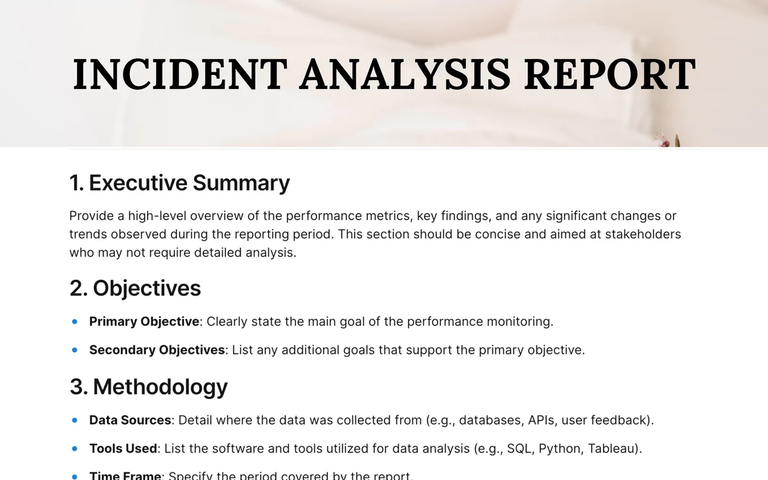
Existing Incident Analysis Report template

A general incident analysis template. Adapt its sections for a post-event security review.

Before you start

Questions from your team.

How can we create a threat model diagram in AFFiNE?

Define the system and scope, draw components, data flows and trust boundaries, then record possible threats and proposed mitigations. For each open question, add an evidence reference and an owner. Use the accompanying page to record review decisions and revisit the model when the system changes. Your team supplies the analysis.

Method reference (English): OWASP threat modeling guidance.

Does AFFiNE replace dedicated threat modeling tools?

No. AFFiNE supports manual diagrams and collaborative notes. It does not provide automated threat discovery, risk scoring or a complete threat library.

Can AFFiNE help with incident response documentation?

Use it to write review notes, reconstruct a timeline from your team’s records and track proposed playbook changes. Detection, automated response and forensic evidence handling remain in specialist systems.

Can we evaluate self-hosting?

Yes. Docker Compose is the documented self-hosting path, with sign-in through your identity provider via OIDC. Review the Enterprise documentation with your infrastructure team, then test one representative workflow before a wider rollout.

Is AI required for this workspace?

No. These workflows use pages, canvases and tables without requiring AI. In self-hosted AFFiNE, AI needs a configured provider and can be turned off. Review the provider and data flows before enabling it.

How should our team start?

Choose one current documentation task and a small set of permitted sample material. Evaluate whether the team can find, understand and hand over the work before expanding.

A conversation about your team

Evaluate AFFiNE for your security team.

Talk through manual threat model reviews, research notes and engagement handovers.

30-minute Google Meet · Choose an available time

Prefer email? Contact sales