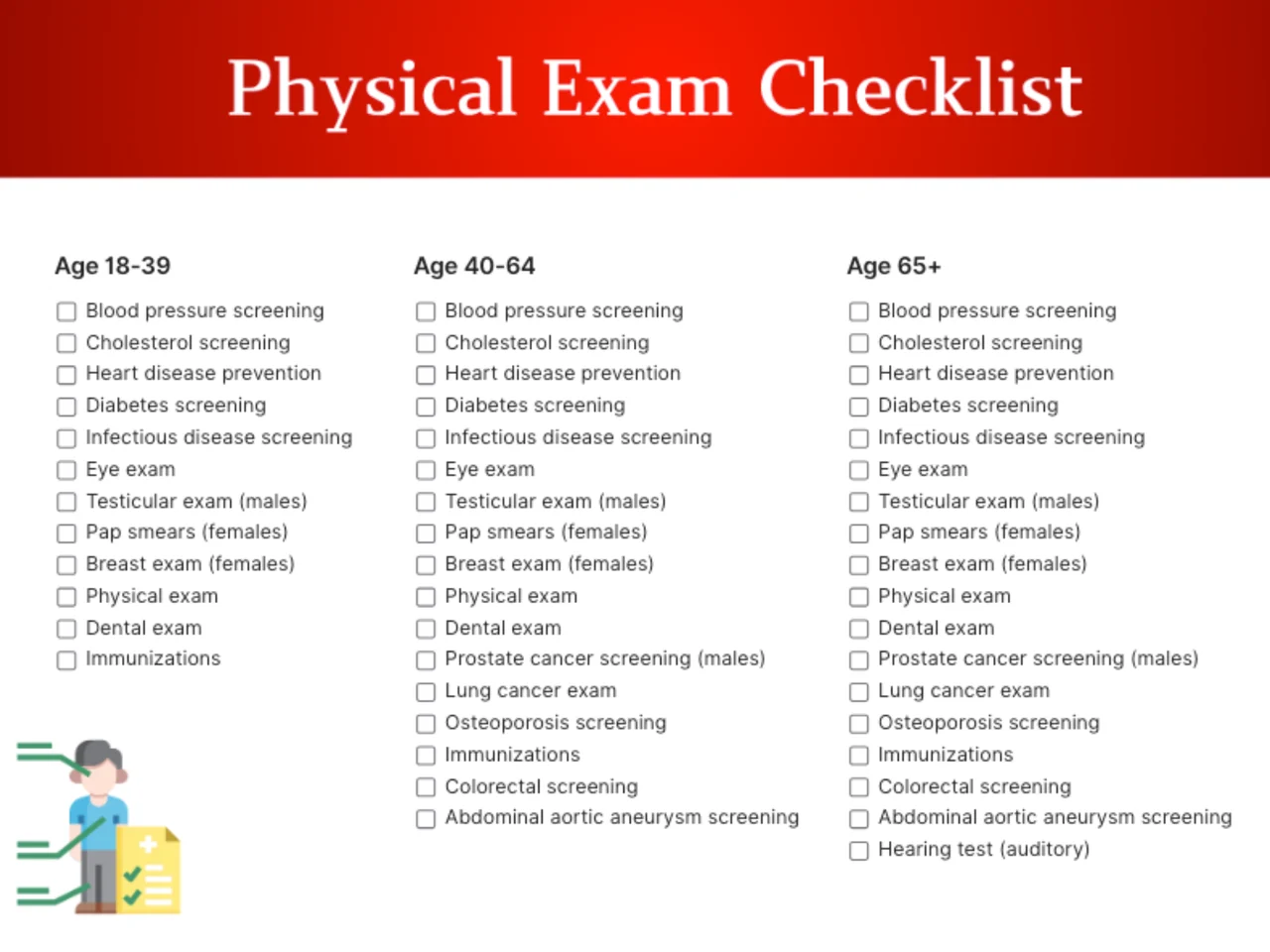
Annual Physical Exam Checklist by Age
Annual physical and wellness exam checklist by age: screenings, vaccines, and preventive care from childhood to senior years. Free printable, editable checklist.
This checklist provides a guide to essential health screenings and preventive measures for each age group, helping individuals stay proactive about their health. While recommendations may vary based on individual health history, lifestyle, and family history, these are general guidelines to discuss with a healthcare provider.
• Growth and Development: Height, weight, and head circumference to monitor growth.
• Vaccinations: Follow the CDC vaccination schedule.
• Hearing and Vision: Routine screenings to identify any early issues.
• Behavioral and Developmental Milestones: Regular assessment of social, motor, language, and cognitive skills.
• Physical Growth and Development: Monitoring of puberty milestones.
• Mental Health Screenings: Assess for signs of depression, anxiety, and behavioral issues.
• Vision and Hearing: Annual checks, especially for those in sports or with family history.
• Substance Use Counseling: Discussion about alcohol, tobacco, and drugs.
• Sexual Health: Guidance on sexual development, prevention, and education.
• Blood Pressure Check: Every 2 years if normal; yearly if higher risk.
• Cholesterol Screening: Every 4-6 years starting at age 20.
• Pap Smear and HPV Testing (Women): Pap test every 3 years from age 21-29; co-testing with HPV every 5 years from 30+.
• Mental Health: Assessment for stress, anxiety, or depression.
• Sexual and Reproductive Health: STI screenings as needed.
• Blood Pressure: Annually or as advised.
• Cholesterol: Every 4-6 years, depending on risk factors.
• Blood Glucose Test: Every 3 years starting at age 45.
• Mammogram (Women): Every 1-2 years starting around 40-50, depending on risk.
• Colon Cancer Screening: Begin screening at 45-50 with colonoscopy or other recommended tests.
• Bone Density Test (Women): Start at 65, or earlier if at high risk.
• Blood Pressure: Every visit.
• Cholesterol and Diabetes Testing: Regularly as advised.
• Bone Density Test: For all women 65+, and men at risk.
• Vaccinations: Annual flu shot, shingles vaccine (once after 50), pneumonia vaccine (based on health status).
• Hearing and Vision: Annually, as aging can affect sensory abilities.
• Cancer Screenings: Continue mammograms, colonoscopies, and prostate checks as advised.
• Cognitive Health Screening: Regular checks for signs of dementia or Alzheimer’s
Regardless of age, annual exams often include:
• Diet and Exercise Counseling: Recommendations for a balanced diet and regular physical activity.
• Stress Management: Strategies to handle life stressors effectively.
• Sleep Quality Assessment: Address any issues with sleep hygiene or disorders.
• Smoking and Alcohol Use Counseling: Discussion of the health risks associated with these habits.
The two terms overlap in everyday use, but they are not identical. A wellness exam (or wellness visit) is a preventive appointment focused on screening, risk assessment, and counseling — reviewing vitals, vaccines, lifestyle, and which screenings are due. An annual physical usually adds a fuller hands-on examination on top of that preventive review.
The distinction matters most for billing: many insurance plans, and Medicare in particular, cover a preventive wellness visit differently from a diagnostic physical, and discussing new symptoms during a wellness visit can change how the appointment is billed. Ask your provider which visit type you are booking and what your plan covers.
Practically, the checklist is the same tool for both: the age-based screening lists above are exactly what a wellness visit reviews, and the preparation steps below apply to either appointment.
Duplicate this checklist and open the section for your age group.
List current medications, supplements, and any symptoms or changes since your last visit.
Note family-history updates and the screenings your provider recommended last time.
Bring the checklist to the appointment and record results and follow-ups on the same page.
A typical annual physical covers vital signs (blood pressure, heart rate, BMI), a head-to-toe physical examination, blood work when ordered, and a review of vaccines and age-appropriate screenings. The exact panel depends on your age and risk factors — the sections above list the common items for each age group.
The focus shifts over time: children's visits center on growth, development, and immunizations; adults add blood pressure, cholesterol, and diabetes screening; from 40 on, cancer screenings such as mammograms and colonoscopies enter the schedule; and 65+ visits add bone density, hearing, vision, and fall-risk checks.
The core vitals and lifestyle items are the same, but several screenings differ — cervical and breast cancer screening for women, prostate screening discussions for men — and their recommended timings differ too. The checklist marks these items; confirm the right schedule for you with your provider.