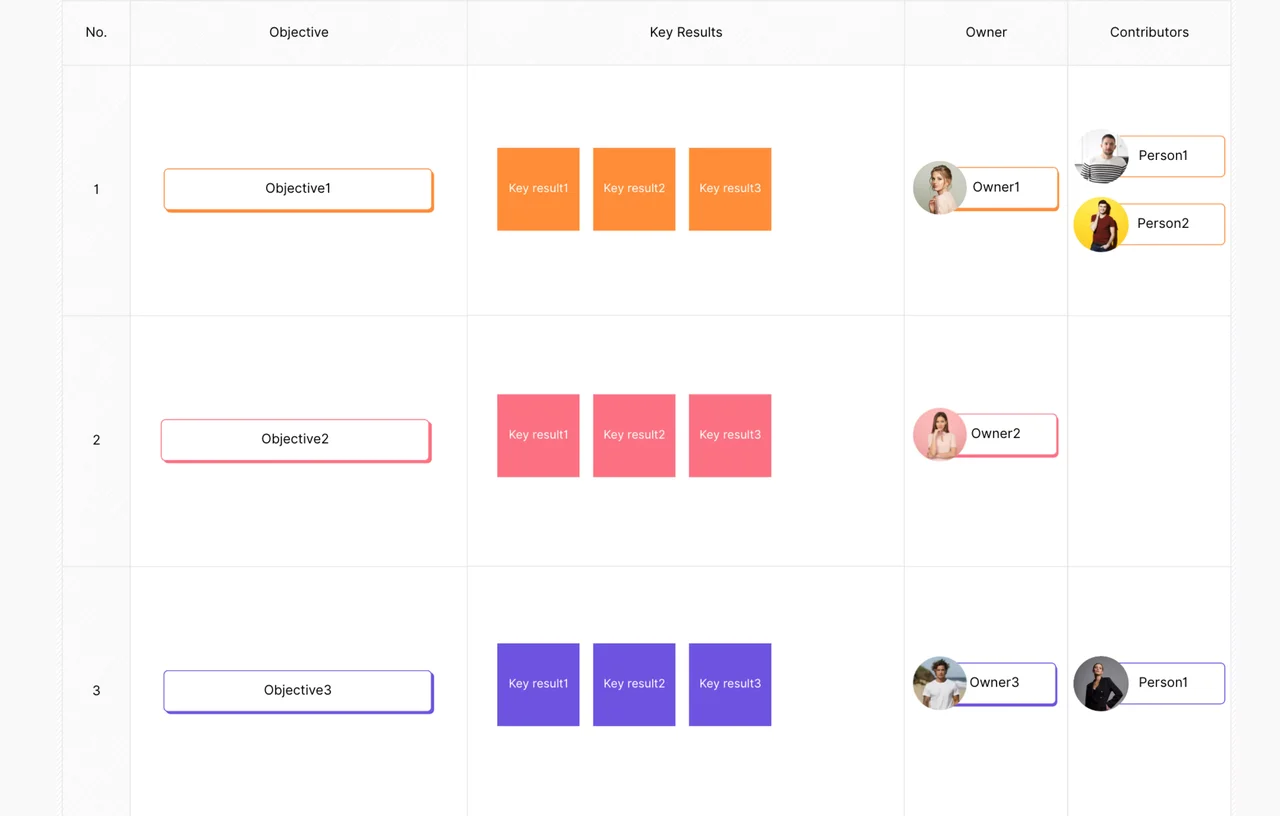
A team OKR template is a shared table where a team writes a small number of objectives, the measurable key results that show each objective is met, and the people responsible for them. This AFFiNE template lays that out on an editable whiteboard: three numbered rows, each with one objective, three key result cards, an owner, and contributors. Because it is a whiteboard, you can add rows, comments, or a check-in column without rebuilding the layout.
What's included in this template
- Five columns: No., Objective, Key Results, Owner, and Contributors.
- Three numbered rows, color-coded orange, pink, and purple, so each objective and its results stay visually grouped.
- Three key result cards per objective (nine in total), which you can rename, recolor, or add to.
- An owner card with an avatar for each objective, plus contributor cards for the people who support it.
- An edgeless (whiteboard) canvas, so the table can grow with extra rows or notes.
When to use a team OKR template
- Quarterly planning. Agree on two or three team objectives for the next quarter and write them where everyone can see them.
- Aligning a team with company goals. Put the company or department objective above the table and check that each team objective supports it.
- Cross-functional projects. Use the Contributors column to show which people from other teams are involved in a key result.
- Monthly check-ins. Open the board in a review meeting and update progress on each key result card.
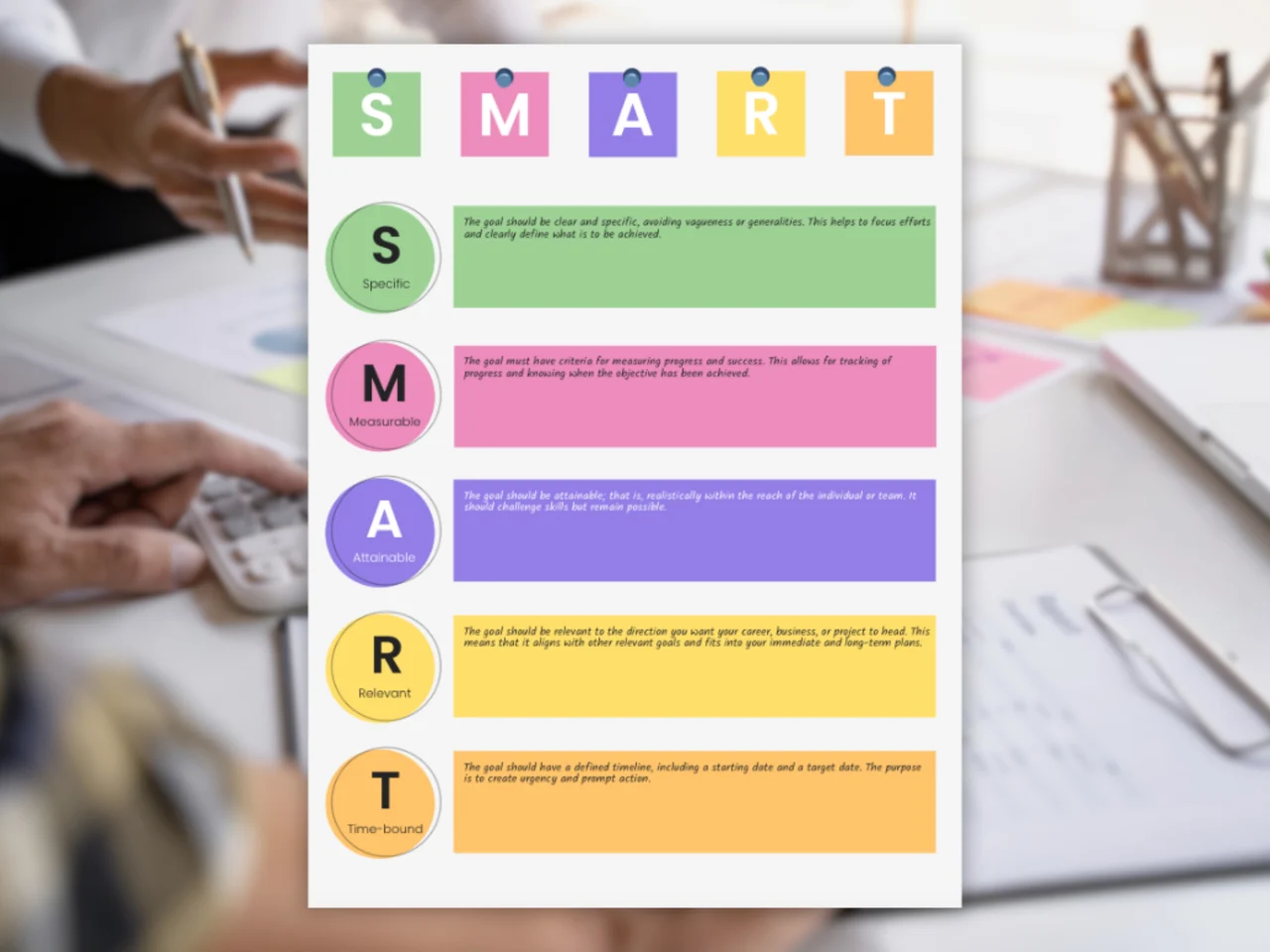
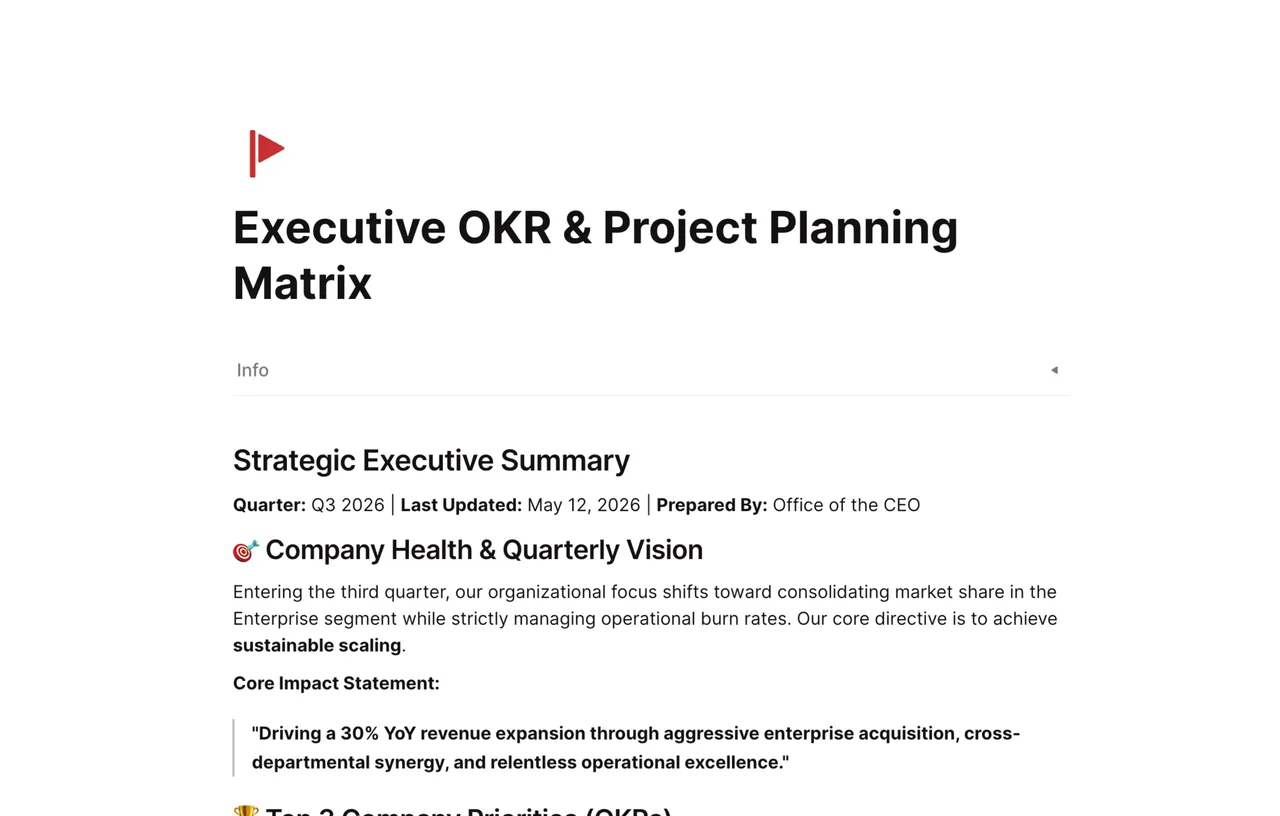
If your goal is personal or small enough for one person, a SMART goal template is usually a better fit. For a one-page summary of strategy and OKRs for leadership, see the executive strategy OKRs one-pager.
How to use this team OKR template in AFFiNE
- Duplicate the template. Click "Use this template" to copy the board into your AFFiNE workspace.
- Write the objectives. Replace "Objective1" to "Objective3" with short, qualitative statements of what the team wants to achieve this cycle.
- Add measurable key results. Rename each key result card with a number and a deadline, such as "Reduce average support reply time from 8 to 4 hours by June 30."
- Assign owners. Put one person on each objective's owner card and list supporting teammates under Contributors.
- Score progress regularly. Add a score or percentage to each key result card during weekly or monthly check-ins.
- Review at the end of the cycle. Note what moved and why, then duplicate the board for the next quarter.
Tips for writing team OKRs
- Keep the list short. Atlassian's OKR play suggests one to three objectives with three to five key results each.
- Write key results as outcomes, not tasks. "Launch the help center" is a task; "Cut repeat tickets by 20%" is a result.
- Give every key result a single owner, even if several people contribute.
- Agree on a scoring scale before the quarter starts so check-ins are quick.
Frequently asked questions
What is the difference between an objective and a key result?
An objective is a qualitative statement of where the team wants to go. A key result is a measurable outcome that proves you got there, with a number and a deadline.
How many OKRs should a team have?
Most teams work best with one to three objectives per cycle and three to five key results each. This template starts with three objectives and three key results per objective.
How often should a team review its OKRs?
Many teams check progress weekly or monthly and score OKRs at the end of each quarter. Update the key result cards during each check-in so the board stays current.
Can I share this OKR template with my team?
Yes. Once the template is in your AFFiNE workspace, you can invite teammates to edit it, or export the board to PDF or PNG to share in a meeting.
For more examples, read the best free OKR templates and everything you need to know about OKRs, or browse more creative thinking templates.