Free Balanced Scorecard Template (Four Perspectives)
Free balanced scorecard template covering financial, customer, internal process, and learning perspectives with objectives, measures, targets, and initiatives.
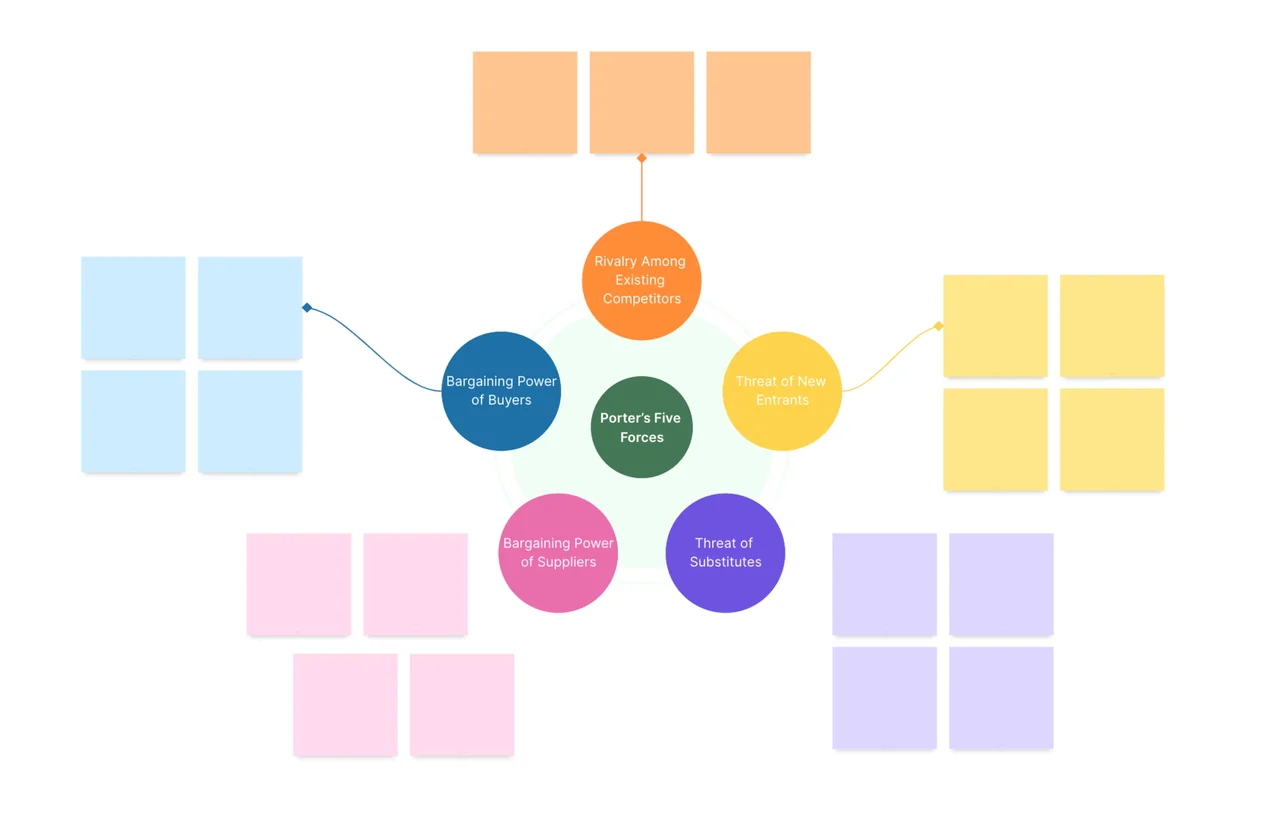

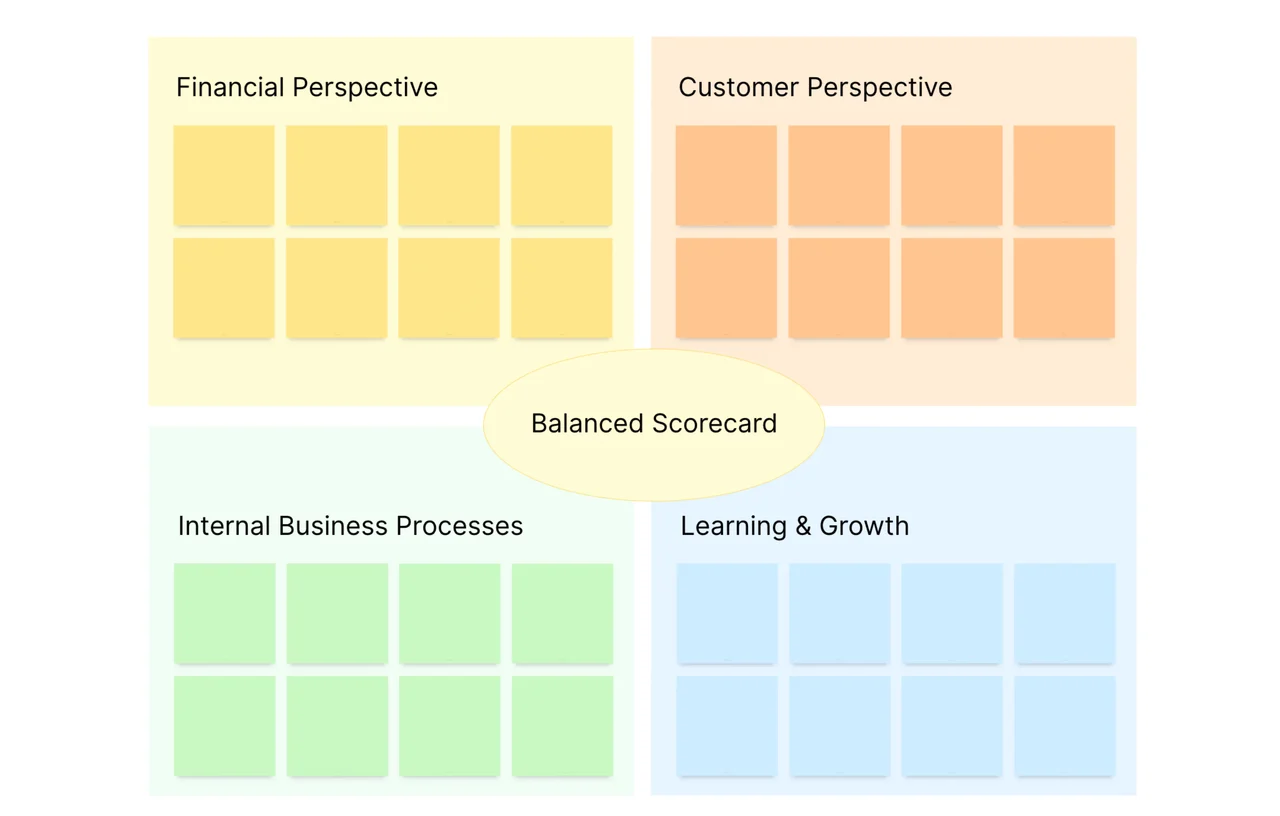
The Balanced Scorecard template offers firms a robust strategic planning and management framework that converts vision and strategy into practical goals and measurements. By assessing performance from four critical perspectives—financial, customer, internal process, and learning and growth—this template assists company executives in maintaining a balanced picture of organizational performance while ensuring short-term operations correspond with long-term strategic goals.
The Balanced Scorecard looks beyond typical financial measurements to present a comprehensive picture of your organization's health. By measuring KPIs from many viewpoints, you'll obtain a better understanding of how different areas of your business interact and affect overall performance, allowing for more informed decision making.
This strategic framework ensures that everyone in your business understands how their everyday actions contribute to the overall corporate goals. The visual dashboard effectively conveys objectives, metrics, targets, and activities, promoting transparency and alignment from the leadership level to front-line staff.
The Balanced Scorecard's organized methodology transforms abstract strategic principles into real, quantifiable actions. The template makes it easier to create obvious cause-and-effect links between objectives, allowing you to determine which activities will have the most influence on your company's performance and strategic success.
Duplicate the template and write the strategy statement at the top — every scorecard line must trace back to it.
Set two to four objectives in each perspective: financial, customer, internal process, and learning & growth.
Give every objective one measure, one target, and one owner.
List the initiatives — the actual projects — that move each measure.
Review monthly: mark each measure green, yellow, or red, and let reds trigger a conversation, not a hiding.
Financial (what shareholders see), customer (what customers experience), internal process (what the company must excel at), and learning & growth (the people and systems behind the rest). The point is that financial results alone arrive too late to steer by.
KPIs are individual metrics; a balanced scorecard is the structure that connects them to strategy. A KPI list tells you what you track — a scorecard shows why each number matters and which project moves it.
Around eight to sixteen total — two to four per perspective. Beyond that the scorecard becomes a reporting chore instead of a steering tool; if everything is measured, nothing is prioritized.