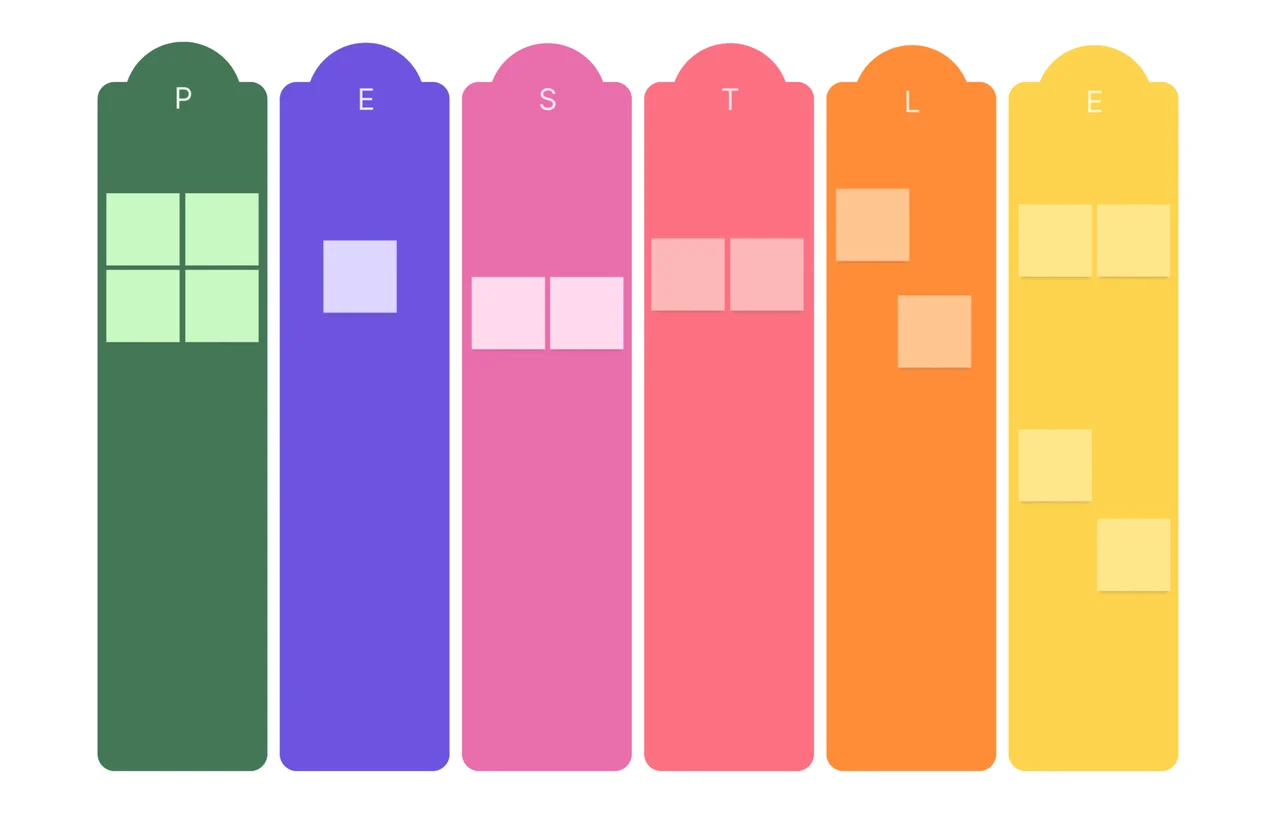
A PESTLE analysis template is a framework for listing the external factors that can affect an organization, grouped into six categories: political, economic, social, technological, legal, and environmental. This AFFiNE template gives you six color-coded columns, one for each letter of PESTLE, with sticky notes ready for your findings. It sits on an editable whiteboard, so a team can add, move, and group notes together during a workshop.
What's included in this template
- Six tall columns labeled P, E, S, T, L, and E, each in its own color (green, purple, pink, red, orange, and yellow).
- Sample sticky notes in every column that you can overwrite, duplicate, or delete.
- Open space below the notes for adding more factors as the analysis grows.
- An edgeless (whiteboard) canvas, so you can add a title, a scope note, or a ranking area beside the columns.
When to use a PESTLE analysis template
- Strategic or business planning. Scan the external environment before setting annual goals or entering a new market.
- Product or service development. Check regulation, technology trends, and customer behavior that could shape a launch.
- Workforce and HR planning. The UK's CIPD PESTLE factsheet lists workforce planning and organizational change among common uses.
- Class assignments. Business and economics students can use the six columns to structure a case study.
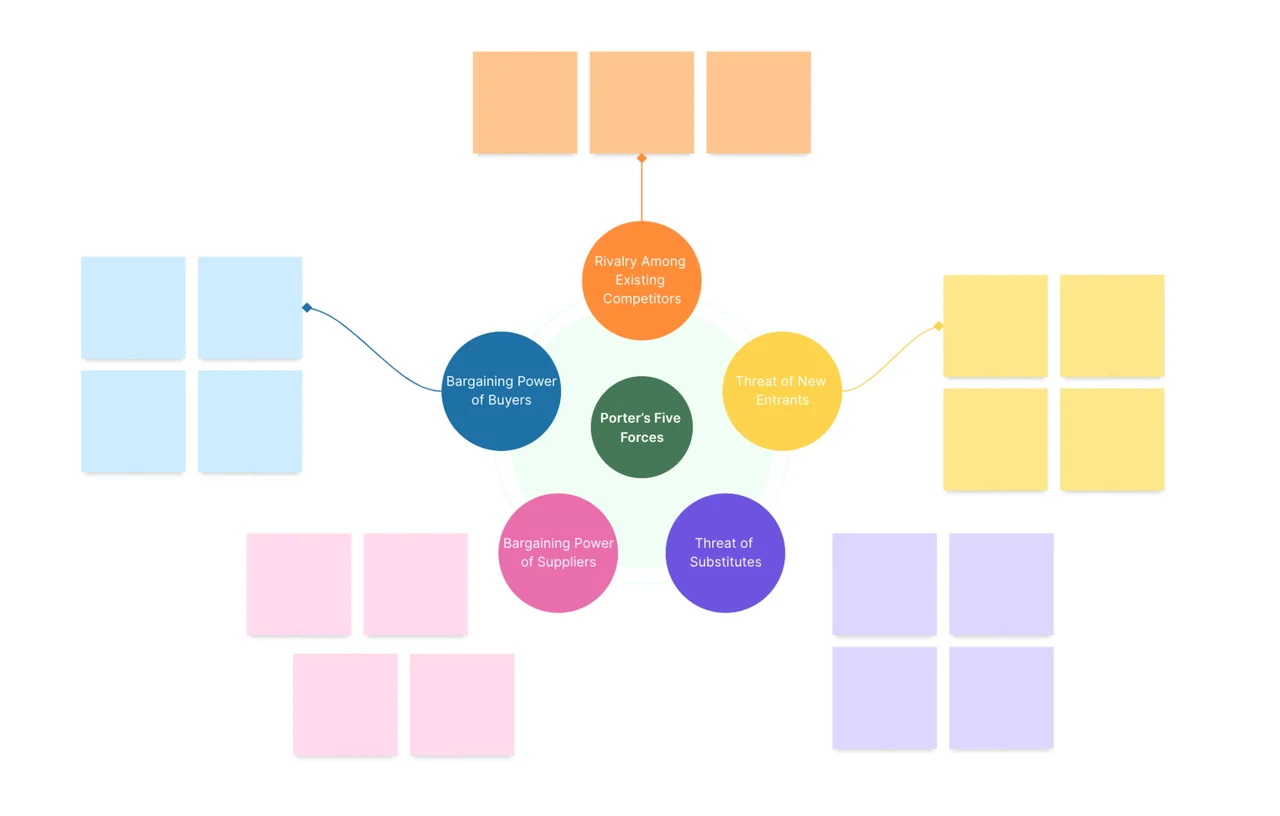
PESTLE looks only at external factors. To pair it with your internal strengths and weaknesses, read the guide to free SWOT analysis templates. For industry competition, use the Porter's Five Forces template.
How to use this PESTLE analysis template in AFFiNE
- Duplicate the template. Click "Use this template" to copy the board into your AFFiNE workspace.
- Define the scope. Add a note above the columns stating the organization, market, and time frame you are analyzing.
- Brainstorm factors. Write one external factor per sticky note in the matching column, such as a new data privacy law under L.
- Rank the factors. Resize or reorder notes so the most likely and highest-impact factors sit at the top of each column.
- Turn findings into actions. Add a note next to each top factor describing the opportunity, risk, or response.
- Review and repeat. Revisit the board every few months, since political, economic, and legal conditions change.
Tips for a useful PESTLE analysis
- Use evidence. Note the source of each factor, such as a government report or industry survey.
- Separate political from legal: political covers policy and government stability; legal covers laws that are already in force.
- Keep it specific to your market. "Inflation" is vague; "Rising freight costs in the EU" is something you can act on.
- Involve people from different teams, because each sees different external pressures.
Frequently asked questions
What does PESTLE stand for?
PESTLE stands for political, economic, social, technological, legal, and environmental. These are the six groups of external factors the analysis covers.
What is the difference between PEST and PESTLE?
PEST covers political, economic, social, and technological factors. PESTLE adds legal and environmental factors as separate categories.
When should you do a PESTLE analysis?
Do one before major decisions such as strategic planning, entering a new market, or launching a product, and repeat it regularly because external conditions change.
Is PESTLE analysis internal or external?
It is external. It looks at forces outside the organization; tools like SWOT add the internal view.
Find more frameworks in the creative thinking templates collection.