
How Engineering Teams Structure Data for Industrial Tape Selection
An industrial tape decision can look complete when a part number is approved — and still be difficult to reuse six months later. The team may remember that a sample worked, yet forget which substrate was cleaned, how pressure was applied, what temperature was present, or whether the test covered removal, electrical insulation, reinforcement, or only initial handling. When that context disappears, the product name becomes a weak substitute for evidence.
A structured application record solves this practical information problem. It keeps the operating conditions, product rationale, supplied form, test evidence, and change boundaries attached to the decision. The record does not need a complex software system: shared documents, controlled worksheets, or an internal knowledge base can all work when the fields reflect the application and ownership is clear. What matters is that commercial, engineering, quality, and purchasing teams refer to the same decision object.
This guide walks through how engineering teams structure that record, field by field.
Key takeaways
- Describe the application before collecting products: process stage, intended function, duration, and a named decision owner come first.
- Record substrate, exposure, and mechanical force as separate fields — "used on metal" is rarely enough to reproduce a decision.
- Attach a one-sentence rationale to every tape family under consideration so future reviews can test whether it still applies.
- Capture supplied form and batch traceability alongside the material choice; a packaging change can alter the application.
- Store observed test conditions and explicit limitations, not just a pass label, and define which changes reopen the decision.
Define the Application Record Before Collecting Products
Teams often start with vendor catalogs because product data is easy to collect. Application data deserves the first position. The record should open with a plain-language description of the process: PCB solder masking during assembly, motor or transformer insulation, heat-sealing release, abrasion protection, carton reinforcement, pallet support, or another defined task. Product families should enter only after the job is understood.
The application field should identify the stage at which tape is applied and the stage at which performance is judged. Temporary masking that must remove cleanly after processing is different from insulation that remains in an assembly. Packaging reinforcement may be judged after stacking and transport, not immediately after a strip is placed on a carton. These time boundaries prevent a quick sample demonstration from being mistaken for a complete review.
Every record also needs a decision owner and contributing roles. Engineering may define the process condition, quality may define validation evidence, operations may describe application constraints, and purchasing may control the approved supplied form. Naming those roles — much like a RACI chart does for project work — prevents missing information from turning into an invisible assumption. Supplier discussions can then attach to defined decision fields instead of an informal product-name request.
Capture Substrate, Exposure, and Force as Separate Fields
"Used on metal" is rarely enough. The substrate field should identify the actual material or a representative description, surface finish, coating, texture, cleanliness, geometry, and any preparation step. When tape bridges two surfaces, both belong in the record. Where the process involves printed circuit boards, wire wrapping, release surfaces, cartons, films, or coated components, the record should preserve the exact interface being reviewed.
Exposure deserves its own section because application temperature and service temperature are different facts. Record heat, cold, humidity, chemicals, abrasion, electrical conditions, outdoor exposure, storage, and removal requirements only where they are relevant. Do not copy every possible exposure from a generic checklist: shorter records with observed conditions are more useful than long records filled with guessed values.
Force should be described by direction and event. Peel at an exposed edge, shear under a sustained load, tension along reinforcement, and abrasion across a surface create different questions. A simple operations sketch can show where the tape sits, which edge is vulnerable, and how a component or package moves. This gives the supplier a clearer basis for discussing construction than an unsupported request for the "strongest" tape.
Connect the Tape Family to a Documented Rationale
A decision record should state why a tape family entered the comparison at all. Glass cloth tape may be considered for certain electrical insulation, coil wrapping, lead protection, or abrasion-related tasks. PTFE film tape may enter conversations about release, low-friction processing, heat sealing, or insulation. Mono filament tape may be considered for directional reinforcement, bundling, or packaging support. These are starting relationships, not universal approvals, and the rationale becomes part of the validation evidence.
The rationale field can be one or two sentences: "Considered because the process needs a release surface during heat sealing," or "Considered because the carton requires reinforcement across a defined load path." That sentence makes later review much easier. When the process changes, the team can ask whether the original rationale still applies — the same test a decision matrix applies to any weighted choice. If it no longer holds, keeping the same product solely because it is already in the system becomes visibly weak reasoning.
Supplier catalogs are most useful when they are organized the same way the record is. River Tape, for example, organizes its offering around industrial applications such as electronics masking, electrical insulation, reinforcement, packaging, release, and related processing needs. That application view is helpful when the internal record uses the same discipline: technical teams can review River Tape tape solutions by application as a way to identify questions and plausible product families, while keeping final suitability tied to their own materials, process, and validation.
Include Supplied Form and Traceability in the Decision
Technical approval can fail at implementation if the record describes only the tape construction. Width, length, core, liner, roll presentation, cut format, labels, individual packaging, and carton arrangement can affect line fit, operator handling, and receiving. These fields belong alongside the material choice because a change in supplied form may alter the application even when the underlying tape family appears unchanged.
The record should also state how a received batch will be identified. Converters typically describe factory capabilities such as coating and laminating, slitting, rewinding, inspection, OEM packaging, and batch traceability. A buyer can connect those capabilities to the internal receiving workflow — ideally documented as a short standard operating procedure — by recording which roll labels, packaging identifiers, inspection documents, or batch references must remain associated with the approved condition.
This information is especially useful when several functions touch the order. Purchasing knows what may be substituted and what requires review. Receiving knows which identifiers to retain. Operations knows the roll presentation used during validation. Quality can trace an observation back to the supplied batch instead of treating every roll under a broad product name as indistinguishable.
Use an Industrial Tape Decision Record
The fields below form a compact record that can live in an existing engineering or operations system. The goal is not to create paperwork for every sample. It is to preserve the facts that determine whether an earlier conclusion remains relevant.
| Record group | Minimum useful fields | Change trigger |
|---|---|---|
| Application | Process stage, intended function, duration, decision owner | New task or different stage of use |
| Interface | Substrates, finish, cleanliness, geometry, preparation | Material, coating, or preparation change |
| Environment | Application and service conditions, exposure, removal need | Temperature, chemical, storage, or service change |
| Mechanical demand | Force direction, load event, vulnerable edge, handling sequence | Load, geometry, or movement change |
| Supplied form | Width, length, core, liner, presentation, packaging, identifiers | Conversion or packaging change |
| Evidence | Sample ID, batch, test method, observations, limits, approver | New source, new batch condition, or expired evidence |
The change-trigger column is what makes reuse conditional. A record can say that a reviewed decision remains current while the defined fields are unchanged. It can also say that a substrate coating change, a higher process temperature, a new roll width, different application equipment, or an altered transport load requires review. This is more precise than a blanket rule that either retests everything or assumes an approval lasts forever.
Teams that keep this kind of record in a shared workspace get one more benefit: the table, the operations sketch, and the discussion thread stay attached to each other. A connected workspace such as AFFiNE lets a record like this live next to the whiteboard sketch of the load path and the meeting notes where the decision was made, so the evidence does not scatter across attachments and chat messages.
Store Observations, Not Just a Pass Label
A binary pass result is difficult to interpret without the test conditions. The evidence section should describe how the sample was applied, which materials were used, how long it was observed, what handling or exposure occurred, and which failure criteria were checked — the same logic that makes acceptance criteria more useful than a bare "done." Photographs, sketches, sample identifiers, and short operator notes provide useful context when they are linked to the record rather than scattered across messages.
Limitations should be explicit. If the trial covered room-temperature application and short-term handling, say that elevated temperature and long storage were not evaluated. If removal was not part of the task, do not imply a conclusion about residue. If electrical properties require a separate engineering review, keep that boundary visible. A precise limitation is better decision data than an impressive but undefined pass.
After approval, the record becomes a handoff tool. Purchasing can quote the approved supplied form, operations can confirm the setup, receiving can retain batch information, and quality can recognize when a reported issue falls outside the original context. When the application changes, the team does not have to reconstruct the original decision from memory.
Treat the Record as Change Control, Not a Permanent Guarantee
The structured record organizes evidence; it does not establish suitability beyond the actual tested materials and conditions. Its strongest contribution is making that boundary usable. It tells the team what was reviewed, what remains unknown, and which future changes should reopen the decision.
This approach keeps industrial tape selection connected to real engineering work. The product name remains in the record, but it no longer carries the whole conclusion. Application, interface, exposure, force, supplied form, traceability, and validation evidence share that responsibility. As a result, teams can move faster without pretending that missing context is certainty — and they can explain why a choice remains valid, or why it needs another look, when the process evolves.
FAQ
What should an industrial tape decision record include?
A useful record covers six groups: the application (process stage, function, duration, and decision owner), the interface (substrates, finish, cleanliness, and preparation), the environment (application and service conditions), the mechanical demand (force direction and load events), the supplied form (dimensions, liner, presentation, and packaging identifiers), and the evidence (sample and batch IDs, test method, observations, and explicit limitations).
Why is application data more important than product data in tape selection?
Product data describes what a tape is; application data describes what the job requires. A part number that passed a test is only reusable if the team knows which substrate, exposure, and force conditions that test covered. Starting from the application keeps vendor catalogs in their proper role — a source of candidates to evaluate, not a substitute for understanding the task.
When should a team re-test an approved industrial tape?
Whenever a field named in the record's change triggers moves: a new substrate coating, a higher process temperature, a different roll width or application equipment, a changed transport load, a new supply source, or evidence that has simply aged past its review window. Between those triggers, the documented approval remains current — that conditional reuse is the main efficiency the record buys.
Do tape decision records require special software?
No. The structure matters more than the tool. A controlled worksheet, a shared document, or a page in a team knowledge base all work, as long as every function refers to the same record, each record has a named owner, and evidence stays attached to the decision rather than scattered across email threads and chat messages.
Related Articles

6 Best Internal Knowledge Base Software Tools
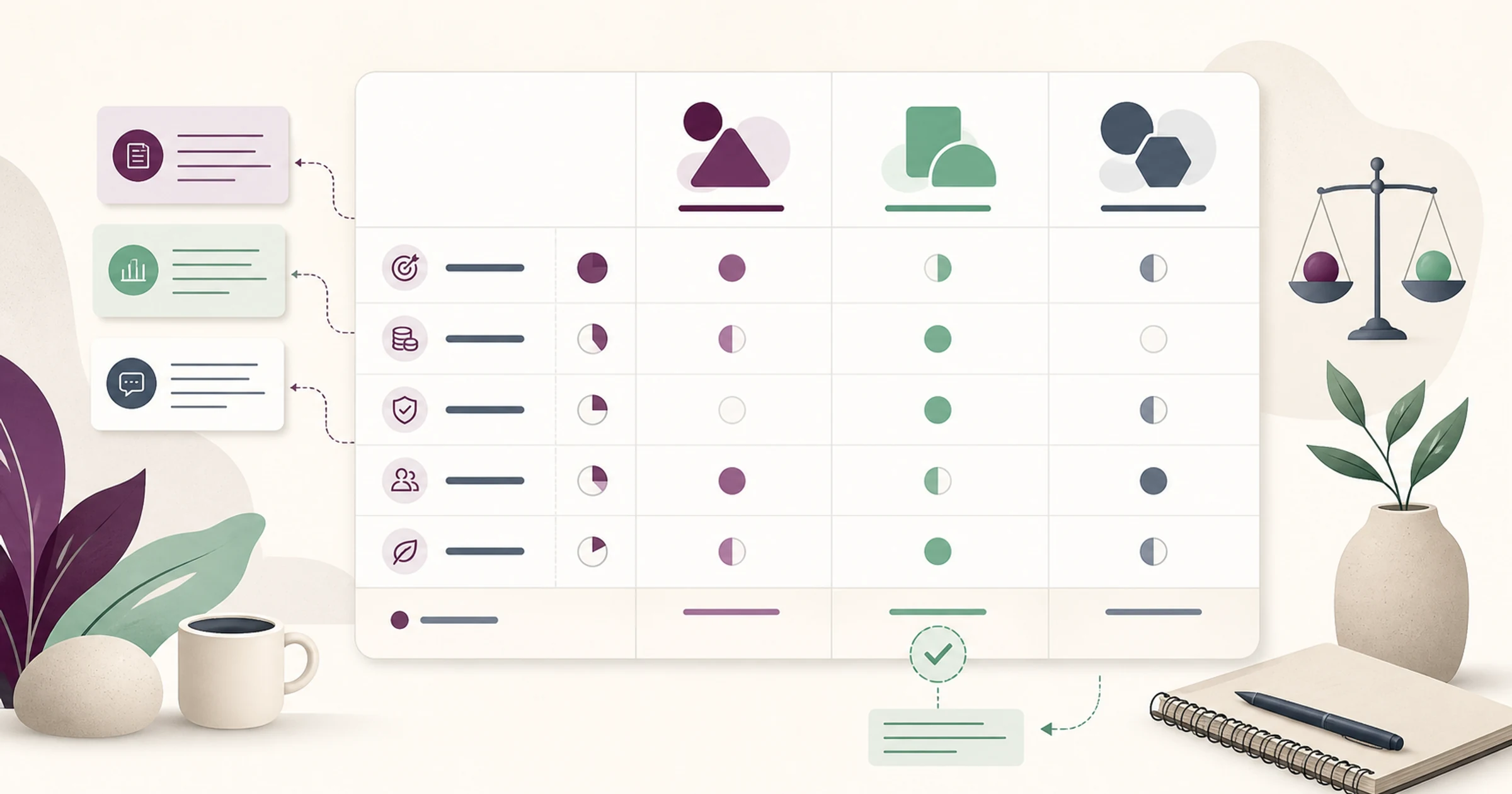
Decision Matrix Template: Weighted Scoring With Examples
![How to Write Your Own Standard Operating Procedure (SOP): A Step-by-Step Guide with 5 Best Free Tools [Templates & Examples]](/og.jpeg)
How to Write Your Own Standard Operating Procedure (SOP): A Step-by-Step Guide with 5 Best Free Tools [Templates & Examples]

Acceptance Criteria Examples and Template: Copy, Paste, Ship