Free Sequence Diagram Template (UML) — Draw Online
Free UML sequence diagram template with lifelines, messages, and activation bars ready to edit. Map API calls and system interactions on an infinite canvas.
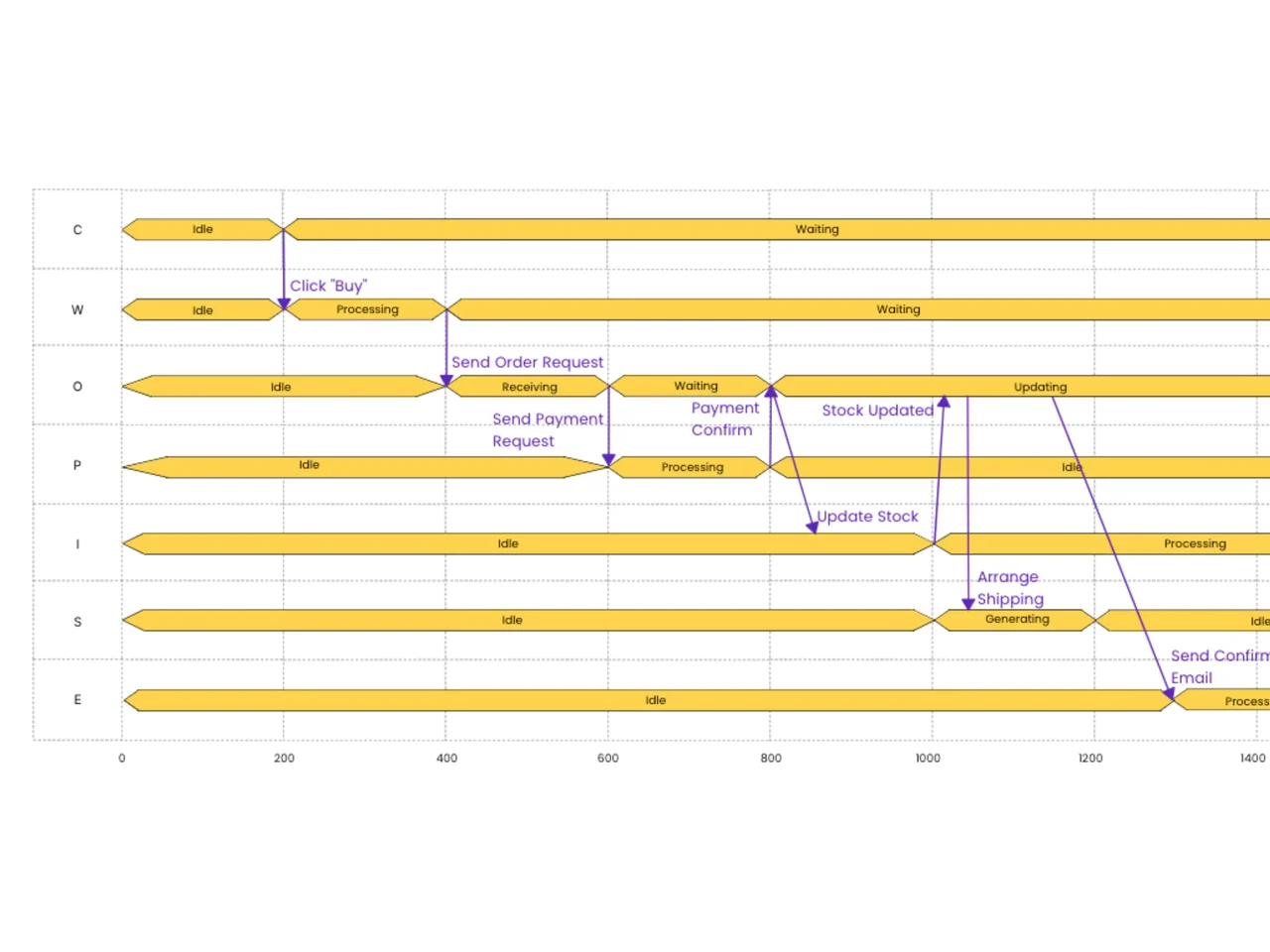
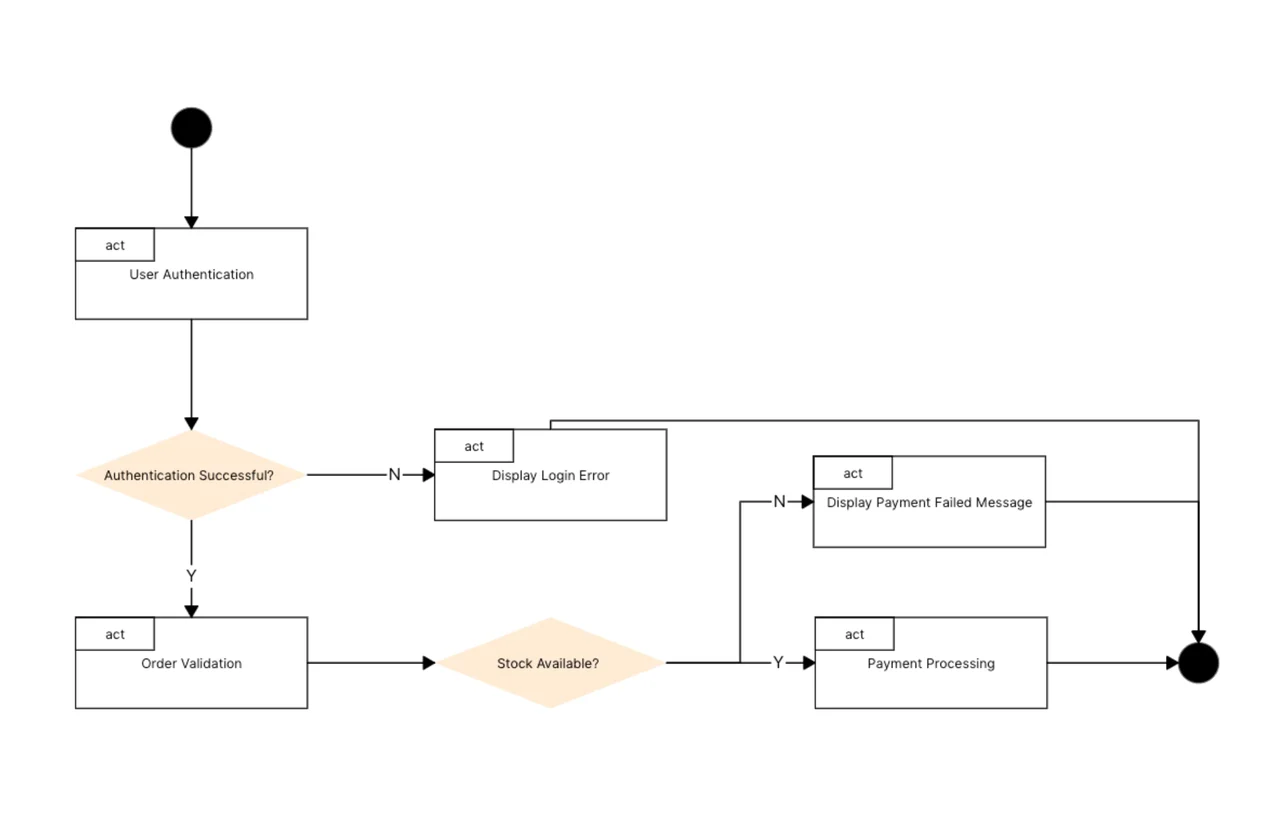
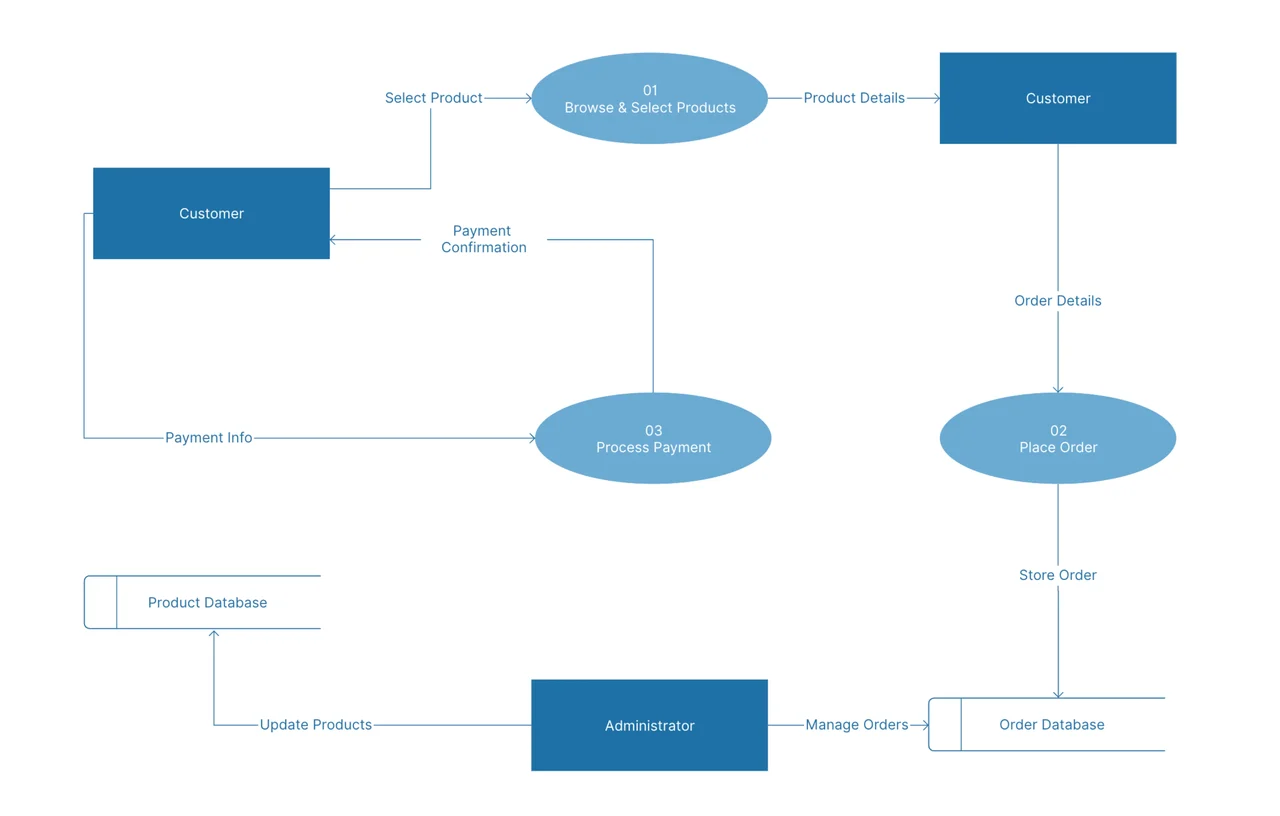
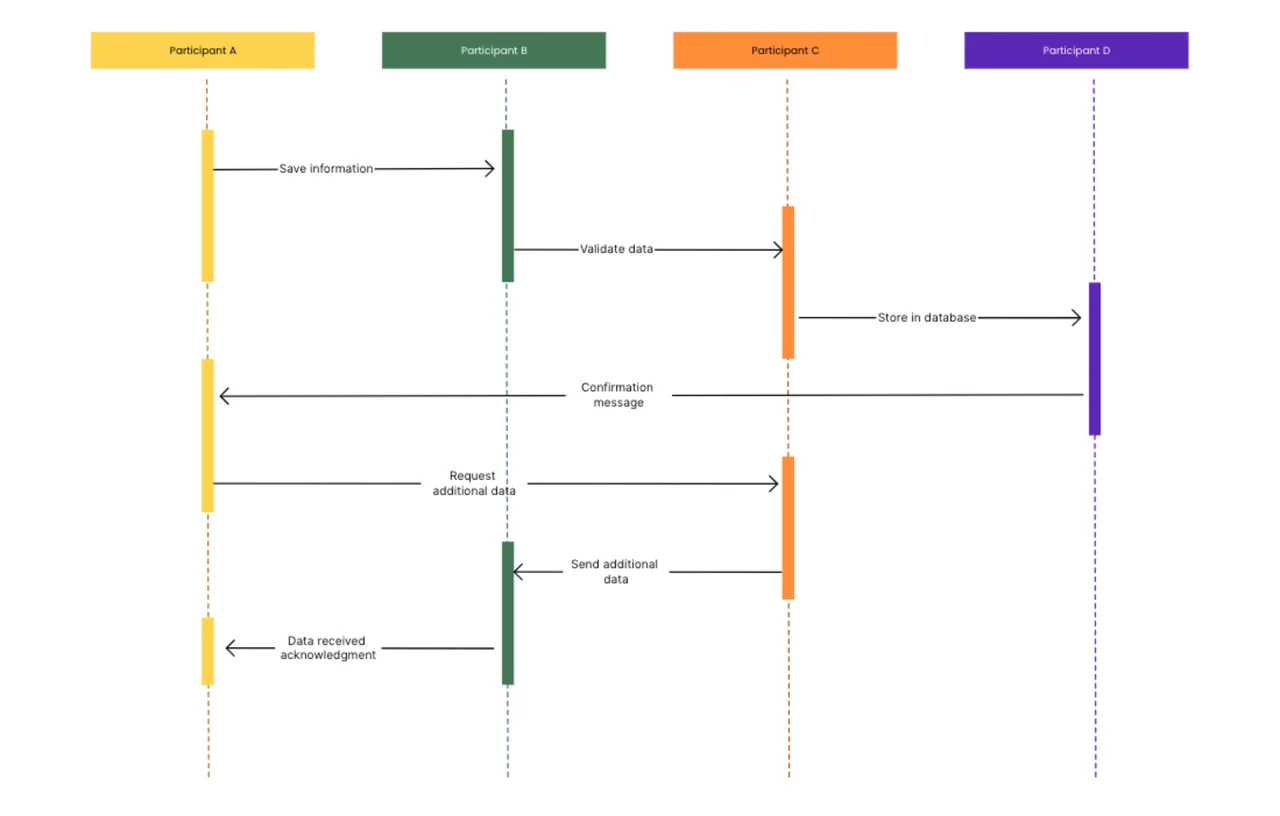
A sequence diagram is an effective UML modeling tool that shows how processes interact with one another and in what order, making complicated system interactions easier to grasp. This template offers a systematic framework for documenting message exchanges between components, allowing developers and stakeholders to view the sequential flow of actions within a system. Whether you're creating new software architecture or documenting current system operations, this template makes communication easier and ensures that everyone knows how components interact over time.
Sequence diagrams convert abstract system behaviors into explicit visual representations of component interactions. Mapping the actual sequence of message exchanges allows you to detect potential bottlenecks, redundancies, or missing interactions that might otherwise be concealed in text-based documentation. This visual clarity allows teams to immediately comprehend how different pieces of a system communicate and work together.
Well-designed sequence diagrams are critical development documents that help technical and non-technical stakeholders communicate. This template allows you to generate uniform, professional diagrams that clearly demonstrate system architecture and process flows, making it easier to onboard new team members, manage legacy systems, and ensure that everyone understands how the system works.
Sequence diagrams, which visualize message exchanges and their timing amongst system components, assist teams in identifying optimization possibilities and potential design problems early in the development process. This template provides the framework for modeling alternative interaction patterns, comparing various techniques, and making educated design decisions that improve overall system performance and maintainability.
Duplicate the template and list the participants — users, services, databases — as lifelines across the top.
Add the triggering interaction first: the actor call that starts the flow, drawn as an arrow to the first lifeline.
Chain each message left to right in time order, labeling arrows with the call or event name.
Mark activation bars where a participant is doing work, and dashed return arrows for responses.
Add alt/loop frames for branching and retries, then walk the diagram top to bottom to verify the story holds.
A sequence diagram is a UML diagram that shows how participants in a system interact over time — every message between them, in order, top to bottom. Teams use them to design API flows, debug distributed systems, and explain how a feature actually works.
A flowchart shows the decision logic of one process; a sequence diagram shows the conversation between several participants over time. If your question is "who calls whom, and in what order," you want a sequence diagram.
No — this template draws lifelines, messages, and activation bars on AFFiNE's whiteboard canvas, and the result lives next to your specs and API notes instead of in a separate diagramming tool.