Thematic Lesson Plan Organizer

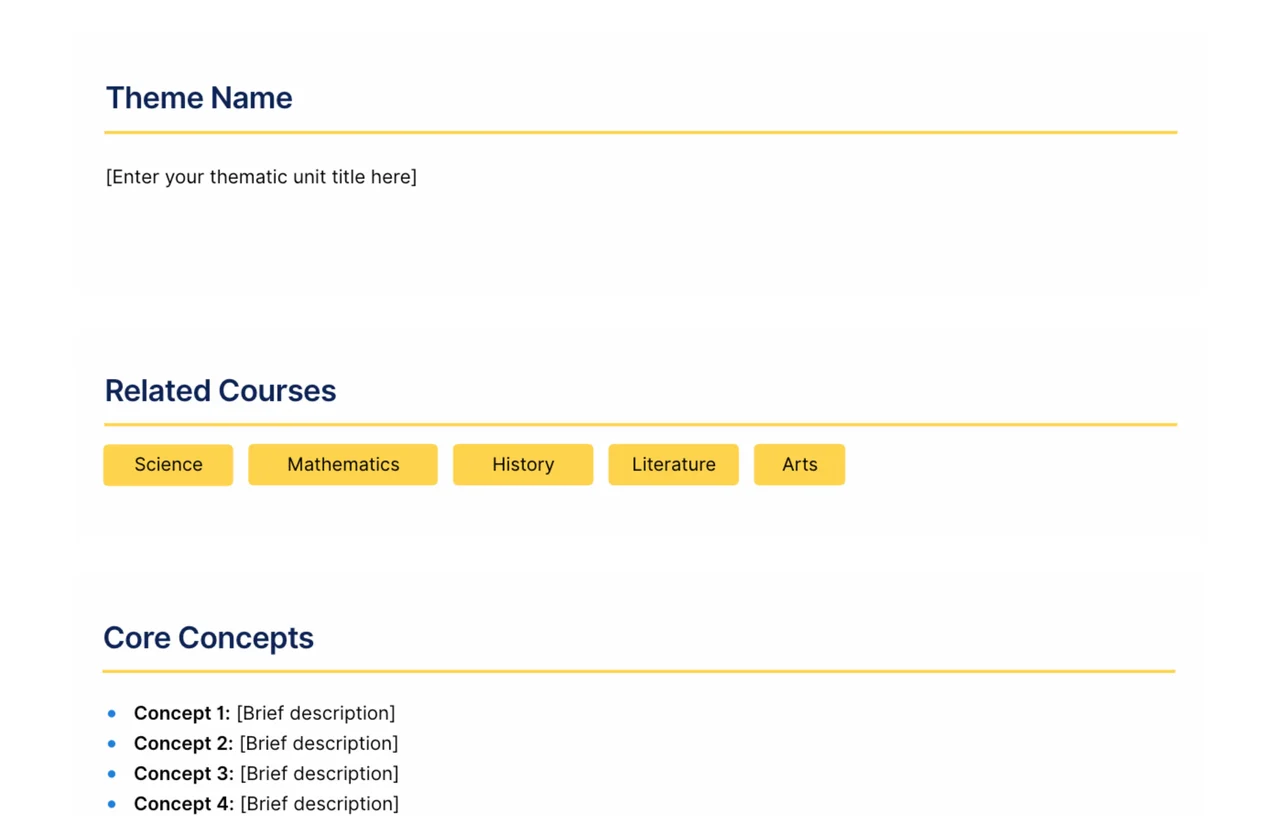
Free thematic lesson plan organizer in AFFiNE: name your theme, tag related subjects like Science, Math and History, and define the core concepts of the unit.

Thematic lesson plan with Theme Name field, Science, Mathematics, History, Literature and Arts tags, and a Core Concepts list

A thematic lesson plan is a plan that connects lessons in several subjects around one central theme, such as weather, communities, or a historical period, so students meet the same idea from different angles. This AFFiNE organizer gives you a Theme Name field, a Related Courses row with Science, Mathematics, History, Literature, and Arts tags, and a Core Concepts list where you define the big ideas the unit will keep returning to.

What's included in this template

  • Theme Name: a placeholder for your thematic unit title.
  • Related Courses: tags for Science, Mathematics, History, Literature, and Arts that you can keep, remove, or rename to match the subjects your theme touches.
  • Core Concepts: a list of four concept placeholders, each with a short description.
  • Further sections below the core concepts for planning objectives, activities, and assessment around the theme (edit or add blocks as needed).

When to use a thematic lesson plan

  • Elementary and preschool units built around a topic like seasons, animals, or community helpers.
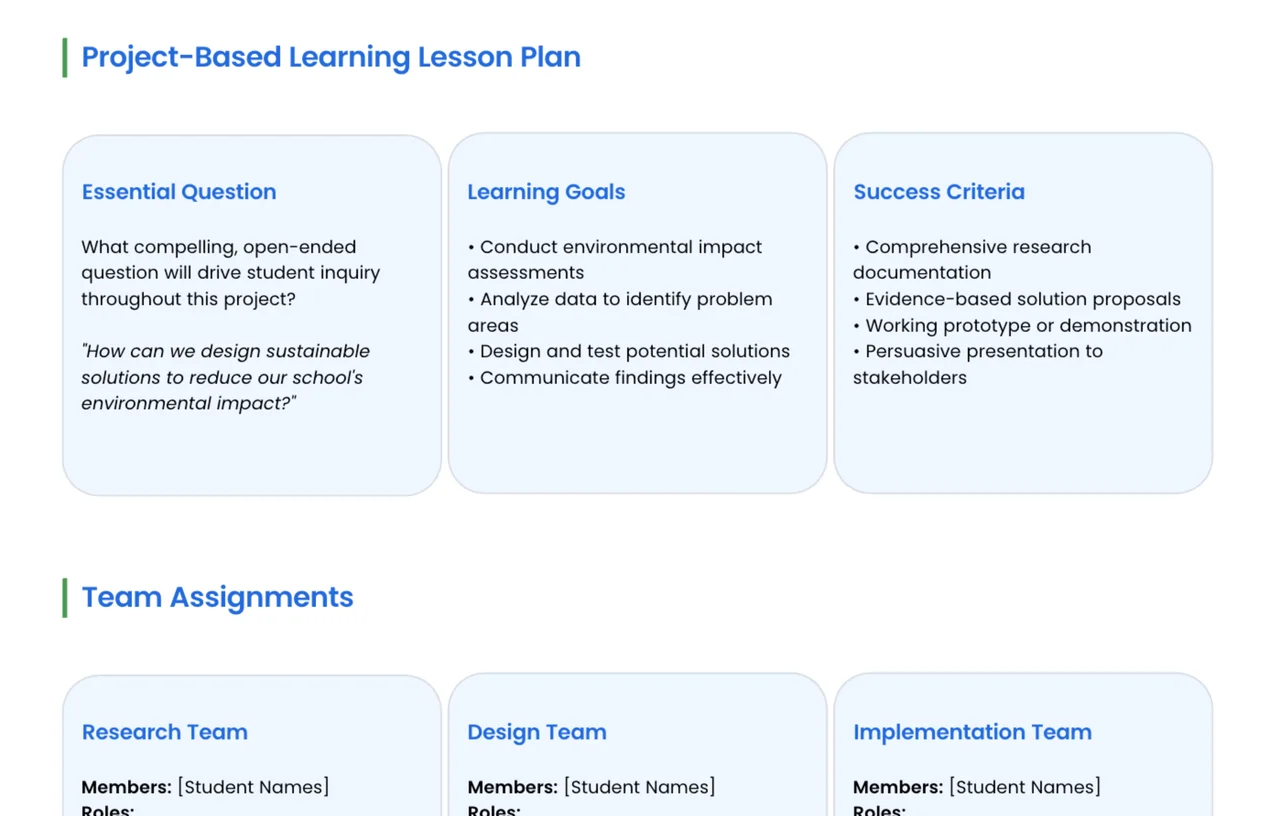
  • Cross-curricular projects where a science topic also drives reading, math, and art work.
  • Team teaching, where several teachers need one shared document that shows how each subject supports the theme.
  • Summer programs and homeschooling, where one theme can organize a few weeks of activities.

How to use this thematic lesson plan organizer in AFFiNE

  1. Duplicate the template. Click Use this template to copy the organizer into your AFFiNE workspace.
  2. Choose the theme. Enter a theme that is broad enough for several subjects but specific enough to plan around.
  3. Pick the related courses. Keep only the subject tags your unit will use and add any that are missing.
  4. Define the core concepts. Write three to five big ideas students should understand by the end of the unit.
  5. Map activities to subjects. Under each concept, list the lesson or activity each subject will contribute and how you will assess it.
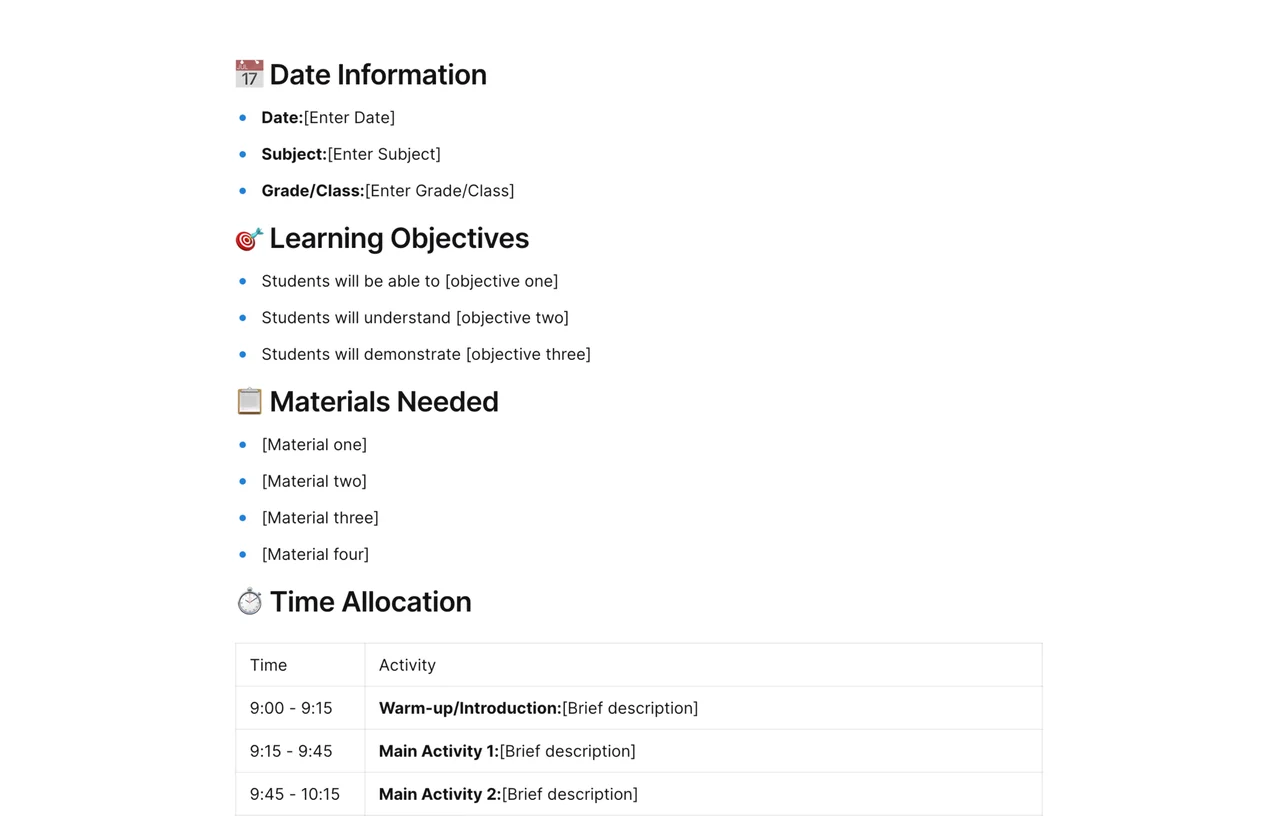
  6. Break it into daily lessons. Link each activity to a daily plan, for example a copy of the daily lesson plan outline.

Tips for planning a thematic unit

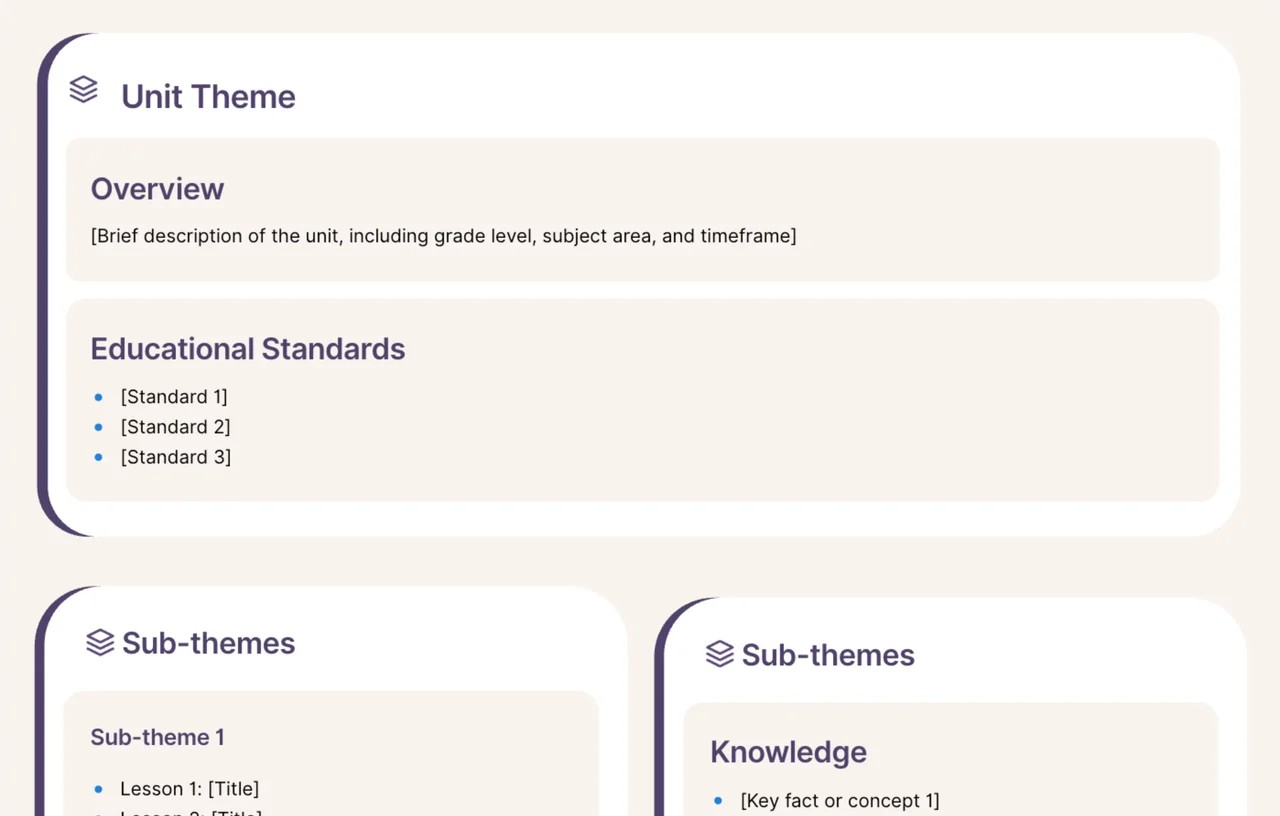
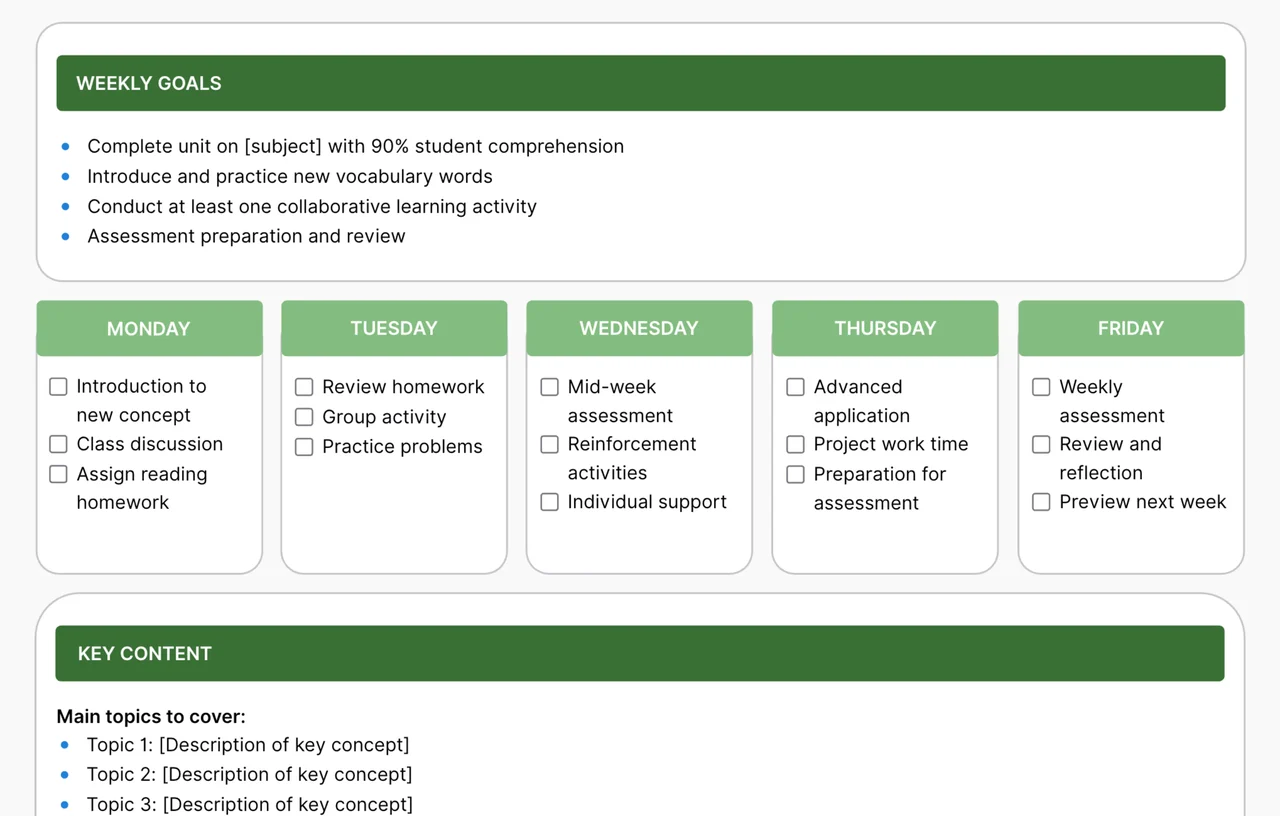
District planning templates for thematic units, such as the Albuquerque Public Schools elementary thematic unit template, start from the theme and the standards it supports before listing activities. Do the same: check that every activity serves a core concept and a learning goal, not just the theme's look. Keep one culminating task, such as a presentation or project, that pulls the subjects together. For week-by-week scheduling, pair this organizer with the weekly lesson planner.

Frequently asked questions

What is a thematic unit in teaching?

A thematic unit is a group of lessons across several subjects that share one central theme. Students study the theme in science, reading, math, and other subjects over several days or weeks.

How do you write a thematic lesson plan?

Choose a theme, list the subjects it connects to, define the core concepts, and then plan activities and assessments for each subject. This organizer follows that order.

What is the difference between a thematic unit and a unit plan?

A unit plan usually covers one topic within a single subject, while a thematic unit links several subjects through a shared theme. For a single-subject unit, see the unit lesson plan framework.

Can I use this organizer for preschool?

Yes. Rename the course tags to areas like literacy, counting, art, and circle time, and keep the core concepts simple.

More teacher templates are in the lesson plan template collection, and our lesson plan template guide covers planning basics.
Get more things done, your creativity isn't monotone