Nursing Concept Map: Examples, Template & Steps
What changed (Nov 16, 2026): Merged our older posts "Nursing Concept Map: 7 Steps To Sharper Clinical Thinking" (concept-map-nursing) and "Nursing Concept Map Examples" (nursing-concept-map-examples) into this guide. Rewrote it around the parts of a nursing concept map, a 7-step method, turning a map into a care plan, nursing diagnosis, worked examples, templates, and a comparison with care plans and mind maps. Removed duplicate sections, linked the free nursing concept map template, and added seven FAQs.
A nursing concept map turns a long list of patient data into one picture you can reason with. You put the patient's main problem in the middle, connect it to the assessment findings, nursing diagnoses, interventions, and outcomes, and label every line so the relationships are clear. This guide covers what a nursing concept map is, its parts, a 7-step method for building one, how to turn it into a care plan, how to use it for nursing diagnosis, worked examples, templates, and tips for nursing school and practice.
The examples below are study aids that show how to organize information. They are not clinical guidance. Always follow your instructor, your facility's policies, and the provider's orders.
What Is a Nursing Concept Map?
A nursing concept map is a diagram that places a patient's main health problem at the center and links it to assessment data, nursing diagnoses, interventions, and expected outcomes. Labeled lines or arrows show how each piece relates to the others, so you can see priorities, spot connections, and plan care for the whole patient.
You will see several names for the same tool. A care map, nursing care map, or concept care map usually means a concept map built to plan care for one patient. A clinical concept map is one used in a clinical setting or clinical rotation. A patient concept map is centered on one person's health profile rather than on a disease in general. Your instructor may use any of these terms, and the core idea is the same: organize the patient's data visually and show how it connects.
The purpose is to clarify your thinking, connect theory to practice, and show the relationship between patient needs and nursing actions. Instead of a list of scattered symptoms and tasks, you get a web that shows not just what is important but how everything fits together. For general background on the format itself, see our guide to what a concept map is.
How a nursing concept map differs from a mind map
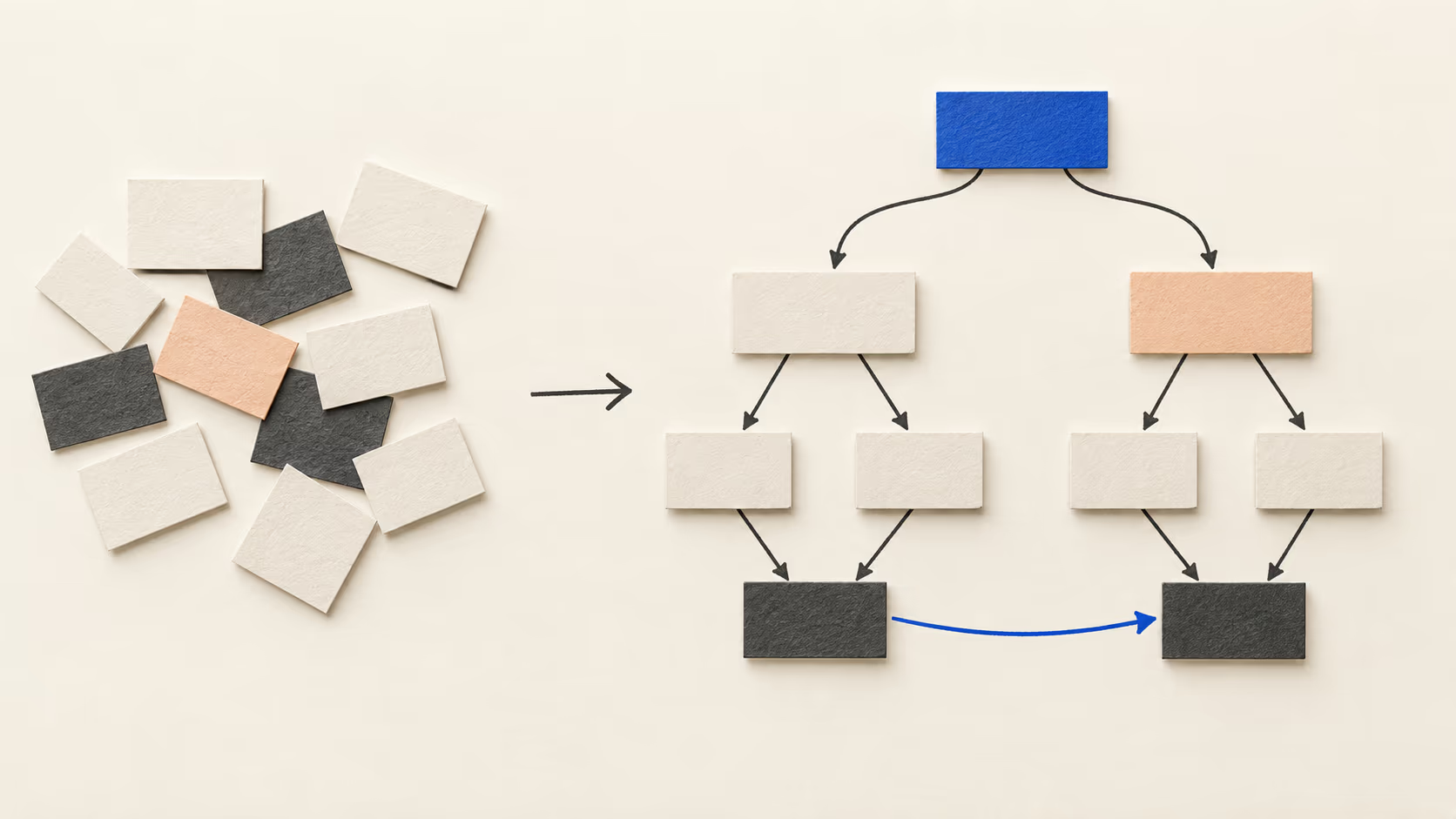
A mind map has one center and branches that radiate outward, usually without labels on the lines. A concept map adds linking words on each line, such as "leads to" or "requires," and it allows cross-links between branches. That difference matters in nursing. A mind map can list a patient's symptoms. A concept map can show that crackles and low oxygen saturation point to impaired gas exchange, which requires oxygen therapy, which is evaluated by pulse oximetry. If you want to see how concept maps work outside nursing, our overview of concept map examples and key elements covers other subjects.
Why nurses and nursing students use them
Concept maps help with several things nurses do every day:
- Critical thinking: Building the map makes you analyze, interpret, and evaluate patient data instead of memorizing facts. Research on concept mapping in nursing education links it with the development of critical thinking and clinical reasoning (see supporting study).
- Organizing patient data: You can group and prioritize information, which makes it easier to identify critical issues and plan interventions.
- Seeing the whole patient: The map pushes you to connect physical, psychological, and social factors, not just the main diagnosis.
- Communication: A clear map is an easy way to share complex patient information with other team members during handoffs or rounds.
- Bridging theory and practice: It helps you apply textbook knowledge to a real patient.
- Reflection: After a simulation or clinical day, reviewing your map helps you check your reasoning and find areas to improve.
Parts of a Nursing Concept Map
Every nursing concept map is built from the same set of parts. Once you know them, any template or assignment format becomes easier to fill in.
Central concept
The central concept is the foundation of the map. It is usually the patient's primary diagnosis, chief complaint, or main health concern. Place it in the center or at the top. For a patient with pneumonia, "Pneumonia" is the central concept.
Assessment data
Assessment data are the facts that support everything else on the map. They include:
- Subjective data: what the patient reports, such as symptoms and history.
- Objective data: what you measure or observe, such as vital signs, lung sounds, and lab results.
- Health history and risk factors: past conditions, surgeries, treatments, and factors that raise risk.
- Current medications: what the patient is taking and how it affects care.
Attach specific data to each branch, such as lab values, medication names, or patient quotes. Specific data make the map useful instead of generic.
Nursing diagnoses
Nursing diagnoses describe the patient's response to the health problem, such as "Impaired Gas Exchange" or "Risk for Infection." Group the assessment cues that point to the same problem, then name the nursing diagnosis that fits the cluster. Use standardized language such as NANDA-I for clarity and consistency. Rank the diagnoses so the most urgent problems come first.
Interventions
Interventions are what you plan to do for each diagnosis: monitoring, medications given as prescribed, positioning, education, and collaborative actions with other team members. Draw a line from each diagnosis to its interventions so nothing is missed.
Outcomes and evaluation
Each diagnosis needs an expected outcome or goal, written so you can measure it. Evaluation is where you check whether the outcome was met and update the map when the patient's condition changes. This step makes the map a living document instead of a one-time drawing.
Linking words and cross-links
Lines or arrows connect the central concept to each branch. Short phrases along the lines explain the relationship, for example "leads to," "results in," "requires," "increases risk for," "treated by," or "monitored with." Cross-links connect items on different branches. They help you see the bigger picture and prevent tunnel vision, for example when a risk factor on one branch affects an intervention on another.
Structure: tree or web
You can arrange these parts in two main ways:
- Hierarchical (tree) structure: The main topic sits at the top and branches move downward from general to specific. This works well for step-by-step care plans or when you need to show clear priorities.
- Web (spider) structure: The central concept sits in the middle with branches radiating outward. This works well when many factors interact around one problem, as in complex patient scenarios.
Whichever you choose, aim for clarity. Use color coding or shapes to separate types of information, for example blue for assessments and green for interventions, and keep lines neat to avoid clutter.
How to Make a Nursing Concept Map in 7 Steps
This method works for a class assignment, a clinical rotation, or a quick map before a shift. You can draw it on paper, use a template, or build it in a free concept map maker so you can move boxes and update links as you go.
Step 1: Gather and list all patient data
Collect subjective and objective data: vital signs, symptoms, medical history, lab findings, and current medications. Include past conditions, surgeries, or treatments that may influence current care.
Step 2: Place the central concept
Put the chief complaint or primary diagnosis at the center of the map. This anchors the map and keeps your focus on the main concern.
Step 3: Branch out with key findings
Create branches for assessment findings, risk factors, health history, and abnormal labs. Use connecting lines to show relationships, for example "fever" linked to "infection risk."
Step 4: Cluster related cues
Group signs and symptoms that point to the same underlying problem. For example, shortness of breath, crackles on auscultation, and low SpO2 might cluster under Impaired Gas Exchange.
Step 5: Write and prioritize nursing diagnoses
Turn each cluster into a specific nursing diagnosis using standardized language. Rank them so problems that need immediate action, such as unstable vital signs or new-onset confusion, come before problems that can be monitored.
Step 6: Link interventions and outcomes
Draw lines from each diagnosis to the interventions that address it and to the expected outcome. Label each line with a linking phrase. Check that every intervention connects to a diagnosis and every diagnosis has an outcome.
Step 7: Add cross-links, then review and update
Look for connections between branches and add cross-links. Add potential complications and the monitoring that will catch them. As care goes on, update the map with new data, check outcomes, and revise priorities. Start broad, then add detail as you gather more information.
From Concept Map to Nursing Care Plan
A concept map gives you the big picture. A care plan turns that picture into structured, documented actions. Many programs ask for both, and the map makes the care plan faster to write and harder to get wrong. Pairing them helps in three ways:
- Clarity and focus: The map shows connections between problems, interventions, and outcomes, so the care plan is more targeted.
- Individualization: Seeing the patient's unique factors makes you less likely to miss key issues or fall into a one-size-fits-all plan.
- Communication: A well-structured map is easy to share, so everyone works from the same picture.
Step by step: translating a concept map into a care plan
- Start with a complete concept map. Make sure it includes the central diagnosis, related symptoms, risk factors, relevant lab data, nursing diagnoses, interventions, and expected outcomes.
- Cluster and prioritize issues. Look for clusters of related problems, such as impaired gas exchange and infection risk in a pneumonia patient. Prioritize based on urgency and patient needs.
- Define nursing diagnoses. Each major branch of the map can become a formal nursing diagnosis, for example "Impaired Gas Exchange related to infection."
- Identify interventions. For each diagnosis, list evidence-based interventions. Use the map's branches to make sure you cover medications, education, monitoring, and collaborative actions.
- Set measurable outcomes. Draw them from the map's outcome branches and define specific goals with a time frame.
- Document and implement. Transfer the information into your formal care plan template. Use clear, concise language and link each intervention to a diagnosis and an outcome.
- Evaluate and revise. As you deliver care, return to the map. Update it with new data and outcomes, and revise the care plan to match. This cycle keeps care relevant and patient-centered.
Worked example: pneumonia map to care plan
Suppose your concept map for a patient with pneumonia shows:
- Central diagnosis: Pneumonia
- Symptoms: Cough, fever, low oxygen saturation
- Risk factors: Advanced age, smoking history
- Interventions: Oxygen therapy, antibiotics, patient education
- Outcomes: Improved oxygenation, reduced fever, understanding of the medication regimen
To translate it into a nursing care plan concept map entry, you would:
- Document "Impaired Gas Exchange related to alveolar inflammation" as a nursing diagnosis.
- List interventions such as "Administer oxygen as ordered," "Monitor respiratory rate and effort," and "Educate patient on deep breathing exercises."
- Set a goal such as "Patient will demonstrate improved oxygenation within 24 hours."
This direct translation keeps the care plan focused and easy to communicate during handoffs or interdisciplinary rounds.
Keeping the map and care plan in sync
- Treat the map as a living document. Update it whenever the patient's condition changes, then update the care plan.
- Collaborate. Share the map and care plan with your team to get input and keep care holistic.
- Use digital tools when they help. An editable map is easier to update and share than a redrawn paper copy.
Using a Concept Map for Nursing Diagnosis
A nursing diagnosis concept map helps you see patterns in scattered data, cluster related cues, and arrive at precise nursing diagnoses. When a new patient arrives with multiple symptoms, abnormal labs, and several risk factors, the map lets you organize everything in one place instead of holding it in your head.
Why mapping helps the diagnostic process
- Visual organization: Mapping assessment findings, health history, and lab results gives you a clear picture of the patient's overall condition.
- Pattern recognition: With all the data in one place, clusters stand out, such as fever, cough, and low oxygen saturation in a respiratory case.
- Prioritization: The map shows which issues need immediate attention.
- Holistic view: You can see links between physical symptoms, psychosocial factors, and environmental influences.
- Tracking progress: As interventions are carried out, you update the map to reflect changes in the patient's condition.
Step by step: from data to nursing diagnoses
- Gather all patient data. List subjective and objective data, history, lab findings, and current medications.
- Identify the central concept. Place the main health issue or chief complaint at the center.
- Branch out with key findings. Add branches for assessment findings, risk factors, and abnormal labs.
- Cluster related cues. Group signs and symptoms that point to the same underlying problem.
- Formulate nursing diagnoses. Write specific nursing diagnoses for each cluster in standardized language such as NANDA-I.
- Link to interventions and outcomes. Connect each diagnosis to interventions and expected results, and to the patient's overall goals, such as symptom management or improved quality of life.
Also add potential complications that could arise if a problem is not managed well. That helps you plan monitoring and preventive actions.
Example: diagnosis in a pneumonia case
- Central concept: Pneumonia
- Assessment: Cough, fever, crackles, low O2 saturation
- Labs: Elevated WBC, positive sputum culture
- History: Recent upper respiratory infection, smoker
- Risk factors: Advanced age, chronic illness
- Clusters: Symptoms and labs grouped under Impaired Gas Exchange and Infection Risk
- Nursing diagnoses: Impaired Gas Exchange related to alveolar inflammation; Risk for Infection related to compromised respiratory defenses
Linking common nursing diagnoses to interventions
A simple table can help you check that each diagnosis on the map has a matching intervention:
| Nursing diagnosis | Example intervention |
|---|---|
| Risk for Infection | Implement strict hand hygiene protocols |
| Impaired Mobility | Initiate physical therapy sessions |
| Acute Pain | Administer prescribed analgesics |
A diagnosis-centered map can also be built around one nursing diagnosis rather than a disease. For example, a map built around Impaired Mobility for a stroke patient would connect the causes, risks, and rehabilitation strategies.
Keep medical and nursing diagnoses separate on the map. A cluster of shortness of breath, fatigue, and edema in a patient with heart failure belongs on the map, but the nursing diagnosis is the patient's response, such as fluid volume excess, while heart failure stays as the medical diagnosis at the center.
Nursing Concept Map Examples
These nursing concept map examples show how the same parts work for different patients and settings. Use them to see the level of detail an assignment needs and how to connect symptoms, risk factors, and interventions. They are learning examples, so adjust them to your patient, your instructor's format, and the orders in place.
When you review any example, ask yourself:
- What is the central focus: a patient, a diagnosis, or a disease?
- How are symptoms, assessments, and interventions organized?
- Are the connections between concepts clearly labeled and logical?
- Does the level of detail match the assignment or clinical goal?
Pneumonia concept map example
Pneumonia is the most common teaching example because it shows assessment, diagnosis, intervention, and outcome clearly.
- Central concept: Pneumonia
- Assessment findings: Fever, cough, crackles or wheezes on lung exam, low SpO2, elevated WBC count. Monitor temperature, respiratory rate, and oxygen saturation regularly to detect changes.
- Labs: White blood cell count and sputum culture, which helps identify the causative organism and guide antibiotic therapy.
- Risk factors: Advanced age, chronic illness, immobility, recent hospitalization, smoking history, recent respiratory infection, immunocompromised status.
- Nursing diagnoses: Impaired gas exchange, risk for infection, ineffective airway clearance.
- Interventions: Monitor pulse oximetry and lung sounds, administer oxygen as ordered, elevate the head of the bed to help lung expansion, encourage coughing and deep breathing, give prescribed antibiotics, encourage adequate fluid intake to thin secretions, and assist with oral hygiene.
- Patient education: Hand hygiene, effective coughing technique, completing the full course of antibiotics, and activity as tolerated.
- Possible complications to monitor: Sepsis, respiratory failure, pleural effusion.
- Expected outcomes: Improved oxygenation, absence of fever, clear lung sounds, and understanding of infection prevention.
Linking phrases tie it together: impaired gas exchange "leads to" low O2 saturation, which "requires" oxygen therapy.
You can also show how each type of factor feeds the plan:
| Factor | Role in the care plan |
|---|---|
| Risk factors | Guide preventive measures and early interventions |
| Symptoms | Determine the urgency and type of interventions needed |
| Interventions | Align with symptoms and risk factors |
| Outcomes | Show whether interventions worked and when to adjust the plan |
Chronic condition example: type 2 diabetes
Chronic conditions need continuous monitoring and long-term planning, so the map focuses on risk factors, complications, and education.
- Central concept: Diabetes mellitus type 2, a chronic condition characterized by insulin resistance
- Risk factors: High blood pressure, poor diet, lack of exercise, obesity
- Signs and symptoms: Polydipsia, polyuria, fatigue
- Potential complications: Retinopathy, nephropathy
- Interventions: Blood glucose monitoring, patient education on lifestyle modifications
A chronic disease map supports ongoing monitoring because you adjust it as the patient responds. It supports proactive care because risk factors and complications are visible early. It also supports patient engagement, since you can use it to explain the condition to the patient.
A second chronic example is heart failure:
- Central concept: Heart failure
- Symptoms: Shortness of breath, edema
- Assessment: Vital signs, daily weight
- Nursing diagnosis: Fluid volume excess
- Interventions: Diuretics as prescribed, fluid restriction
- Outcomes: Improved breathing, stable weight
Linking phrases such as "causes," "treated by," and "monitored with" connect the branches. For a patient with overlapping conditions, such as diabetes and cardiovascular disease, or diabetes and hypertension, build layers that address each condition and then cross-link where they affect each other.
Acute care example
Acute conditions need fast but thorough planning. A nursing care plan concept map for an acute case usually has three main branches:
- Immediate interventions: the actions to stabilize the patient, carried out per orders and protocol.
- Risk assessments: potential complications to watch for.
- Follow-up actions: later steps to monitor and adjust treatment.
| Acute condition | Immediate interventions | Risk assessments | Follow-up actions |
|---|---|---|---|
| Myocardial infarction | Ordered treatments such as aspirin, oxygen, and nitroglycerin | Monitor for arrhythmias and heart failure | Cardiac rehabilitation, medication adherence |
| Acute respiratory distress syndrome | Support mechanical ventilation as ordered | Assess for ventilator-associated pneumonia and barotrauma | Ongoing reassessment with the team as ventilator settings are adjusted |
| Postoperative care | Antibiotics as prescribed, wound care | Watch for post-surgical infection | Track the incision until it heals with no infection |
Short acute maps also pair each intervention with a clear outcome. For example, administering antibiotics links to reduced infection markers, and a pain management protocol links to the patient reporting a pain level below 3 on the pain scale.
Med-surg concept map example
A med-surg concept map helps when one patient has several problems at once, such as pneumonia, diabetes, and a recent surgery. Medical-surgical patients often have overlapping diagnoses and changing conditions, so the map layers information like medications, labs, and functional status so nothing gets missed.
Key elements to include on a med-surg map:
- Vital signs and baselines: so you can spot deviations that may signal complications.
- Neurological and musculoskeletal assessments: for early detection of issues like impaired mobility or altered mental status.
- Risk for complications: such as falls or impaired swallowing, so you can act early.
- Medication management: tracking medications and their effects across a complex regimen.
- Patient education and family involvement: so the patient and family understand the plan.
Building a med-surg map for pneumonia, step by step:
- Place the primary diagnosis at the center: "Pneumonia."
- Add key branches:
- Assessment findings: cough, fever, crackles, low O2 saturation, elevated WBC count.
- Risk factors: advanced age, immobility, recent hospitalization, smoking history.
- Nursing diagnoses: impaired gas exchange, risk for infection, ineffective airway clearance.
- Interventions: monitor pulse ox, administer oxygen, encourage coughing and deep breathing, give prescribed antibiotics, assist with oral hygiene.
- Patient education: hand hygiene, medication adherence, activity as tolerated.
- Expected outcomes: improved oxygenation, absence of fever, clear lung sounds, understanding of infection prevention.
- Draw connections: use arrows and linking phrases, for example impaired gas exchange "leads to" low O2 saturation, which "requires" oxygen therapy.
- Highlight complications and monitoring: add branches for possible complications like sepsis or respiratory failure, plus monitoring tasks such as frequent vital signs and sputum cultures.
Other med-surg maps follow the same pattern. A patient recovering from a cerebrovascular accident (CVA) might have a map highlighting ineffective cerebral tissue perfusion, risk for falls, and impaired physical mobility, with interventions for each. A post-operative patient with COPD and a surgical wound would have branches for both the respiratory and the wound problems, cross-linked where they affect mobility and recovery.
Share the med-surg map with respiratory therapists, dietitians, or physicians when it helps the team see how each role fits into the plan. Review and update it throughout the shift, because med-surg patients can change quickly.
Student example: congestive heart failure
This is one of the concept map examples for nursing students that works well for a first assignment. Here is how to build it:
- Select a central theme: "Congestive Heart Failure."
- Identify key concepts: symptoms such as dyspnea and edema, risk factors such as hypertension and obesity, and the pathophysiology.
- Link interventions: connect each symptom and risk factor to nursing interventions such as medication administration, lifestyle modifications, and patient education.
- Add patient outcomes: include outcomes that show whether interventions worked, like improved respiratory function or reduced hospital readmissions.
- Use visual elements: colors, symbols, or icons to separate the types of information so the map is easier to read.
Other example types you will meet in school include patient-specific maps (built around one person, such as a patient with diabetes and hypertension), disease-focused maps (one condition, such as pneumonia or heart failure), diagnosis-centered maps (one nursing diagnosis), care plan-focused maps that follow assessment, diagnosis, planning, implementation, and evaluation, and mental health or public health maps that highlight psychosocial factors, therapeutic interventions, and community resources.
Nursing Concept Map Templates
A template gives you a structure so you do not start from a blank page. It helps you remember every care component, keeps your maps consistent, and makes them easier for instructors and colleagues to review. A template is a starting point, not a rigid checklist, so add or remove sections to fit the patient.
Template types by purpose
- Nursing diagnosis concept map template: built around nursing diagnoses, with space for the supporting data, interventions, and outcomes for each one. Use it when the assignment asks you to justify and prioritize diagnoses.
- Nursing care plan concept map template: labeled sections for assessment findings, diagnoses, interventions, and outcomes, so the map translates directly into a care plan. This pre-structured type suits beginners and standardized care plans.
- Med-surg concept map template: room for several diagnoses at once plus branches for vital signs, assessments, medications, complications, and education.
- ATI-style concept map template: if your program uses ATI materials, your instructor may assign a specific ATI concept map form. Fill in that form with the same parts described above, and follow the box labels it uses rather than a generic layout.
- Blank templates: open layouts that give you freedom for unusual cases.
Template types by structure
- Spider maps: a primary diagnosis in the center with many related factors. Useful for complex cases where several symptoms or conditions need attention at once.
- Flowcharts: step-by-step processes such as treatment protocols or care pathways.
- Hierarchy maps: general to specific, good for breaking down a comprehensive care plan for a chronic disease.
- System maps: the relationships between body systems or healthcare processes, useful for multidisciplinary care.
How to choose a template
| Question | What to look for |
|---|---|
| Purpose | Are you mapping a general care plan, a specific diagnosis, or a med-surg scenario? |
| Level of detail | Match the template to the assignment or clinical need. Some are detailed, others high level. |
| Format | Digital templates are editable and shareable. Printable templates work for handwriting during rounds or study. |
| Flexibility | Pick one you can adapt by adding or removing sections. |
| Collaboration | For group work, choose a format that supports shared editing. |
Nursing programs use different care plan formats, so check the headings your instructor expects before you start.
Free nursing concept map template
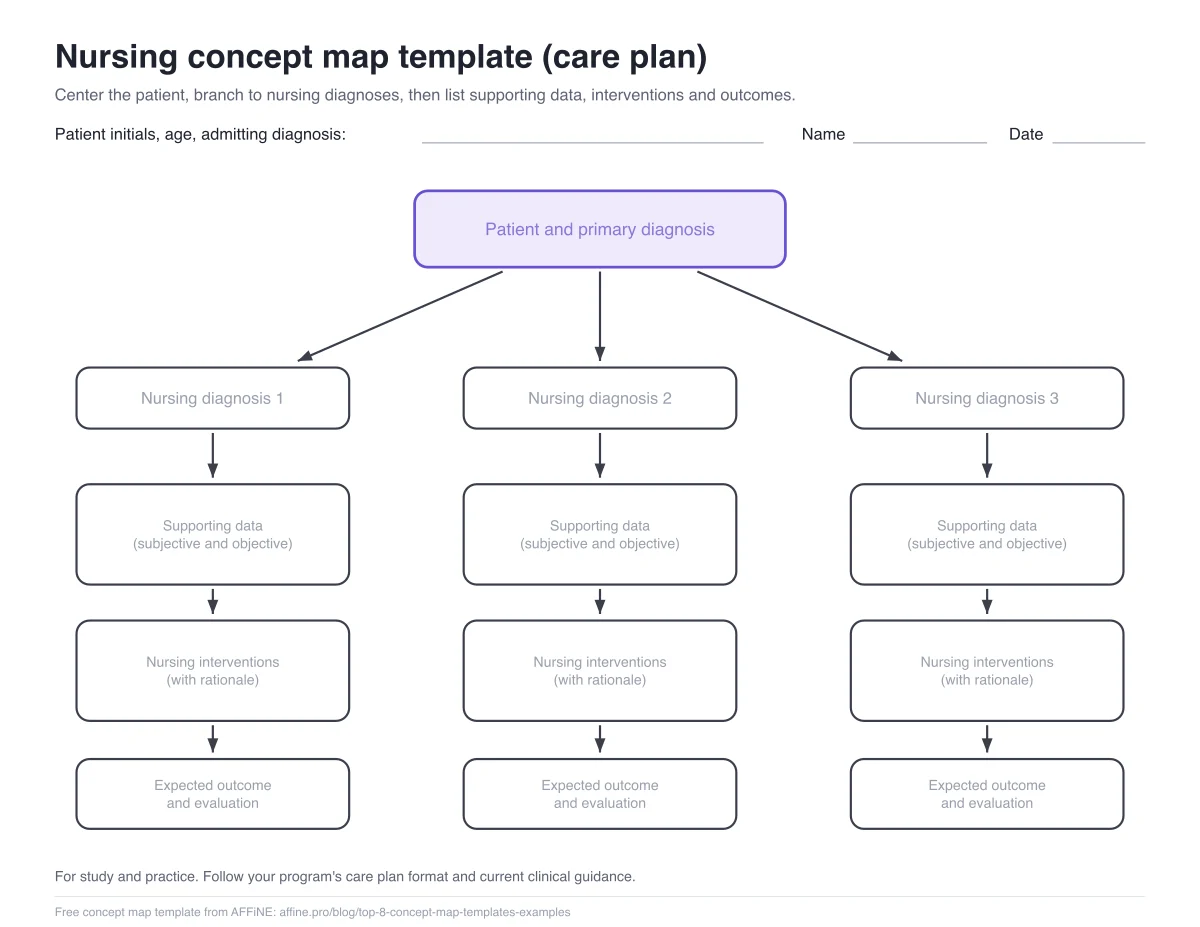
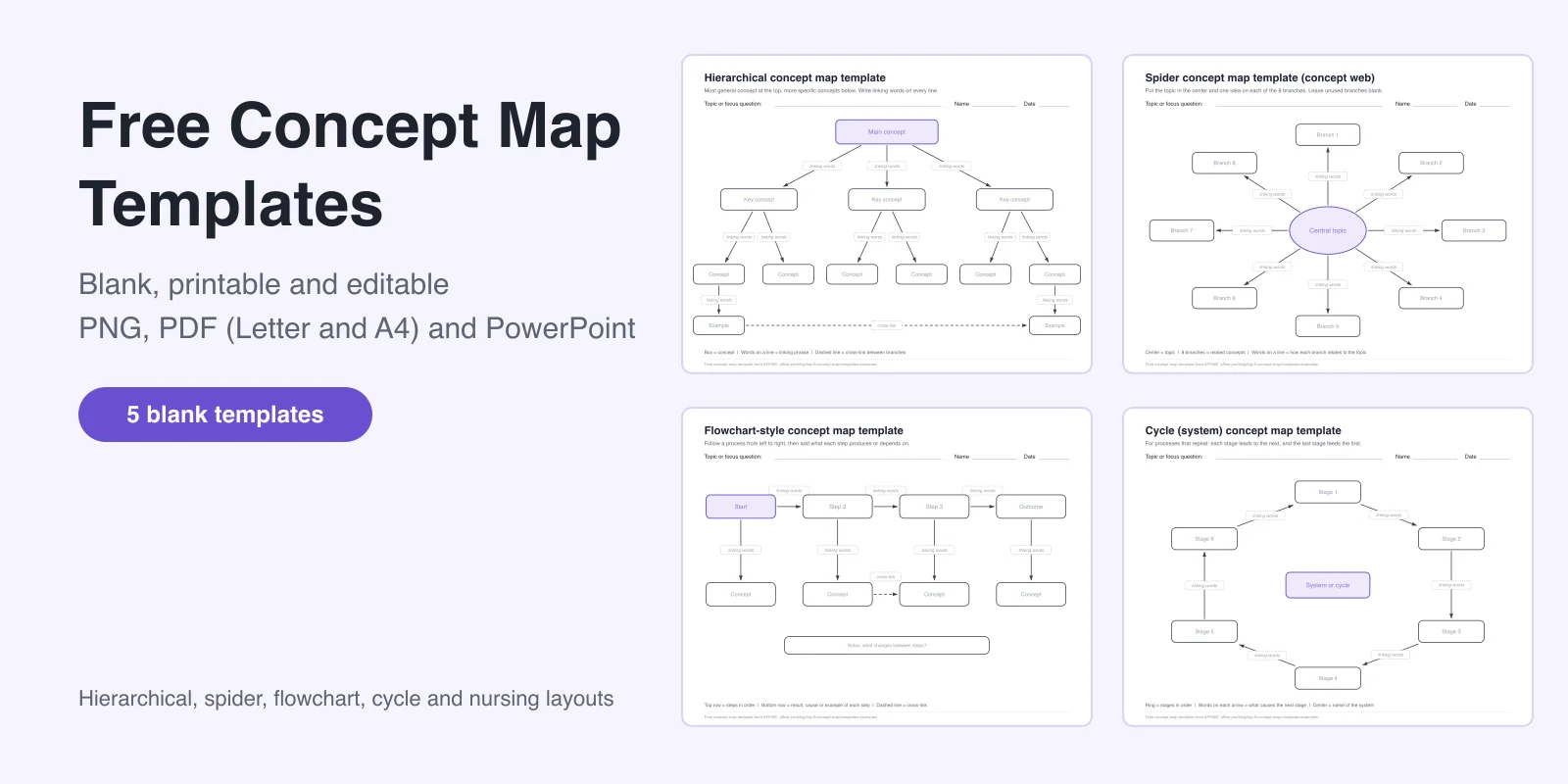
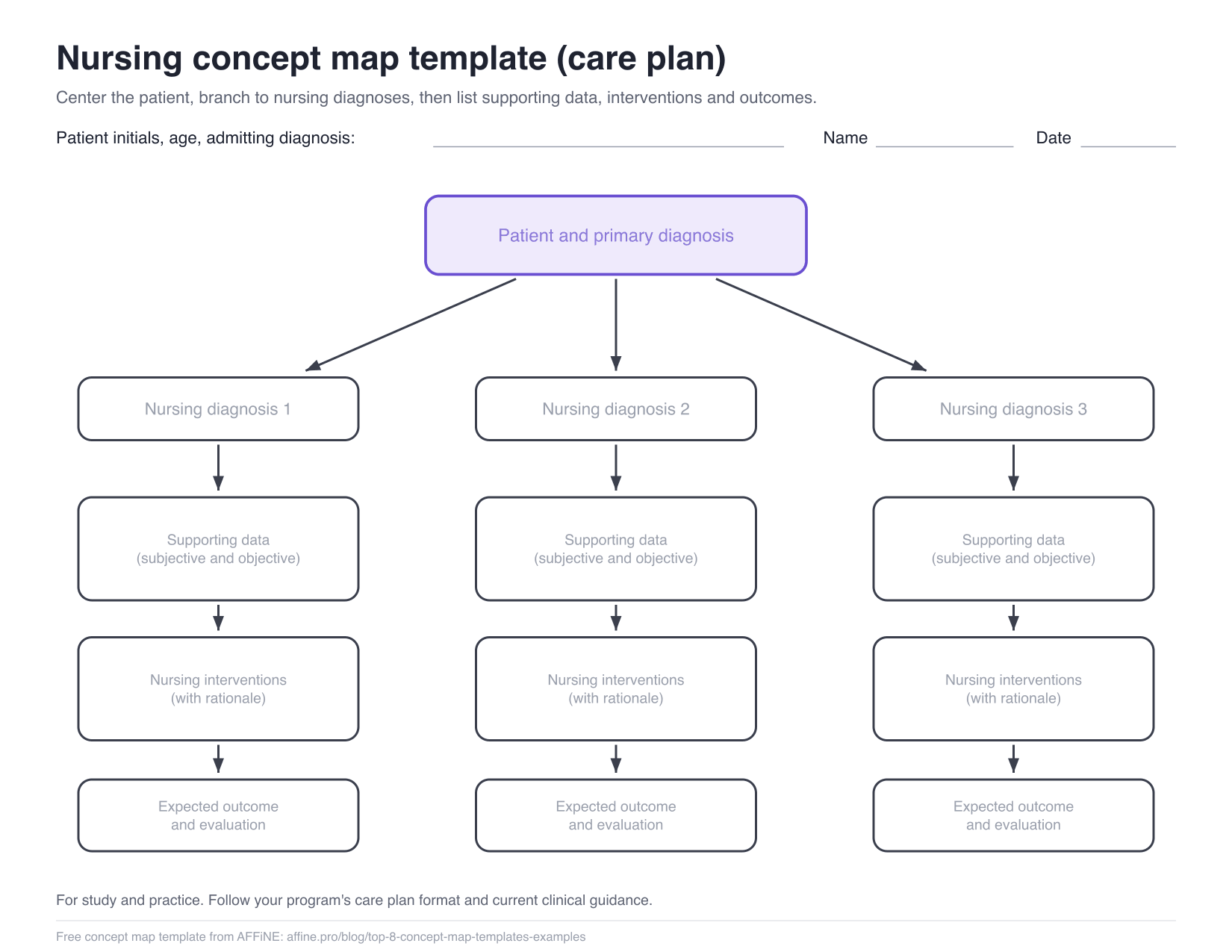
Our free nursing template puts the patient and primary diagnosis at the top and gives you three nursing diagnosis columns. Under each diagnosis there are boxes for supporting data, nursing interventions with rationale, and the expected outcome and evaluation. It needs no sign-up. You can download it as a PNG image, as page 5 of the printable PDF in US Letter or A4, or in the editable PowerPoint file. The other blank templates are on our free concept map templates page. Creately also publishes editable nursing concept map templates for diagnosis and care planning.
Concept Map vs Care Plan vs Mind Map
These three tools overlap, and nursing programs often use more than one. Here is how they compare:
| Nursing concept map | Nursing care plan | Mind map | |
|---|---|---|---|
| Layout | Web or hierarchy around a central problem | Columns or a linear format | One center with radiating branches |
| Links | Labeled lines and cross-links show relationships | Each diagnosis is linked to its interventions and outcomes in rows | Branches are usually unlabeled |
| Main use | Seeing how data, diagnoses, and interventions connect | Documenting and carrying out care | Brainstorming and note-taking |
| Best for | Clinical reasoning, prioritizing, and study | Formal documentation and handoffs | Quick recall of a topic |
In practice, the concept map comes first. You use it to reason about the patient, and then you transfer the result into the care plan format your program or facility requires.
Tips for Using Concept Maps in Nursing School and Practice
Concept mapping in nursing education
Concept mapping in nursing education is used in both the classroom and simulation. Students use maps to synthesize information, prepare for high-fidelity simulations, and reflect during debriefings (learn more about simulation use). For students, maps help with exam preparation, clinical rotations, and care planning assignments. A few habits make them work better:
- Start simple. Map a single-diagnosis case first, then move to patients with multiple conditions as your confidence grows.
- Match the assignment. Check the headings and level of detail your instructor expects before you start.
- Study examples, then personalize. Use examples and templates as a springboard, but build each map around your actual patient's data.
- Reflect after each clinical day. Ask what worked, what you missed, and how the map affected your care.
- Review maps with peers and mentors. Share feedback and learn from each other's reasoning.
Concept maps in clinical practice
- Use the map as a living document. Update it as the patient's condition changes and as interventions take effect.
- Prioritize visually. Put the most urgent problems where you see them first, and address life-threatening issues before others.
- Use color coding or symbols. Separate problems, interventions, and outcomes so the map is quick to scan.
- Involve the team and the patient. Interdisciplinary input adds perspectives you might miss, and walking the patient through the map can improve their understanding of the plan.
- Keep it readable. Neat lines and clear labels matter more than covering every possible detail.
- Go digital for complex cases. Digital maps are easy to update, share, and expand with extra layers. If you want to build one online, try our free concept map maker.
Nursing Concept Map FAQs
What is a nursing concept map?
A nursing concept map is a diagram that puts a patient's main health problem at the center and links it to assessment data, nursing diagnoses, interventions, and expected outcomes. Labeled lines show how each part relates, which helps nurses and nursing students prioritize care and plan for the whole patient.
Is a care map the same as a nursing concept map?
Usually, yes. The terms are often used interchangeably. A care map, nursing care map, or concept care map is a concept map used to plan care for a patient. A clinical concept map is one used in clinical settings, and a patient concept map is centered on one person's health profile.
What should be included in a nursing concept map?
Include a central concept such as the primary diagnosis, assessment data such as symptoms, vital signs, lab results, health history, and risk factors, the nursing diagnoses, the interventions for each diagnosis, and measurable expected outcomes. Add linking words on the lines and cross-links between related branches.
How do you turn a concept map into a nursing care plan?
Start with a complete map, cluster and prioritize the problems, and turn each major branch into a formal nursing diagnosis. List interventions for each diagnosis, set measurable outcomes, document them in your care plan template, and then evaluate and revise both the map and the plan as the patient changes.
How is a concept map different from a mind map in nursing?
A mind map has one center and unlabeled branches, so it works for brainstorming or listing facts. A concept map labels every connection with words such as leads to or requires, and it allows cross-links between branches, so it shows how symptoms, diagnoses, interventions, and outcomes relate to each other.
Is there a free nursing concept map template?
Yes. AFFiNE offers a free blank nursing concept map template with three nursing diagnosis columns and boxes for supporting data, interventions with rationale, and expected outcome and evaluation. It is available as a PNG image, in a printable PDF in US Letter or A4, and in an editable PowerPoint file.
What are common nursing concept map examples?
Common examples include pneumonia, which shows impaired gas exchange and risk for infection, chronic conditions such as type 2 diabetes and heart failure, acute cases such as myocardial infarction, med-surg patients with several diagnoses such as a patient recovering from a stroke, and student maps such as congestive heart failure.