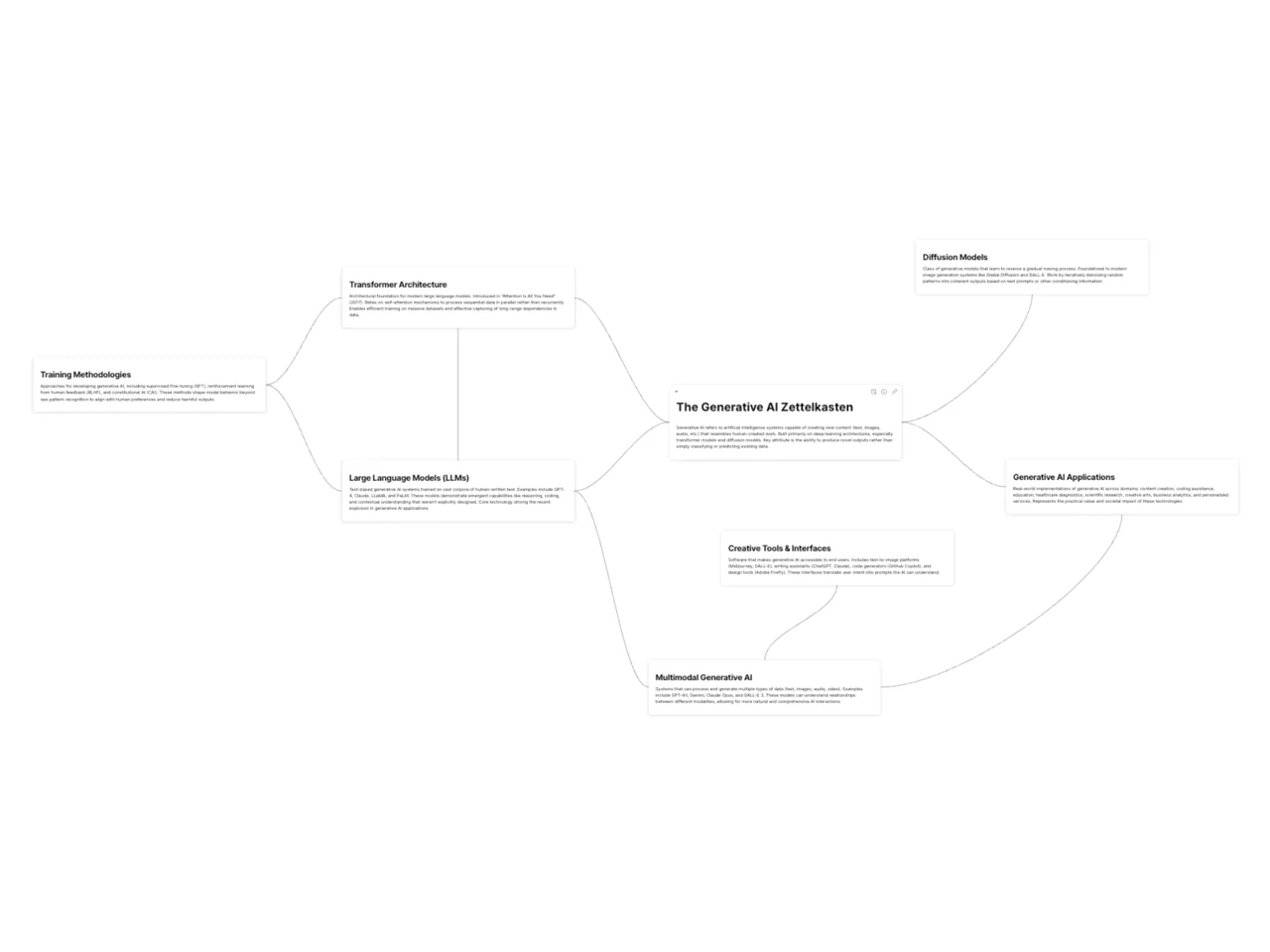
An academic research Zettelkasten is a network of short, linked notes that a researcher builds while reading and thinking, so ideas from many sources can be connected and reused when writing papers, theses, or dissertations. This AFFiNE template starts that network for you: a central "Academic Research Fundamentals" note linked to nine topic notes that cover the research process, from forming a question to publishing. Each note holds a few bullet points, and the connectors show how the topics relate on an editable whiteboard.
What's included in this template
- A central hub note, "Academic Research Fundamentals," highlighted in blue.
- Nine linked topic notes: Research Question Development, Research Design Frameworks, Data Collection Methods, Research Ethics, Analysis Techniques, Literature Review Methodology, Academic Writing Conventions, Publication Strategies, and Impact and Dissemination.
- Short bullet summaries in each note that you can replace with your own ideas and sources.
- Curved connectors between related notes, which you can redraw as your understanding changes.
- An edgeless (whiteboard) canvas with room to add literature notes and permanent notes around the hubs.
Who it's for
- PhD and master's students. Collect notes across hundreds of sources and connect them toward a thesis argument.
- Researchers writing a literature review. Group notes by theme and spot gaps or tensions between studies.
- Early-career academics. Keep one long-term knowledge base that feeds several papers and grant proposals.
- Students learning research methods. Use the nine topic notes as a map of the research process.
For a general-purpose version of the method, see the digital Zettelkasten template. To track deadlines alongside your notes, pair it with the academic assignment tracker.
How to use this academic research Zettelkasten in AFFiNE
- Duplicate the template. Click "Use this template" to copy the board into your AFFiNE workspace.
- Rename the hub notes. Adapt the nine topics to your field or your thesis chapters.
- Write literature notes. After reading a source, add a short note in your own words with the full citation.
- Distill permanent notes. Turn each key idea into one atomic note that makes sense on its own.
- Link related ideas. Connect each new note to at least one existing note and add a line on why they relate.
- Draft from clusters. When a group of linked notes forms an argument, pull them into a new AFFiNE doc as an outline.
Tips for using a Zettelkasten in academic research
- Write one idea per note, in your own words, so it can be reused in different papers.
- Always record the source. Many researchers pair a Zettelkasten with a reference manager such as Zotero, as the Graduate Institute Geneva's Zettelkasten guide describes.
- Link while you write the note, not later; unlinked notes are easy to lose.
- Expect the network to be thin at first. Its value grows as connections accumulate.
Frequently asked questions
What is the Zettelkasten method?
It is a note-taking method in which you write short, single-idea notes and link them to each other, building a network of ideas over time. It is associated with the German sociologist Niklas Luhmann.
What are the types of notes in a Zettelkasten?
Common types are fleeting notes for quick thoughts, literature notes that summarize a source, and permanent notes that state one idea in your own words and link to related notes.
How do I use a Zettelkasten for a PhD or master's dissertation?
Write literature notes as you read, distill them into permanent notes, and link them by theme. Clusters of linked notes become the outline for chapters.
Is Zettelkasten good for a literature review?
Yes. Linking notes from different sources makes agreements, disagreements, and gaps between studies easier to see than in separate summaries.
Learn more in the Zettelkasten method guide and Zettelkasten tips, or browse all Zettelkasten templates.