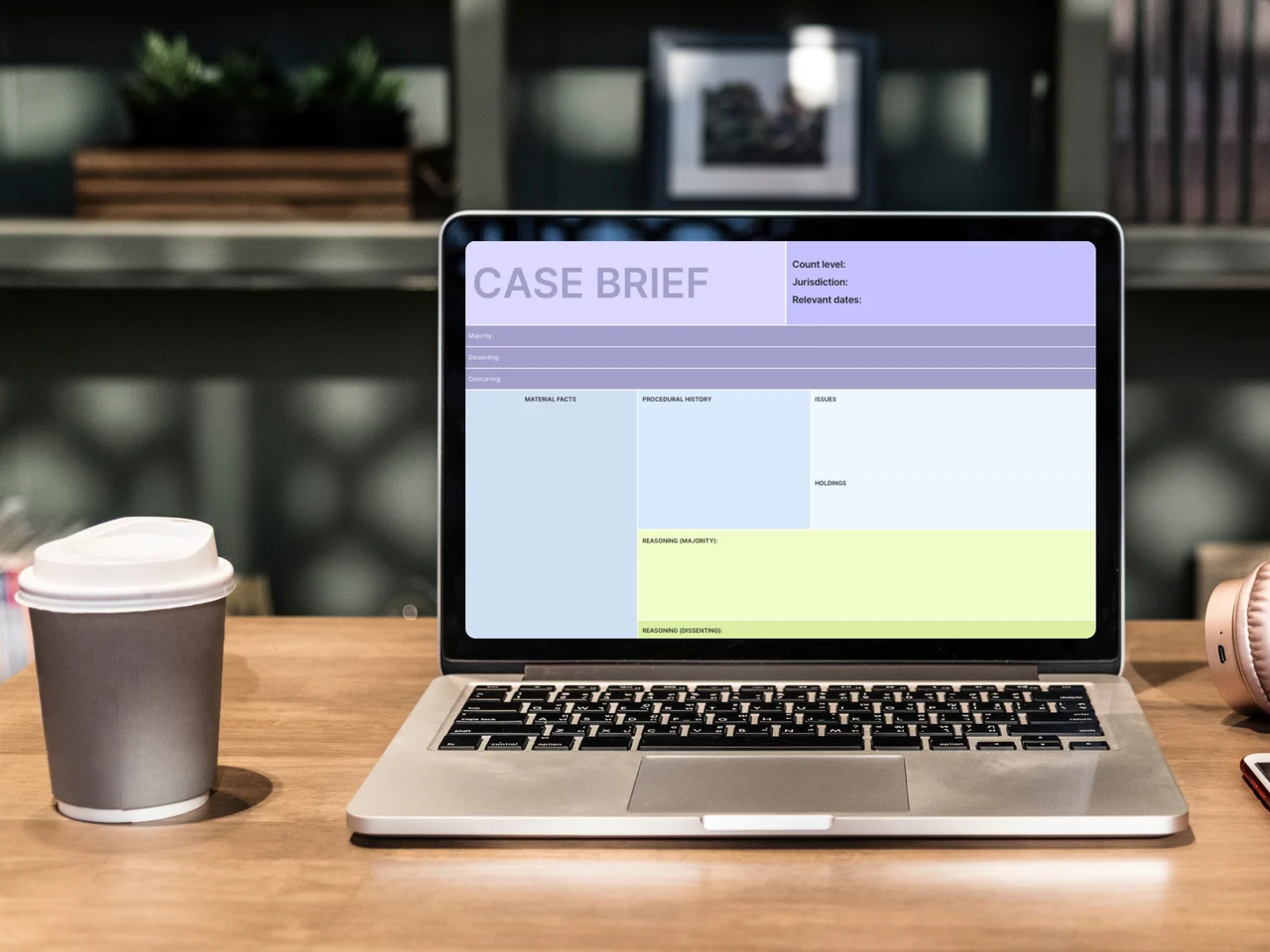
Case Brief Example: Facts, Issues, Holding, Reasoning
Review a case brief example that shows how to summarize facts, issues, holdings, reasoning, and case significance for clearer legal study.

A Case Brief Example serves as a practical guide to understanding the essential elements of a well-structured case summary. By providing a sample, it demonstrates how to effectively organize key details such as the case name, facts, legal issues, rule of law, court reasoning, and decision. This structured approach helps users break down complex legal judgments into clear and concise sections, making it easier to analyze, study, and recall critical legal information.
Whether you’re a law student honing your analytical skills or a professional seeking to review precedents efficiently, a Case Brief Example can be an invaluable resource. It not only illustrates the ideal format for summarizing cases but also helps foster a deeper understanding of legal principles and their application in real-world scenarios.
Display of the proper format for citing case details, such as case name, court, and date.
Sample facts demonstrating how to concisely summarize relevant case details.
Example of framing the main legal question or issue addressed by the court.
Illustrates how to present the court’s decision on the issue(s).
Sample reasoning, showing how the court’s logic and principles are summarized.
Example of capturing any additional or opposing judicial perspectives.
Example of how to briefly describe the broader impact or precedent set by the case.
Duplicate the template and start with the citation: case name, court, and year.
Summarize the facts in three to five sentences — only the ones the court's reasoning turns on.
State the issue as a yes/no question and the holding as the court's answer.
Trace the reasoning: the rule applied, how the court applied it to these facts, and any tests announced.
Note concurrences, dissents, and your own reaction — that last line is what makes the brief useful at outline time.
IRAC organizes legal analysis as Issue, Rule, Application, Conclusion. A case brief covers the same ground plus the facts and procedural history — this template's sections map onto IRAC so the brief drops cleanly into exam outlines.
Under a page. A brief that restates the whole opinion defeats its purpose; if the facts run past five sentences or the reasoning past a paragraph, you are transcribing, not briefing.
Highlighting marks where information is; briefing forces you to decide what it means. Writing the holding in your own words is the first rep of the recall you will need cold-called in class and again on the exam.