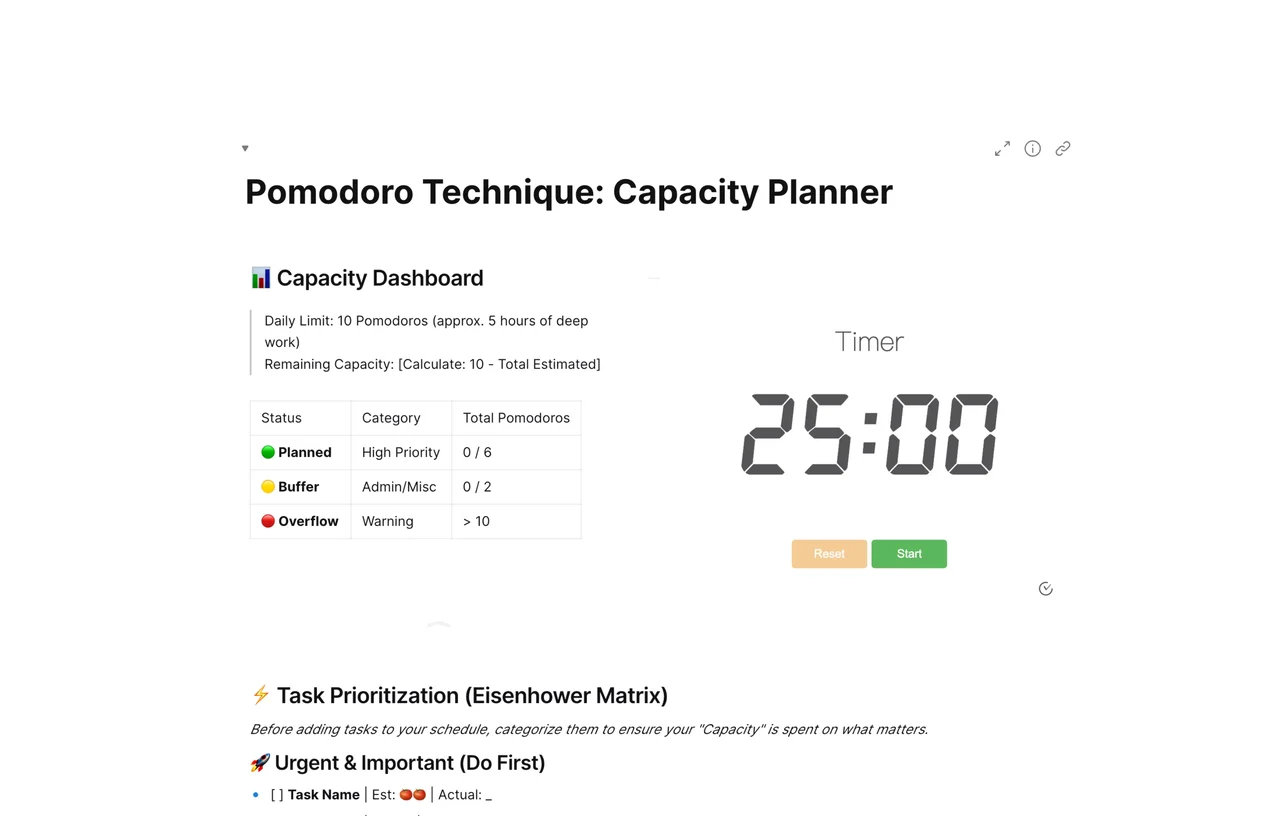
Pomodoro Technique: Capacity Planner
Optimize your workflow with the Pomodoro Technique Capacity Planner. Track focus intervals, manage workload limits, and boost productivity effortlessly in AFFiNE.
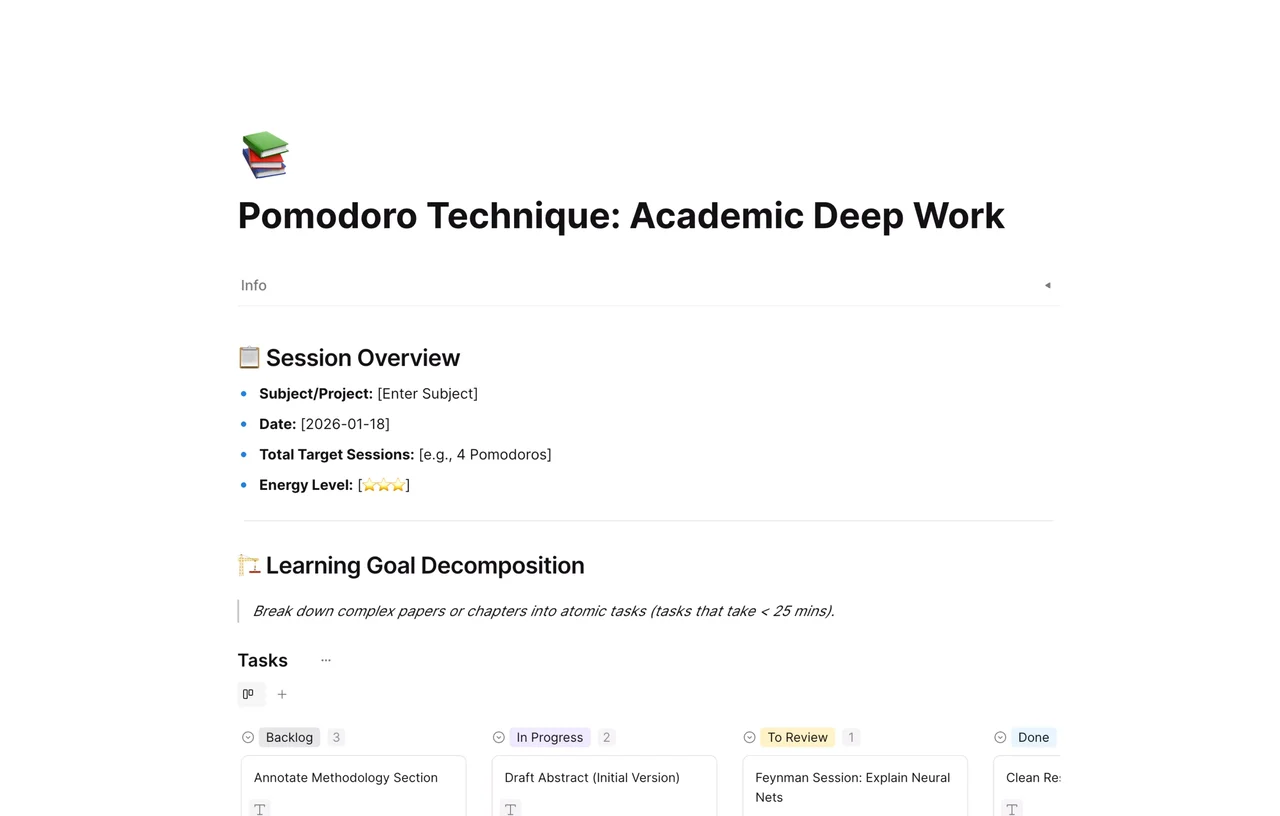
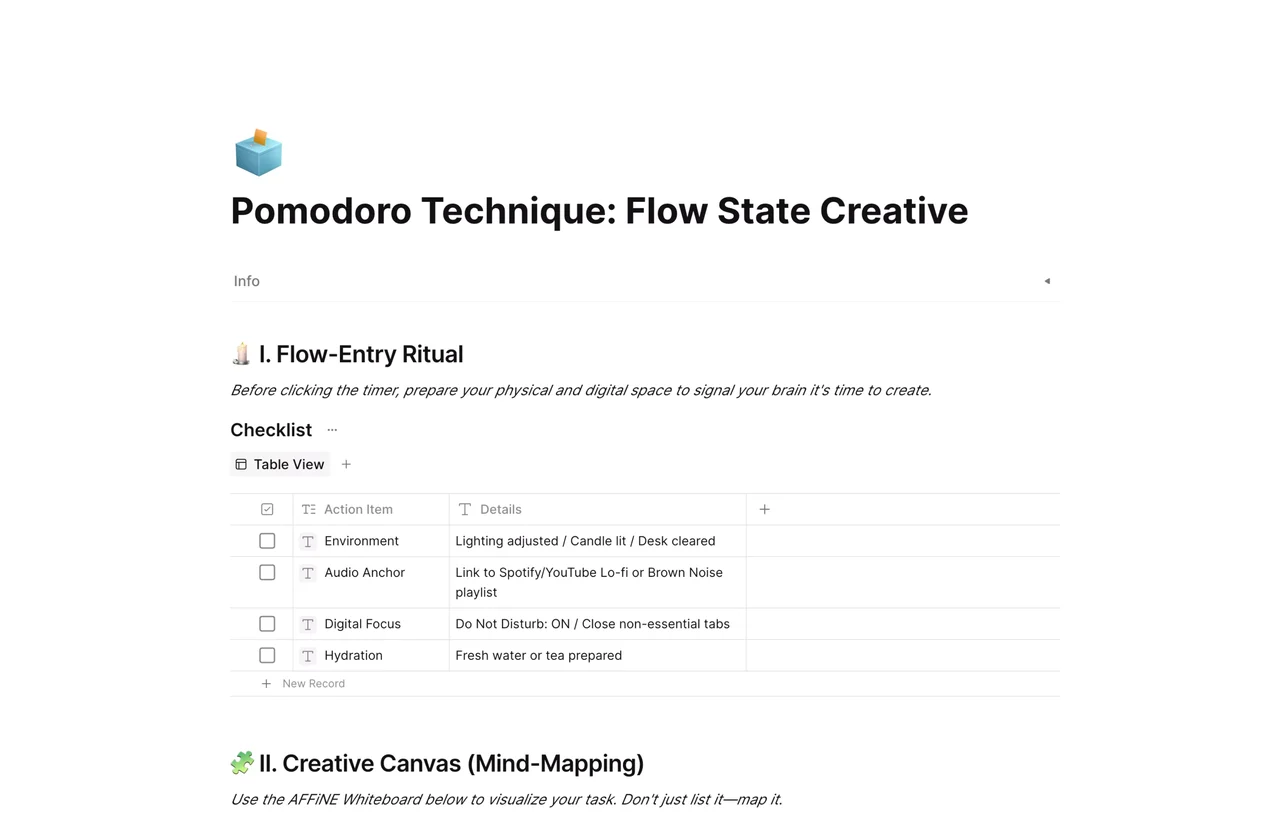
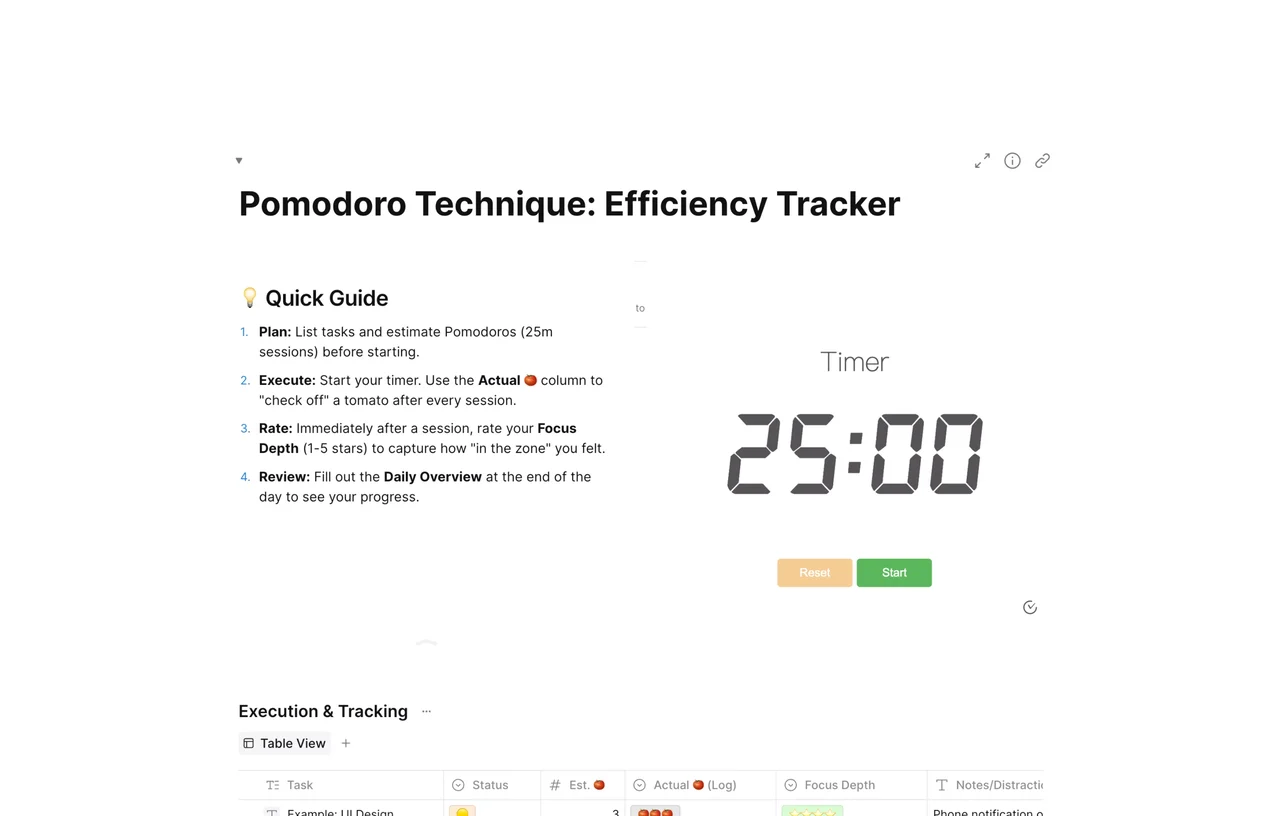
Achieving peak productivity requires more than just a to-do list; it requires a realistic understanding of your mental energy and time. The Pomodoro Technique: Capacity Planner is designed to bridge the gap between intention and action. By breaking your daily workload into manageable 25-minute intervals, this template helps you estimate exactly how much you can achieve in a day without burning out.
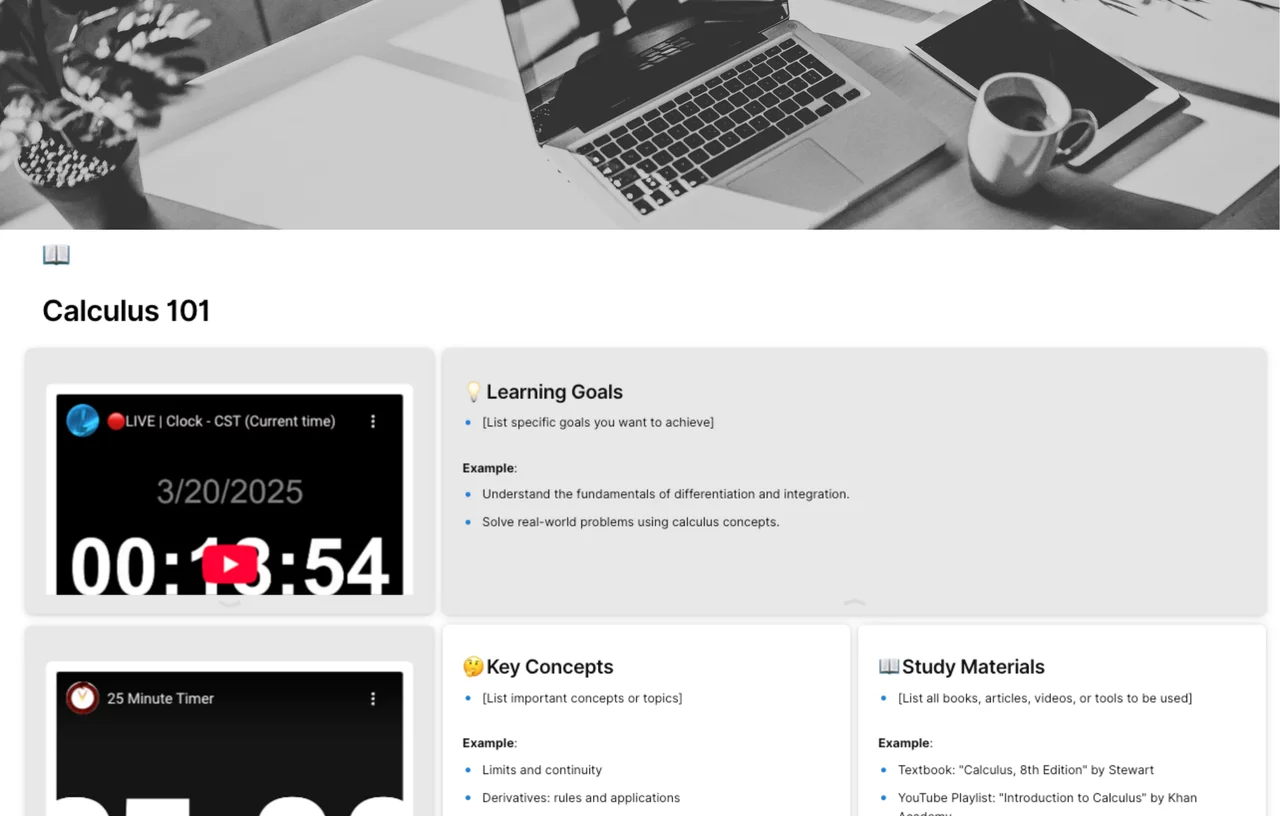
What makes this template truly powerful is its synergy with the platform's core capabilities. You can transition instantly from planning to execution by utilizing AFFiNE's built-in visual timers. Instead of switching between third-party timer apps and your project board, you can track your focus sessions directly alongside your capacity plan, ensuring a seamless and distraction-free workflow.
One of the biggest productivity pitfalls is the "planning fallacy"—underestimating how long tasks will take. This capacity planner forces you to quantify tasks in "Pomodoros" (25-minute units) rather than vague hours. By visualizing your available slots for the day, you can prioritize high-impact work and prevent overcommitment, ensuring you end the day feeling accomplished rather than overwhelmed.
This template is not just a static document; it is an interactive command center for your time. AFFiNE allows you to embed and customize timers directly within your workspace. As detailed on our Timers feature page, you can configure focus intervals and break times that align perfectly with the capacity slots in this template. This integration keeps you in the "flow state," reducing context switching and helping you maintain rhythm throughout the day.
Using the Pomodoro Technique: Capacity Planner with AFFiNE AI allows for smarter retrospectives. By comparing your estimated Pomodoros against the actual timers used, you gain valuable insights into your working speed and distraction patterns. Over time, this helps you refine your capacity planning, making your schedules more precise and your downtime more restorative.