SOP Meaning in Business: Definition, Examples & Uses
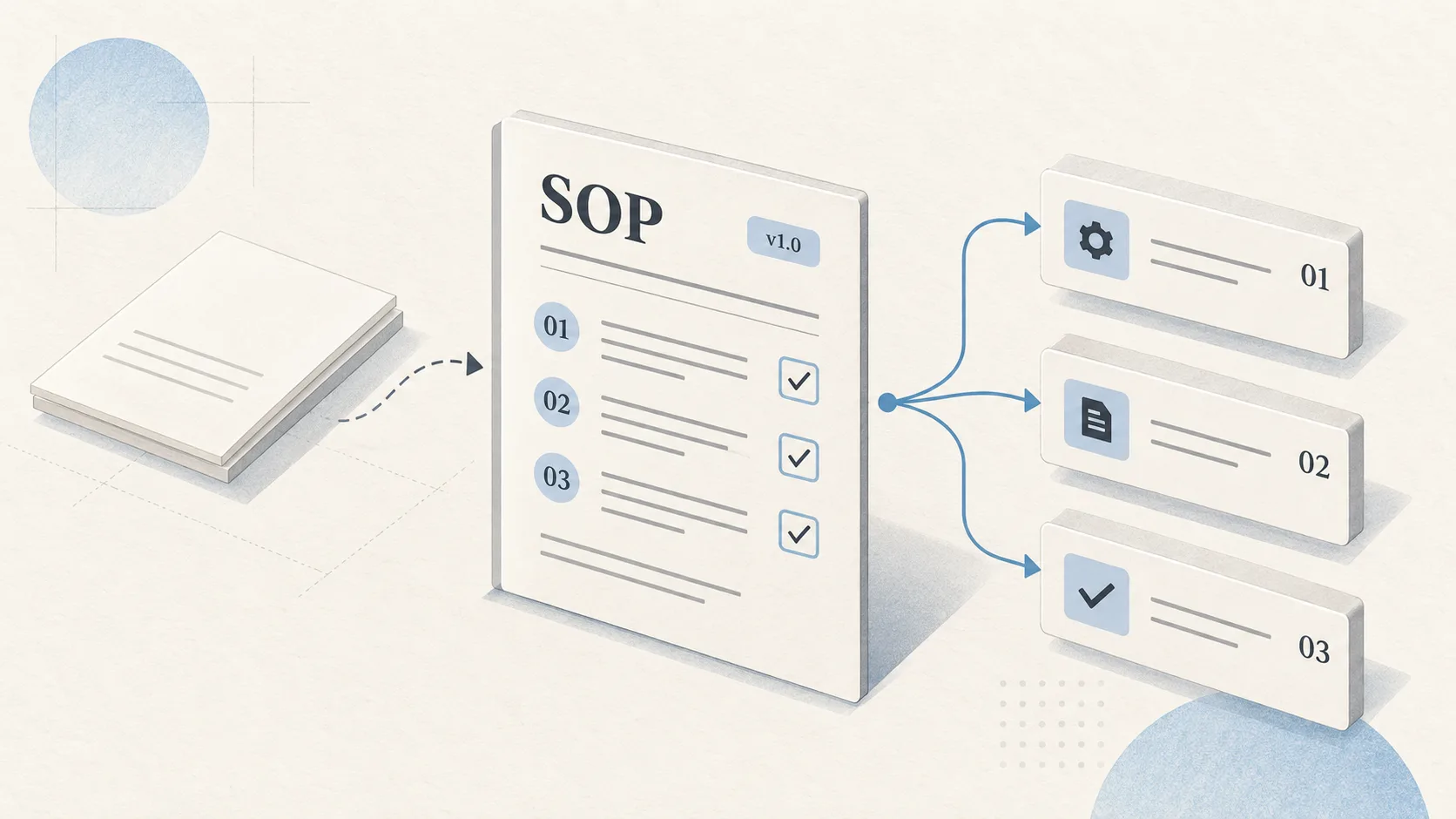
In business, SOP stands for standard operating procedure: a written, approved description of how a team performs a task it repeats. An SOP names who does each step, in which order, what the finished result must look like, and what to do when something goes wrong. Its purpose is simple: the work comes out the same way no matter who is on shift.
This page explains the meaning, where SOPs fit next to policies and workflows, and when a business actually needs one. To draft your own, follow the 8-step guide on how to write an SOP, which includes three complete examples.
What does SOP mean in business?
A standard operating procedure is the agreed way to do one recurring piece of work. Each word carries part of the meaning:
| Word | What it means in practice |
|---|---|
| Standard | There is one approved method, not a different version per person |
| Operating | It covers day-to-day work: support, onboarding, billing, shipping, maintenance |
| Procedure | It is a sequence of concrete steps with owners and checks, not a general goal |
A typical SOP has a title and version, an owner and approver, a purpose and scope, the numbered steps, an exception route, completion criteria, and a revision history. The free SOP template shows those sections in an editable Word, PDF, or Markdown file.
Other meanings of SOP
The same three letters mean different things in other contexts. Check which one your source is using.
| Context | SOP means | Example |
|---|---|---|
| Business and operations | Standard operating procedure | “Follow the refund SOP before issuing credit.” |
| University and visa applications | Statement of purpose | “Submit a two-page SOP with your graduate application.” |
| Automotive and manufacturing planning | Start of production | “SOP for the new model is planned for Q3.” |
The rest of this page uses the business meaning.
Why businesses use SOPs
An SOP is worth the effort when a task repeats, more than one person does it, and mistakes cost time or money. In that situation it does five jobs:
- Keeps results consistent. Two people following the same steps produce the same output, so customers get the same answer from every agent.
- Shortens training. A new hire can learn from a document instead of shadowing one colleague for weeks, and the trainer explains exceptions instead of basics.
- Makes handoffs explicit. Each step names an owner and the evidence that it is done, so work does not stall between teams.
- Supports audits and compliance. In regulated work, a controlled SOP plus completion records show how the task is meant to be performed and that it was performed that way. The SOP itself does not make a process compliant; the controls inside it and the people who follow it do.
- Lets the business change deliberately. When the method changes, the team updates one approved document, records the change, and retrains on the difference.
SOPs have costs too. They need an owner, they go stale when tools change, and a long procedure for a task nobody repeats is wasted work. Write one where the five benefits above matter, and keep it short enough that people actually use it.
SOP examples by department
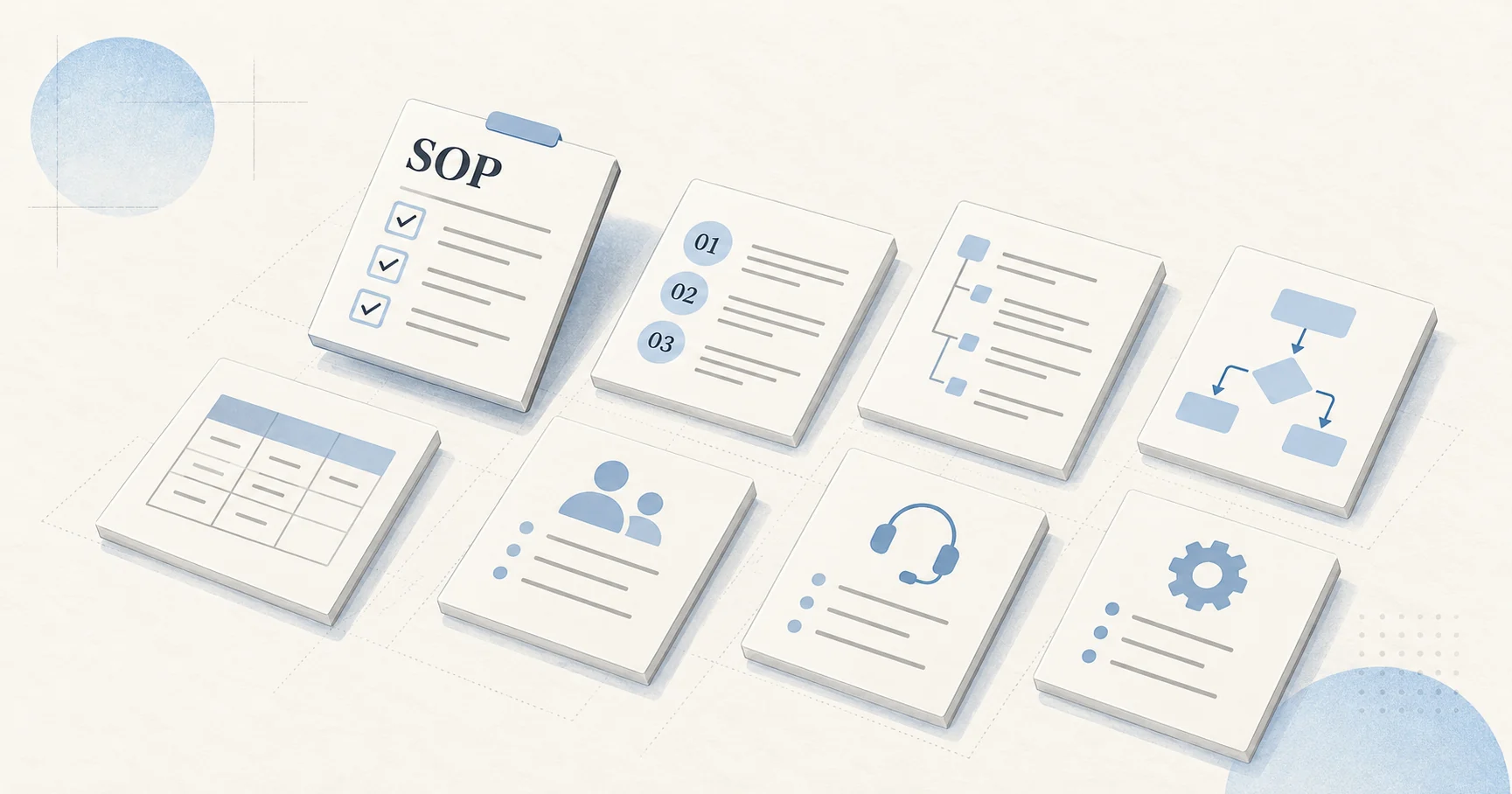
| Department | Example SOP | What the SOP controls |
|---|---|---|
| Customer support | Escalating a case to a specialist | Routing rules, handoff acceptance, and customer updates |
| HR | Preparing day-one access for a new employee | Access requests, schedule, and first sign-in |
| Finance | Approving and issuing a customer refund | Eligibility, approval limits, and payment method |
| IT | Deploying a release to production | Checks before release, rollback owner, and deployment log |
| Marketing | Publishing a LinkedIn post | Drafting, approval, scheduling, and reporting |
| Operations | Responding to an internet outage | Fallback connection, who to notify, and when to resume |
The first three are written out in full in the SOP writing guide. The LinkedIn marketing SOP and internet outage SOP are longer single-function examples, and the 8 free SOP templates give a starting file for each team.
SOP vs policy, process, workflow, and work instruction
These terms are often used interchangeably, but they answer different questions.
| Term | Question it answers | Example |
|---|---|---|
| Policy | What rule must we follow, and why? | Refunds are allowed within 30 days of purchase |
| Process | What happens from start to finish, across teams? | Order to cash: order, invoice, payment, refund |
| Workflow | In what order does work move between people or tools? | A ticket moves from new to assigned to resolved |
| SOP | Who does what, in which order, for one recurring task? | How a billing specialist approves and issues a refund |
| Work instruction | How exactly do I do one action in one tool? | Which screens and fields to use when issuing the refund |
A policy sets the rule, the process shows the big picture, and the SOP turns one part of that process into executable steps. If you are mapping a whole process before writing individual procedures, start with process documentation.
When does a business need an SOP?
Write an SOP when at least one of these is true:
- The task repeats often enough that people ask “how do we do this again?”
- More than one person performs it, or it moves between teams.
- An error is expensive, unsafe, or visible to customers.
- An auditor, regulator, or customer contract expects a documented method.
- You are about to hire, delegate, or hand the task to someone new.
Skip it, or use a short checklist instead, when one experienced person does a low-risk task occasionally. A checklist confirms that known steps were completed; an SOP also explains scope, owners, decisions, and exceptions.
Where SOPs are kept
Small teams often start with Word or Google Docs files. As the number of procedures grows, most teams move them into a shared docs or wiki tool so there is one current copy, links between related procedures, and a clear owner for each. Compare the options in our guide to SOP management software.
Disclosure: AFFiNE publishes this page and makes a workspace that can hold SOPs; the definitions and examples above apply whichever tool you use. See our editorial policy.
Frequently asked questions
What is the full form of SOP in business?
SOP stands for standard operating procedure. In other contexts it can mean statement of purpose (university and visa applications) or start of production (automotive and manufacturing planning).
What is an SOP in simple words?
An SOP is the agreed, written way to do a task your team repeats: the steps, who does each one, how to check the result, and what to do if something goes wrong.
What is an example of an SOP in business?
A customer refund SOP is a common example. It says which requests qualify, who can approve refunds above a set limit, how to issue the refund to the original payment method, and how to notify the customer.
What are the main parts of an SOP?
Document control (title, version, owner, approver, dates), purpose and scope, prerequisites and roles, numbered steps with evidence of completion, exceptions and escalation, completion criteria, and revision history.
Is an SOP the same as a policy?
No. A policy states a rule and the reason for it. An SOP describes the steps people take to follow that rule for one recurring task. Link the SOP to the policy instead of copying the policy into it.