Free BPMN Diagram Template with Core Symbols
Free BPMN 2.0 diagram template with events, tasks, gateways, and swimlanes ready to edit. Map business processes your whole team can read.
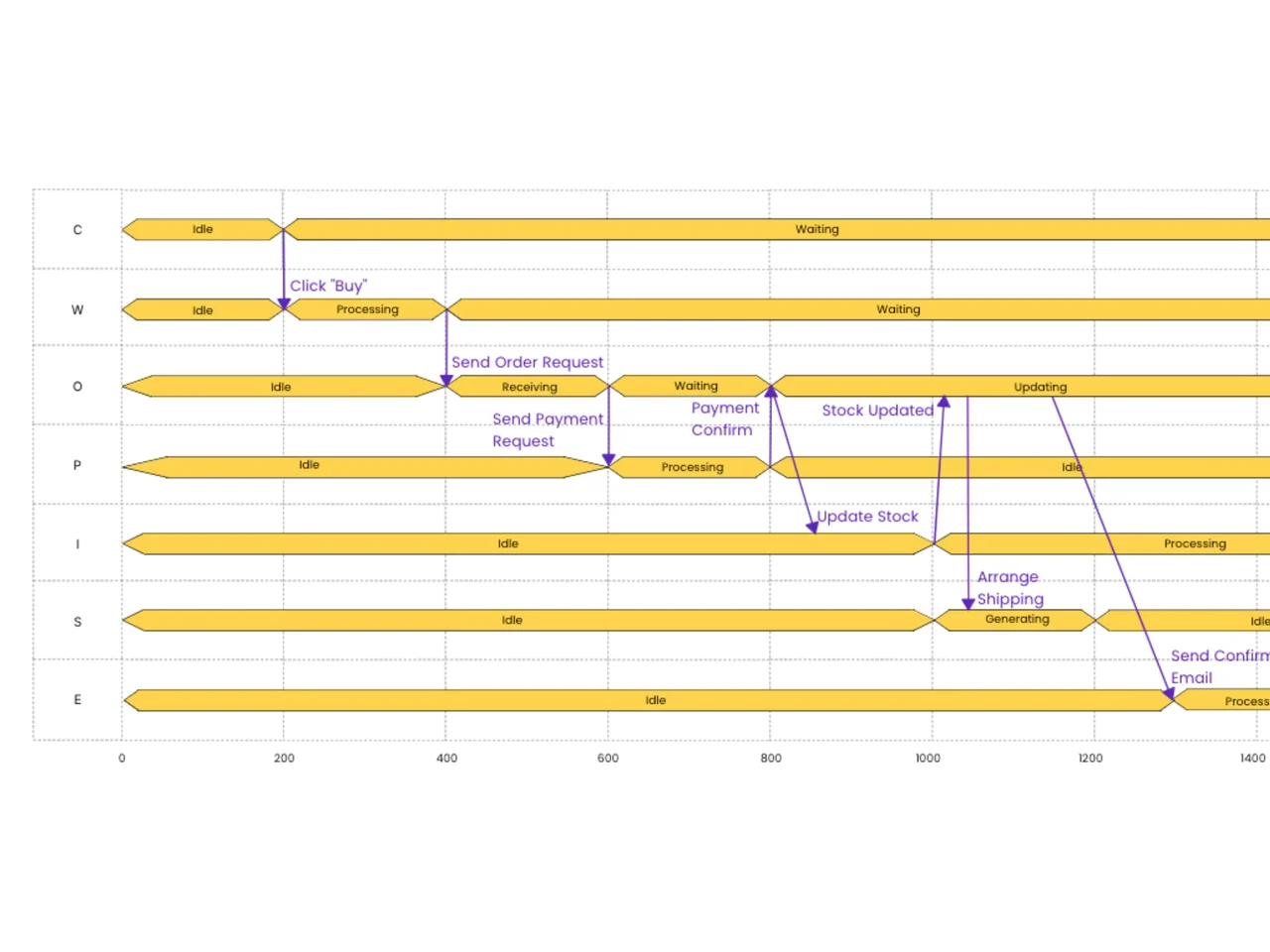
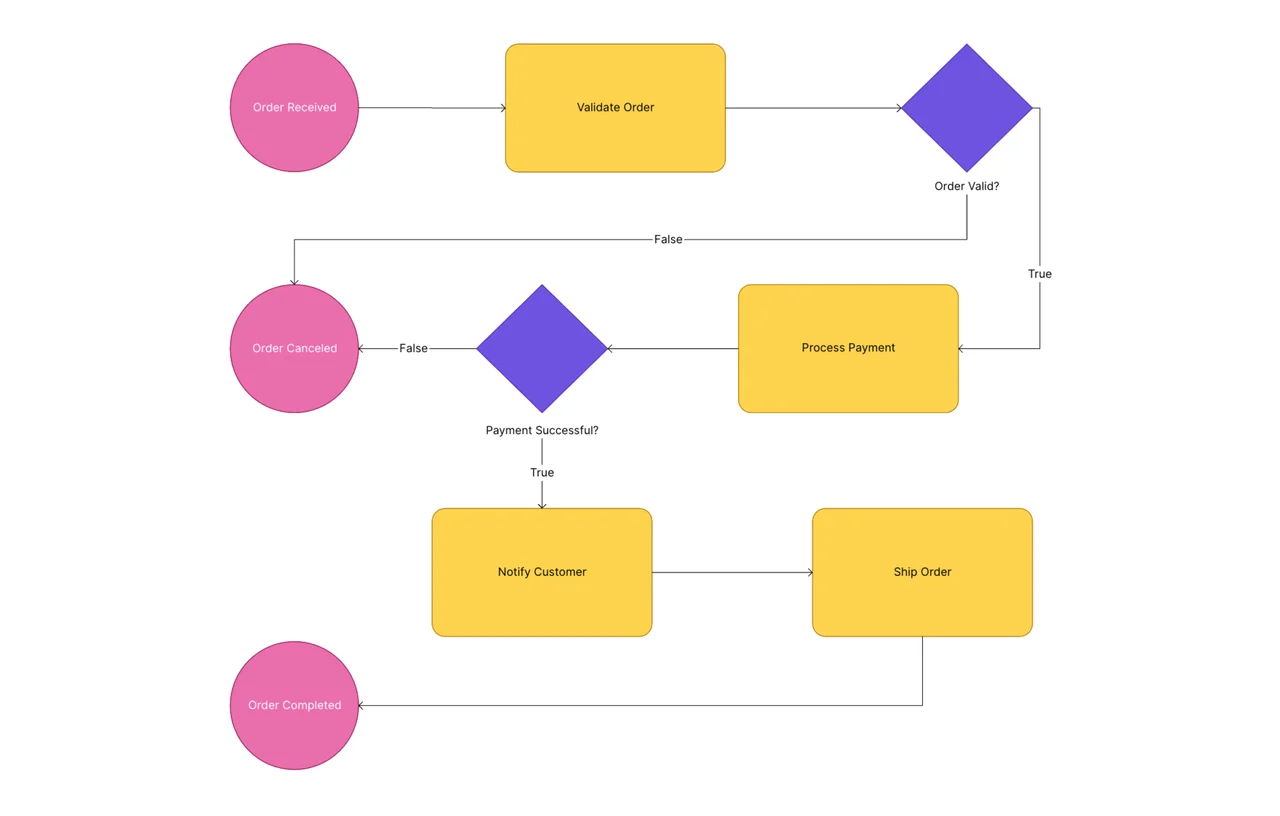
A Business Process Model and Notation (BPMN) diagram is the industry standard for visually representing and documenting business processes in a uniform manner. Our BPMN diagram template includes all of the necessary parts and notation symbols to map out your organization's workflows, from simple operations to complicated cross-functional processes. Using standardized BPMN notation ensures that your process documentation is readily understood by stakeholders from various departments and organizations.
BPMN provides a common language for process modeling, bridging the gap between business and technical stakeholders. The standardized notation guarantees that everyone in your company perceives process flows consistently, eliminating misunderstandings and implementation problems when converting business requirements into operational solutions.
Visualizing your workflows with BPMN diagrams may help you find bottlenecks, redundancies, and inefficiencies in your business processes. The full mapping of operations, decision points, and handoffs enables you to perform a thorough process analysis and execute targeted adjustments that increase productivity while lowering operating costs.
BPMN diagrams are useful documentation for IT teams while establishing or modifying business systems. The extensive process mapping specifies the requirements for automation, application development, and system integration, ensuring that technological solutions meet your business process and workflow management requirements.
Duplicate the template and name the process with its trigger and outcome — for example, "Customer refund, request to resolution."
Lay out swimlanes for each role or system that participates.
Place the start event, then add tasks left to right as rounded rectangles, one verb phrase each.
Add gateways (diamonds) where the flow branches, labeling each outgoing path with its condition.
Close every path with an end event, then walk a real case through the diagram to catch missing branches.
BPMN (Business Process Model and Notation) is a standard visual language for processes: events as circles, tasks as rounded rectangles, decisions as diamond gateways, and swimlanes for who does what. Its value is that business and engineering read the same diagram the same way.
A flowchart is freeform; BPMN is a standard. BPMN's fixed symbol set — events, tasks, gateways, lanes — means a process modeled in one team reads identically in another, which is why operations and compliance teams standardize on it.
Start, intermediate, and end events; task and sub-process shapes; exclusive and parallel gateways; sequence flows; and swimlanes. That covers the core BPMN 2.0 set most process maps need — copy and restyle any element for the rest.