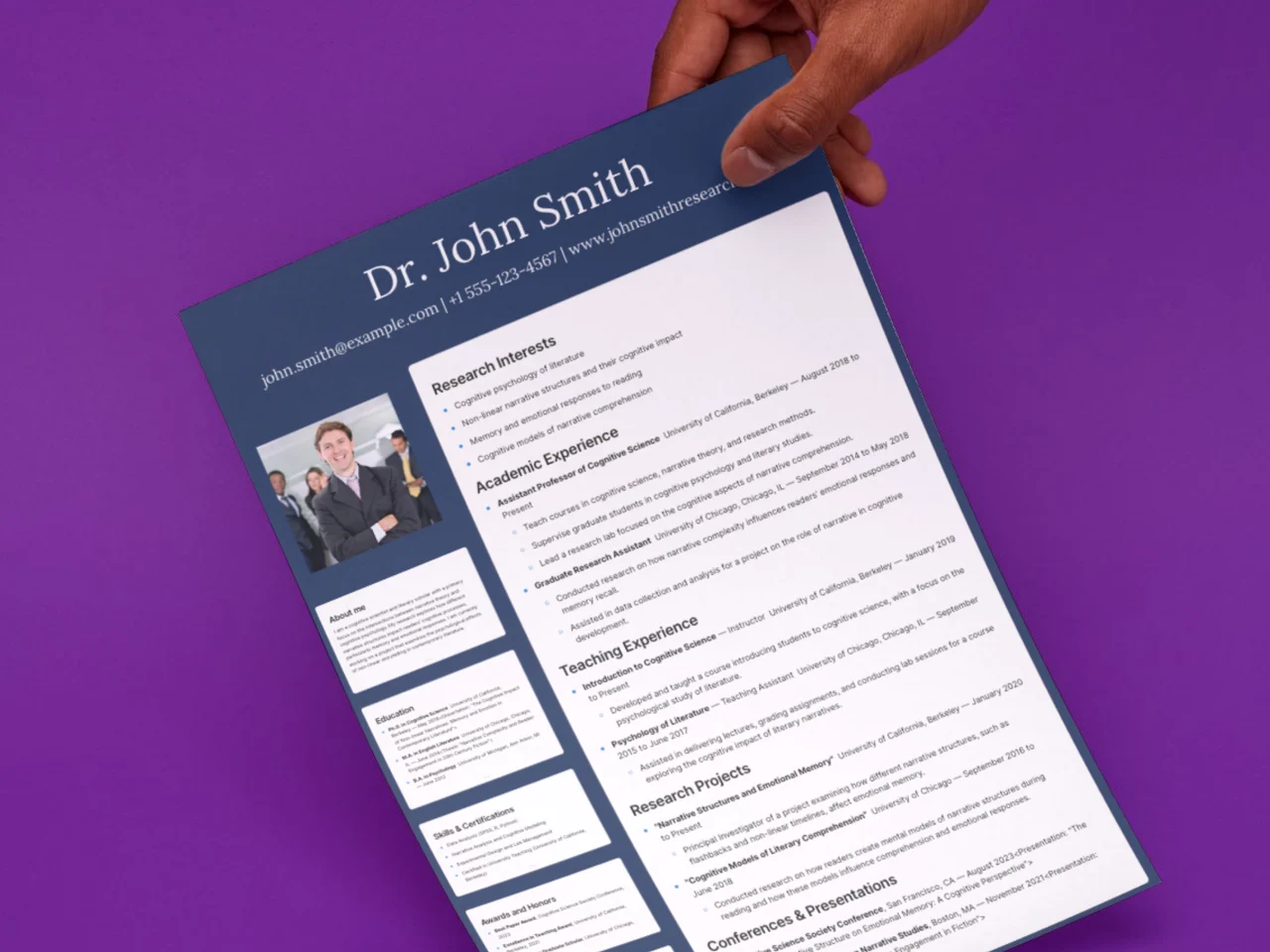
Free Academic CV Template for PhD & Research Careers
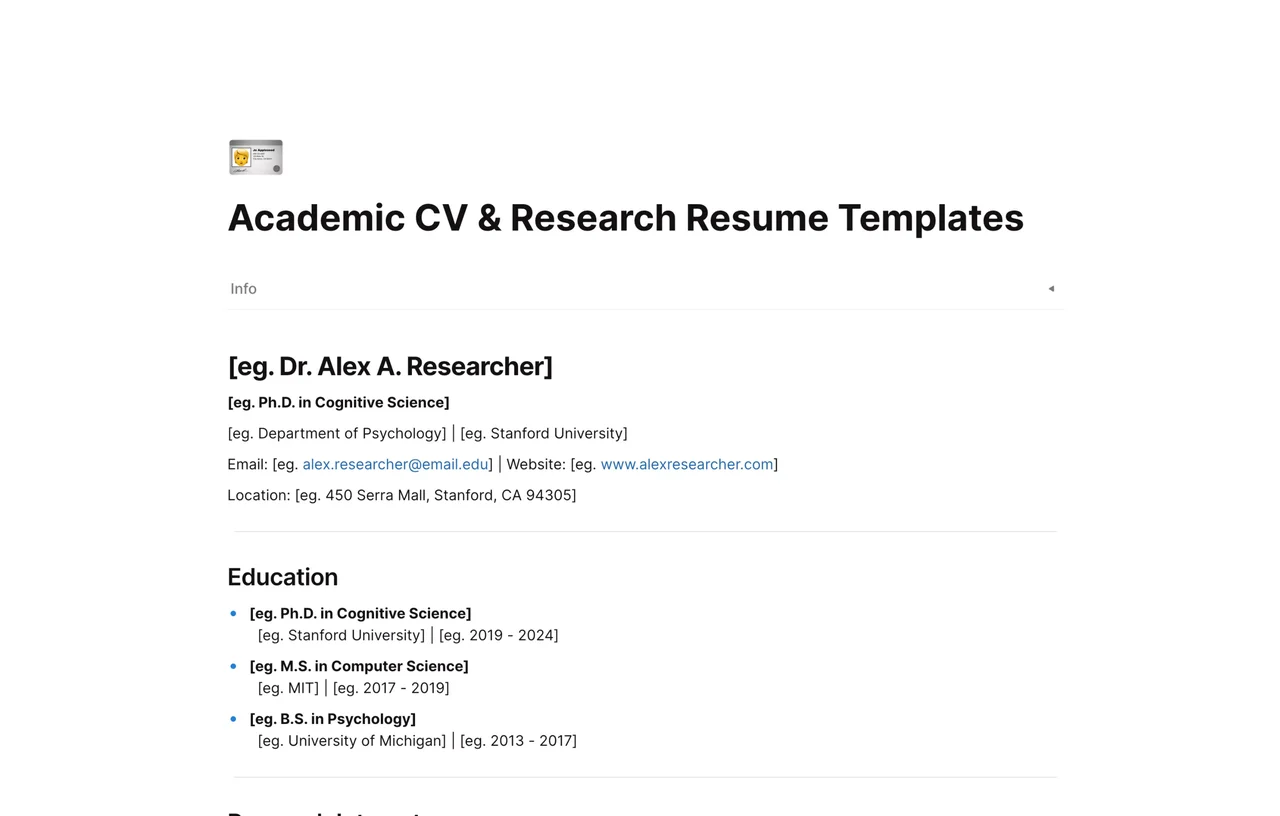
Academic CV & Research Resume Templates
Academic CV Templates
An academic CV is your scholarly record in document form — and unlike a resume, it grows for your whole career. This collection gathers AFFiNE's free academic CV templates for graduate applications, postdoc and faculty searches, and research roles.
Each template structures the sections search committees expect — education, publications, grants, teaching, service — with notes on ordering conventions by field. Duplicate one, maintain it as the master record, and export a tailored PDF per application.
Pick the CV format that matches your career stage below.
FAQ
What goes on an academic CV?
Education, appointments, publications, grants and awards, teaching, service, and references — in the order your field expects. Lab sciences usually lead with publications and funding; humanities and teaching-focused roles often lead with teaching.
How is an academic CV different from a resume?
Length and purpose: a resume is a one-to-two-page marketing document; a CV is the complete scholarly record with no length cap. Committees expect the whole record — omissions read as gaps, not concision.
Should I keep one CV or many?
One master CV with everything, permanently maintained — then export trimmed versions per application. Updating the master the day something happens (paper accepted, talk given) is the habit that makes application season painless.